
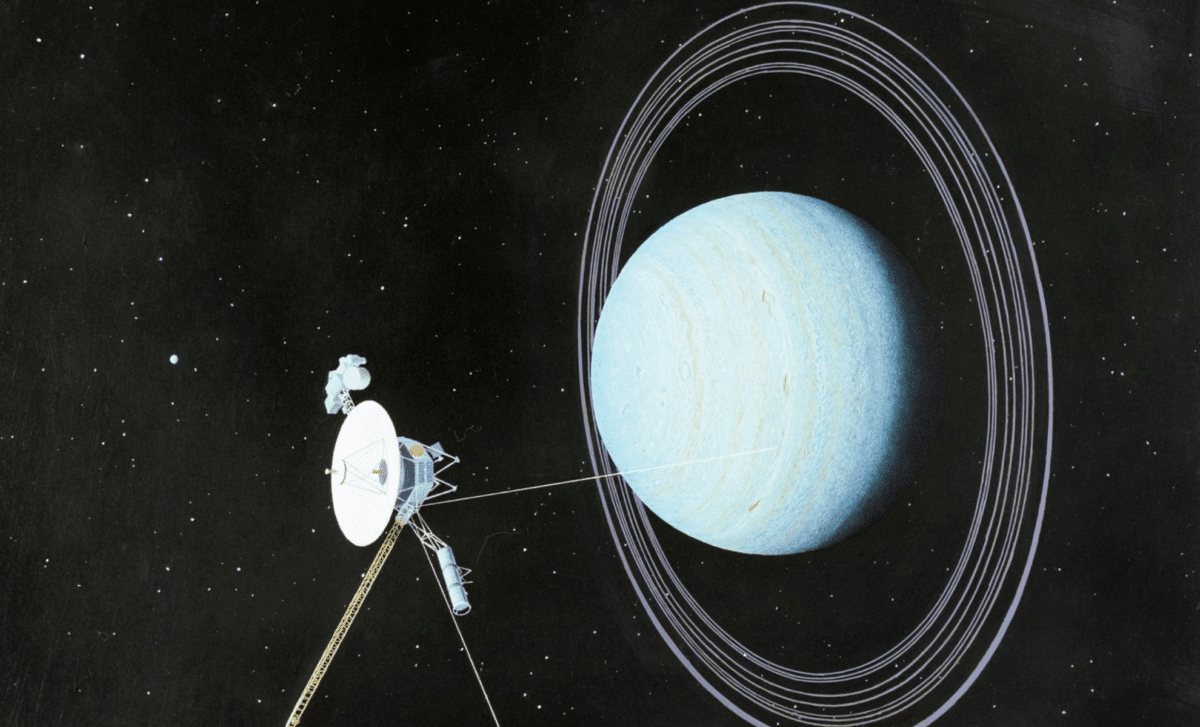
During its historic 1986 passage past Uranus, NASA’s Voyager 2 spacecraft detected radiation levels much higher than scientists had expected. This surprising observation defied previous assumptions about planetary radiation belts and sparked decades of inquiry into Uranus’ unusual environment.
Recent findings published in Geophysical Research Letters have now linked these extreme radiation readings to a rare space weather phenomenon that likely intensified Uranus’ radiation belts. Researchers propose that Voyager 2 encountered a solar wind disturbance analogous to those recorded near Earth, which could have temporarily elevated the radiation levels.
Advancing Knowledge of Planetary Radiation Through Space Weather Study
A team from the Southwest Research Institute (SwRI) revisited Voyager 2’s data, as detailed in Geophysical Research Letters, aiming to decipher the cause behind Uranus’ unexpectedly strong radiation environment.

“Science has come a long way since the Voyager 2 flyby,” said Dr. Robert Allen, lead author of the paper. “We decided to take a comparative approach looking at the Voyager 2 data and compare it to Earth observations we’ve made in the decades since.”
By analyzing contemporary space weather phenomena, especially those near Earth, the researchers found striking similarities that help explain the unusual observations by Voyager 2 during its Uranus encounter.
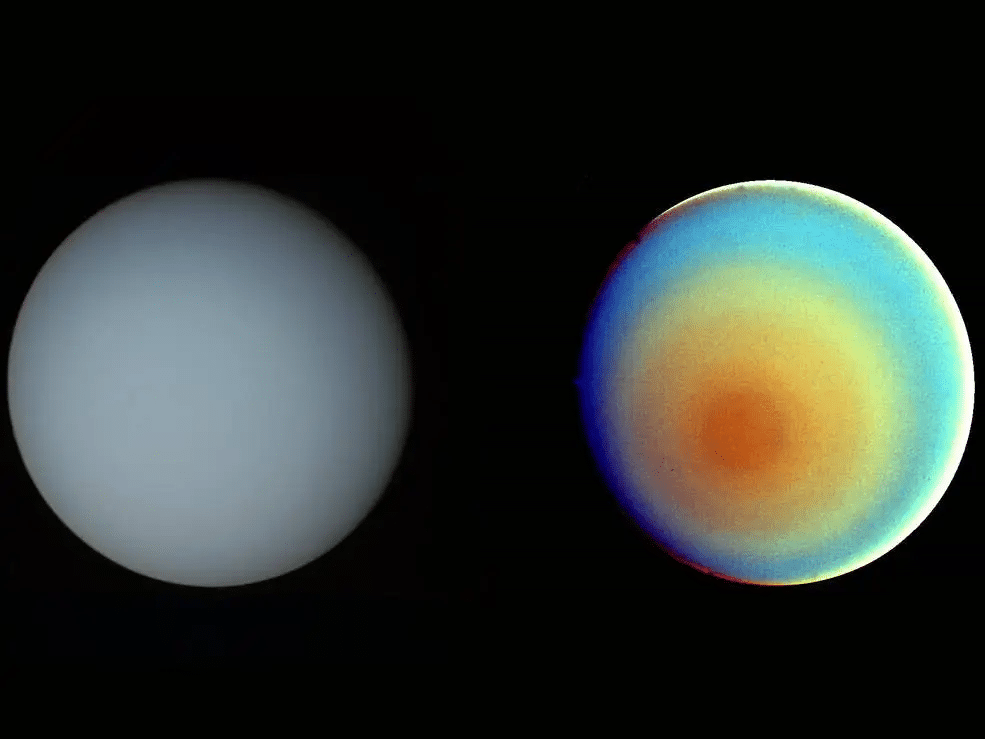
The research suggests Voyager 2 passed through a co-rotating interaction region (CIR), a significant solar wind phenomenon where streams of plasma with different speeds collide, boosting energy levels. On Earth, CIRs are known to accelerate electrons within the radiation belts, causing spikes in radiation. Uranus likely experienced a comparable event, which accounts for the intense levels recorded.
The Influence of Co-Rotating Interaction Regions on Outer Planets
CIRs, common in the inner solar system, occur when faster solar wind overtakes slower portions, compressing and energizing the plasma. Previously, scientists believed such interactions would mostly disperse energetic particles into planetary atmospheres. However, new evidence points to conditions in which these waves instead speed up electrons, amplifying radiation belt intensity.
Co-author Dr. Sarah Vines highlighted the importance of Earth-based observations for understanding these processes.
“In 2019, Earth experienced one of these events, which caused an immense amount of radiation belt electron acceleration,” she said.
“If a similar mechanism interacted with the Uranian system, it would explain why Voyager 2 saw all this unexpected additional energy.”
This advancement sheds light on how space weather impacts radiation environments beyond our planet.
Looking Ahead: Implications for Exploration and Space Weather Understanding
Though this study clarifies a major Uranian puzzle, it also raises further questions about how energy transfer within solar wind disturbances operates. Dr. Allen stresses the importance of continued investigation.
“This is just one more reason to send a mission targeting Uranus,” he said. “The findings have some important implications for similar systems, such as Neptune’s.”
Upcoming missions to Uranus could provide detailed measurements to refine our grasp of these dynamic phenomena. Furthermore, this research informs models of space weather for other outer planets, especially Neptune. As space agencies strategize future missions to the distant reaches of our solar system, these insights offer valuable guidance on the interactions between solar wind and planetary radiation belts.
- Categories:
- Space

0 comments
Sign in to Comment