

Earth’s climate has continually fluctuated throughout its history, alternating between warm periods and extensive ice ages. These changes stem from complex dynamics among the atmosphere, oceans, and Earth’s orbital mechanics. Despite centuries of research, accurately forecasting the onset of future ice ages has remained challenging.
A recently published study in Science has provided new clarity by confirming that variations in Earth’s orbit—such as its axial tilt, wobble, and distance from the Sun—play a direct role in initiating and concluding glacial cycles. Notably, these findings suggest the next ice age could commence within approximately 11,000 years.
The Link Between Earth’s Orbit and Ice Age Cycles
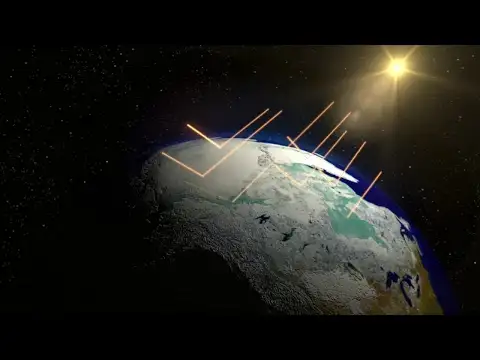
For a long time, scientists have theorized that Earth’s orbital changes drive long-term climate fluctuations. These changes, termed Milankovitch cycles, describe variations in Earth’s movement around the Sun occurring over tens of thousands to hundreds of thousands of years.

Shifts in orbital patterns influence the amount of solar energy reaching various regions, affecting global temperatures, the expansion of ice sheets, and sea level fluctuations. The main cycles include:
- Eccentricity (cycles of 100,000 and 400,000 years): Earth's orbit changes shape between more circular and elliptical, modifying seasonal intensity.
- Obliquity (40,000-year cycle): The angle of Earth’s tilt varies between 22.1° and 24.5°, impacting sunlight distribution across latitudes.
- Precession (21,000-year cycle): Earth's axial wobble alters the timing of seasons.
These orbital elements combine in intricate ways that can either amplify or counteract one another. However, pinpointing how these interactions translate to ice age timelines has remained elusive until now.
Major Discovery: Uncovering a Precise Ice Age Pattern
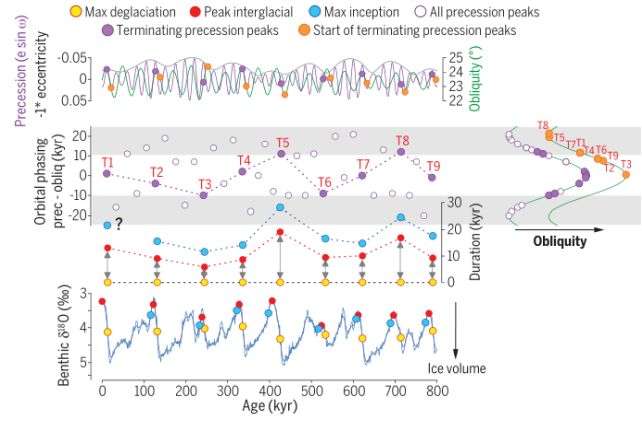
In their investigation, scientists examined 800,000 years of climate history by analyzing oxygen isotope ratios from fossilized foraminifera, tiny marine organisms that preserve records of ancient ice volumes.
Correlating this data with Earth’s orbital behavior, the team identified a definitive pattern connecting glacial periods to particular orbital configurations:
- Ice ages tend to start when Earth's axial tilt (obliquity) lessens, decreasing summer sunlight in polar regions.
- They conclude when precession and obliquity align to boost summer temperatures enough to melt large ice sheets.
This recurring 100,000-year glacial cycle had puzzled researchers because earlier explanations were insufficient. The study now reveals that it follows a predictable rhythm governed by Earth's spatial orientation.
Anticipating the Timing of the Next Ice Age
Currently, Earth’s obliquity is trending downward toward a minimum — a shift consistent with prior conditions that triggered ice ages, according to this research. Their models suggest that barring significant external changes, the upcoming glaciation event could begin within the next 11,000 years.
That said, human influence presents an important variable: ongoing greenhouse gas emissions are altering Earth’s climate trajectory. The Intergovernmental Panel on Climate Change (IPCC) cautions that these emissions could postpone or modify the natural timeline for future ice ages.
How Human Actions May Impact Natural Climate Cycles
While Earth’s natural climate rhythms arise from astronomical forces, modern human activity introduces new complexities. Industrial pollution, deforestation, and fossil fuel consumption have raised atmospheric carbon dioxide to levels unseen for millions of years.
This prompts a critical question: Could continued CO₂ emissions stall or even prevent the onset of the next ice age? Some scientists argue that sustained emissions might inhibit the cooling phase needed for ice sheet growth, effectively delaying glaciation indefinitely. Others warn that disrupting the planet’s intrinsic climate balance may produce unforeseen and severe effects.
The research team highlights that their findings offer a vital reference point for understanding long-term climate trends. Without anthropogenic impact, Earth appears poised to enter an ice age in about 11,000 years. However, with human activities in play, outcomes have become far less predictable.
Implications for Forecasting Climate’s Path Ahead
Grasping Earth’s natural climate cycles is essential for anticipating not only forthcoming ice ages but also the full scale of human influence. Typically, climate projections compare future scenarios against present or pre-industrial benchmarks, but this study suggests that integrating Earth’s natural climate trajectory will deepen our understanding.
The main conclusion? Humanity has shifted from being mere observers of climate fluctuations to active shapers. Decisions made in the coming decades could determine whether the planet moves into another ice age, experiences uncontrolled warming, or encounters other unexpected environmental shifts.
One certainty remains: Earth’s climate history is characterized by dramatic swings, and now human beings hold significant sway over its future course.
- Categories:
- News












0 comments
Sign in to Comment