
Researchers are nearing a pivotal breakthrough that could revolutionize our knowledge of celestial bodies outside the solar system. The quest to identify “exotrojans”—bodies that may orbit at the Lagrange points within distant pulsar systems—has sparked great interest across the astronomical community, although definitive proof is still pending.
Exploring Exotrojans: Expanding the Boundaries of Astronomy
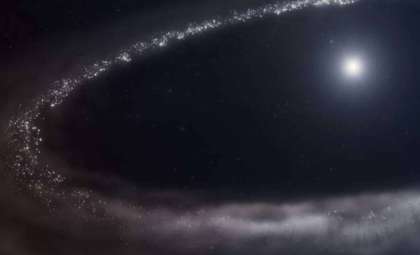
Exotrojans represent theoretical objects occupying the gravitationally stable Lagrange points near stars beyond our own. Trojans are well-known in astronomy as asteroids sharing a planet's orbit. For example, Jupiter hosts thousands of such asteroids situated about 60 degrees ahead of and behind it along its orbital path. Scientists suspect that similar formations might exist around other stars, with exotrojans providing valuable clues into complex gravitational interactions in these far-flung systems, much like those observed in our solar neighborhood.
Searching for exotrojans is particularly challenging in pulsar environments. Pulsars, highly magnetized rotating neutron stars, emit powerful radiation and magnetic fields, complicating the detection of smaller orbiting bodies at their Lagrange points. Despite these hurdles, astronomers are applying cutting-edge methods aiming to spot these hard-to-find companions.

The Extreme Conditions of Black Widow Pulsars
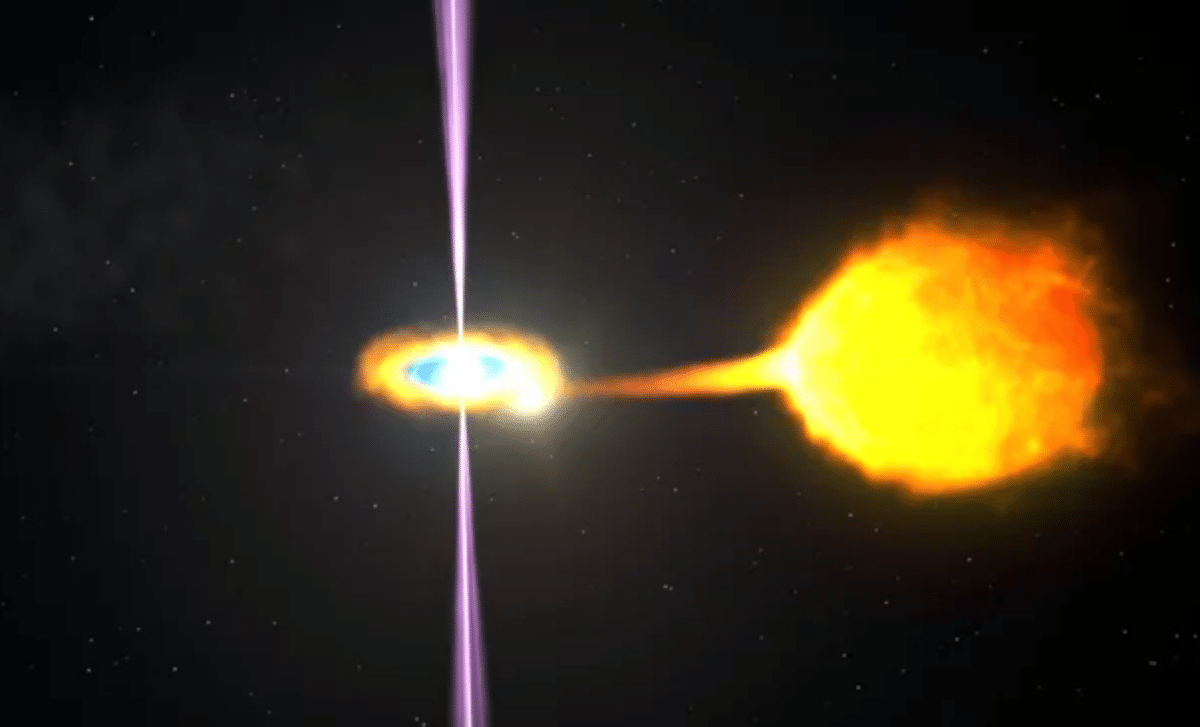
A recent investigation led by Jackson Taylor and colleagues at West Virginia University zeroes in on pulsar binary systems called black widow pulsars. These feature a rapidly spinning neutron star locked in orbit with a much smaller companion star—often just 1% of the Sun’s mass. Over time, the intense gravity of the pulsar strips material away from this companion, eventually obliterating it, hence the evocative moniker “black widow.” These peculiar systems provide a unique laboratory for searching for exotic bodies like exotrojans.
Despite their seemingly harsh environments, black widow pulsars could actually support stable orbits for smaller objects such as exotrojans, owing to the companion star’s very low mass. This offers a remarkable opportunity to investigate co-orbital gravitational relationships in these extreme conditions. Detecting such objects, however, remains challenging because usual exoplanet discovery methods, like measuring gravitational effects on stellar motion, are less effective amid pulsars’ violent surroundings.
Innovative Methods to Detect Exotrojans
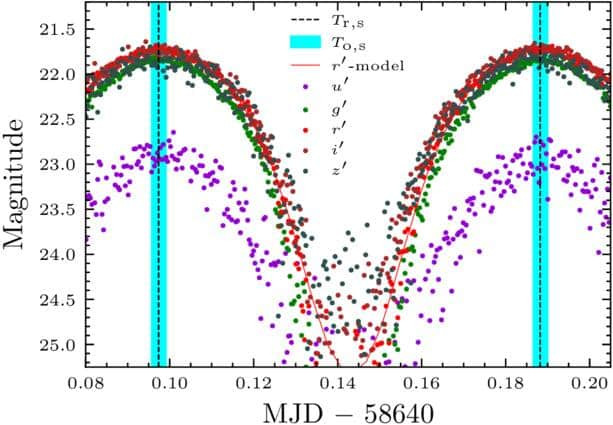
To circumvent these issues, the research team utilized two novel approaches. The first compared optical light curves with radio observations from the pulsar system PSR J1641+8049. Optical brightness peaks when the heated face of the companion star is toward Earth, while radio pulses track the pulsar’s emissions corresponding to the binary system’s center of mass. A discrepancy between these datasets could hint at an additional body, like a Trojan, perturbing the system’s dynamics.
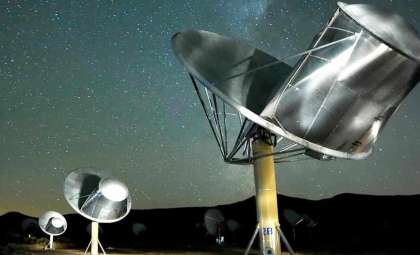
The second approach involved analyzing a 15-year dataset from the NANOGrav project, which monitors radio pulse timing. These Time of Arrival (TOA) measurements can uncover subtle shifts in the system’s center of mass caused by an orbiting third object. A stable exotrojan at a Lagrange point would induce slight wobbles, reflected as timing variations in the pulsar’s radio pulses.
No Definitive Findings Yet, But Optimism Continues
Although these techniques show promise, no unequivocal detection of exotrojans has been made so far. Two systems exhibited signals deemed false positives, likely stemming from data noise or inherent limitations in observational precision. In the other seven observed systems, no bodies larger than Earth were identified, though one system hinted at an object possibly eight times Jupiter’s mass.
These preliminary results, while not conclusive, do not diminish enthusiasm within the astronomical community. The search for exotrojans is still emerging, and the intricate nature of pulsar systems coupled with the current technological ceiling means smaller, more subtle exotrojans might evade detection. With future enhanced datasets such as the forthcoming 20-year NANOGrav observations, scientists remain hopeful that exotic co-orbital companions will be uncovered in the near future.
- Categories:
- News



0 comments
Sign in to Comment