
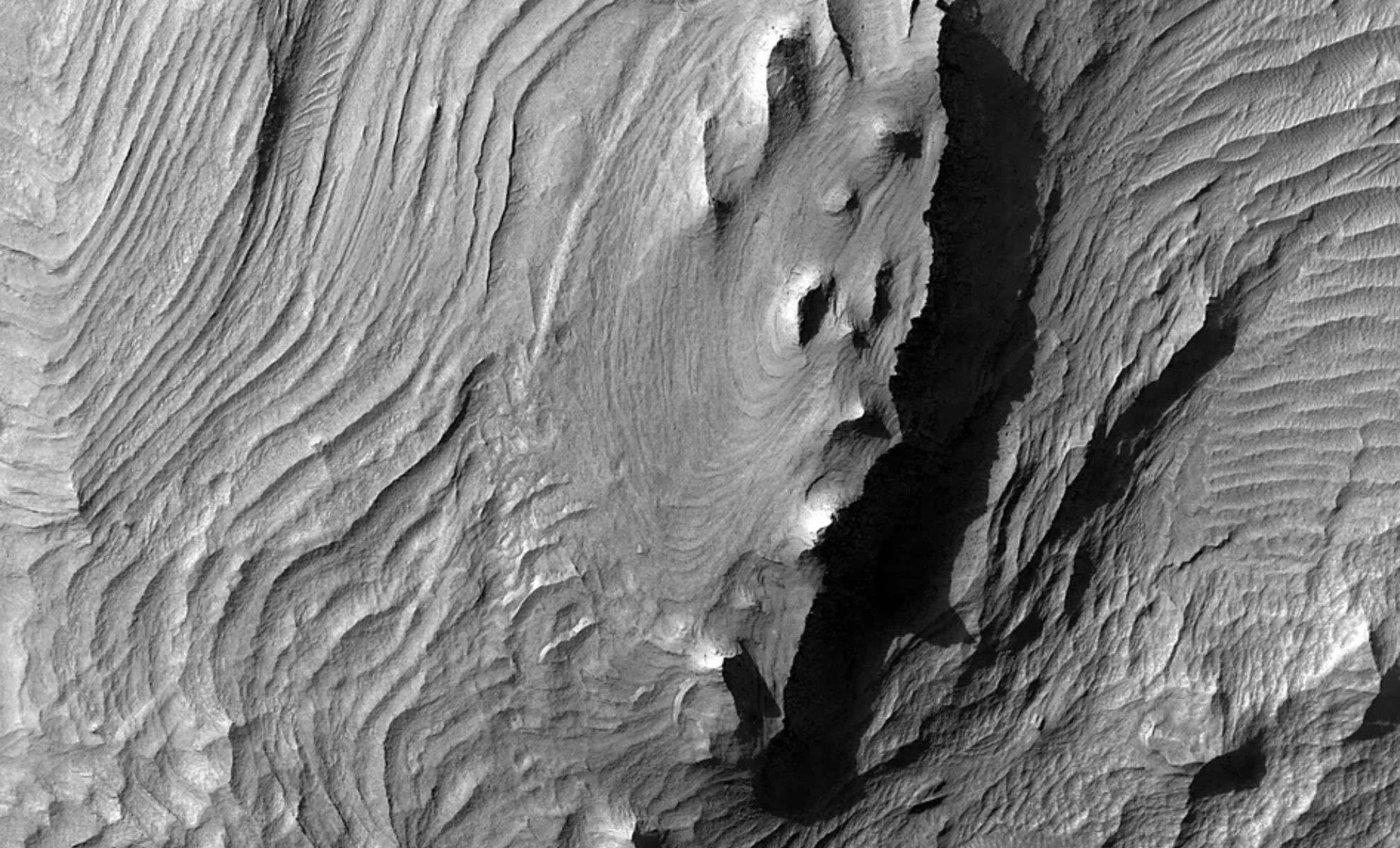
NASA’s Mars Reconnaissance Orbiter (MRO) has recently transmitted detailed images of Candor Chasma, a vast canyon located within Mars’ enormous Valles Marineris system. Captured by the HiRISE camera and studied by researchers at the University of Arizona, these photographs expose layered sediment formations that point to a historically more active Martian environment.
Exploring Valles Marineris: Mars’ Monumental Canyon System
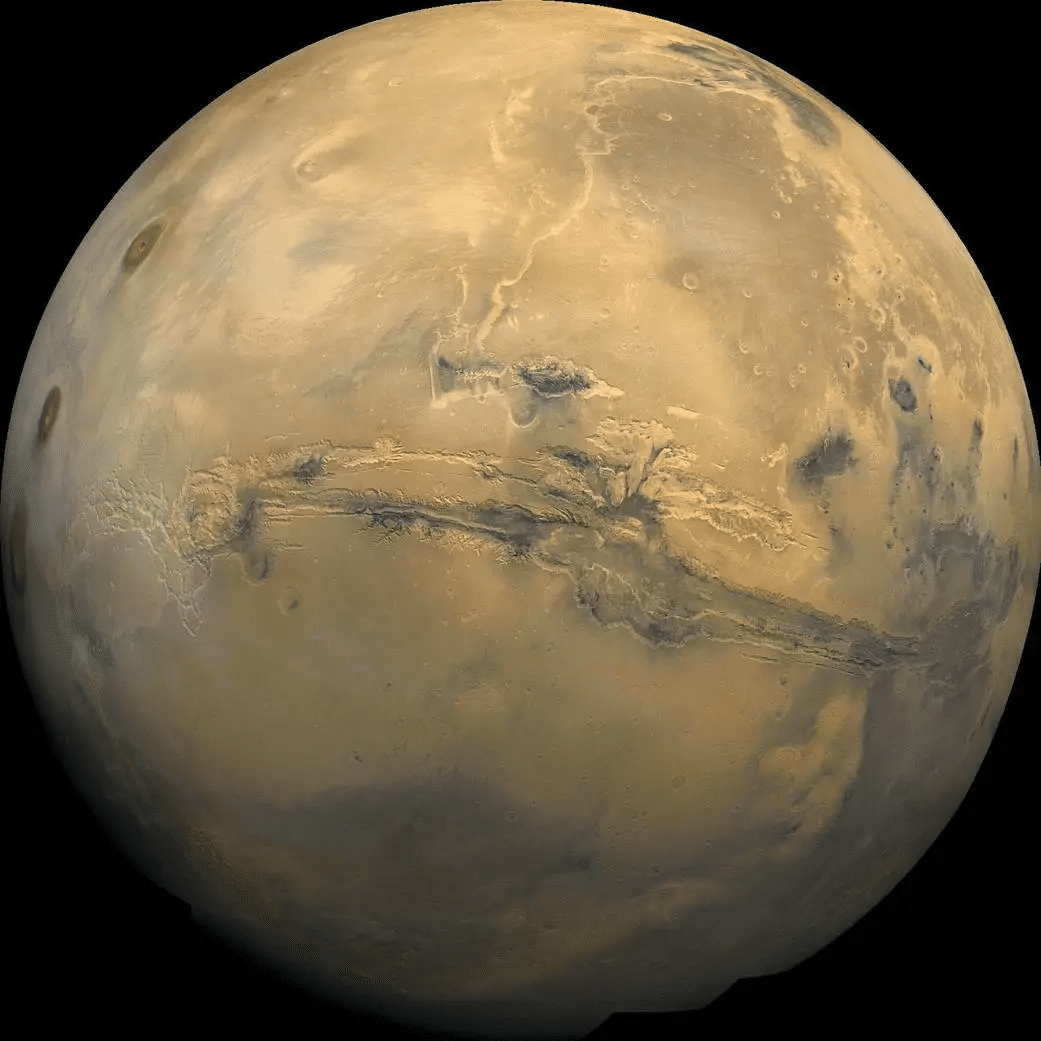
Valles Marineris stands as the most extensive canyon network in our solar system, stretching approximately 2,500 miles (4,000 kilometers) along Mars’ equator. For perspective, Earth’s iconic Grand Canyon extends only about 277 miles in length. In comparison, Mars’ canyon not only dwarfs the Grand Canyon in scale but also reaches depths nearing 7 miles (11 kilometers), making it a remarkable subject of scientific fascination and study worldwide.
Scientists believe Valles Marineris formed primarily through volcanic influences on Mars. Unlike Earth’s dynamic plate tectonics, Mars’ crust remains largely stationary, though it does exhibit fracturing and faulting as it cools. Early theories propose that the canyon originated when volcanic activity caused the crust to stretch and crack. This tectonic stress likely created extensive faults, later modified by erosion, flooding, and landslides. Despite decades of scrutiny, every new image uncovers additional details about Valles Marineris’ complex development.

The Solar System’s largest canyon carves a broad trench across Mars’ surface. Valles Marineris spans over 3,000 kilometers in length, widens up to 600 kilometers, and plunges as deep as 8 kilometers. By contrast, Earth’s Grand Canyon in Arizona measures about 800 kilometers long and 30 kilometers across.
Fresh Perspectives on Candor Chasma from HiRISE Imagery
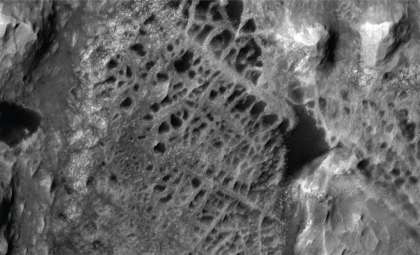
New high-resolution views provided by HiRISE focus on Candor Chasma’s eastern sector, one of Valles Marineris’ largest and most intriguing sub-canyons. The images reveal clear sedimentary layers, some deformed by compression, bending, and erosion linked to tectonic activity. These stratifications are key to piecing together the geological evolution of both the canyon and Mars’ surface features.
The sedimentary sequences discerned within these images indicate Mars experienced a far more dynamic past than previously assumed. That these layers were deposited subsequent to the canyon’s initial formation suggests ongoing environmental changes. Their contorted state hints at persistent tectonic forces, challenging earlier views that Mars’ internal geological activity had largely ceased.
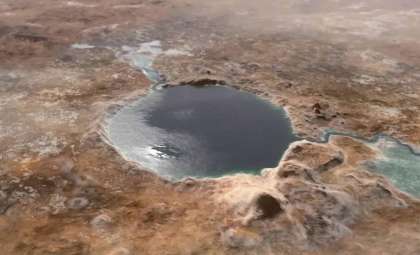
Additionally, these sediment layers could signal periods when Mars had a more volatile atmosphere, potentially hosting liquid water. They might represent deposits from ancient lakes or other aqueous environments, and their alteration highlights Mars’ shift from a wetter past to its present cold, arid conditions.
Martian History: Water Ice and Climate Evolution in Candor Chasma
Significant progress has been made in understanding subsurface water in Candor Chasma. In 2021, the ExoMars Trace Gas Orbiter—a joint venture by the European Space Agency (ESA) and the Russian space agency—detected water ice beneath this canyon. This ice is believed to be preserved in a permafrost-like state, akin to Earth’s polar zones.
This discovery lends support to hypotheses that ancient Mars might have had a climate capable of sustaining stable liquid water on its surface. Estimates suggest up to 40% of Valles Marineris’ near-surface material could consist of such frozen water. This reserves not only offer critical resources for future Mars missions but also raise the prospect that Mars once harbored suitable conditions for microbial life.
Although Mars lacks active plate tectonics as seen on Earth, its crust remains geologically active. Continuous faulting and fracturing continue to reshape Mars’ landscape. Cooling causes crustal cracking that forms features like Candor Chasma. These geological processes, though less intense than Earth’s plate movements, are sufficient to deform and erode sedimentary structures within the canyon.
- Categories:
- News







0 comments
Sign in to Comment