
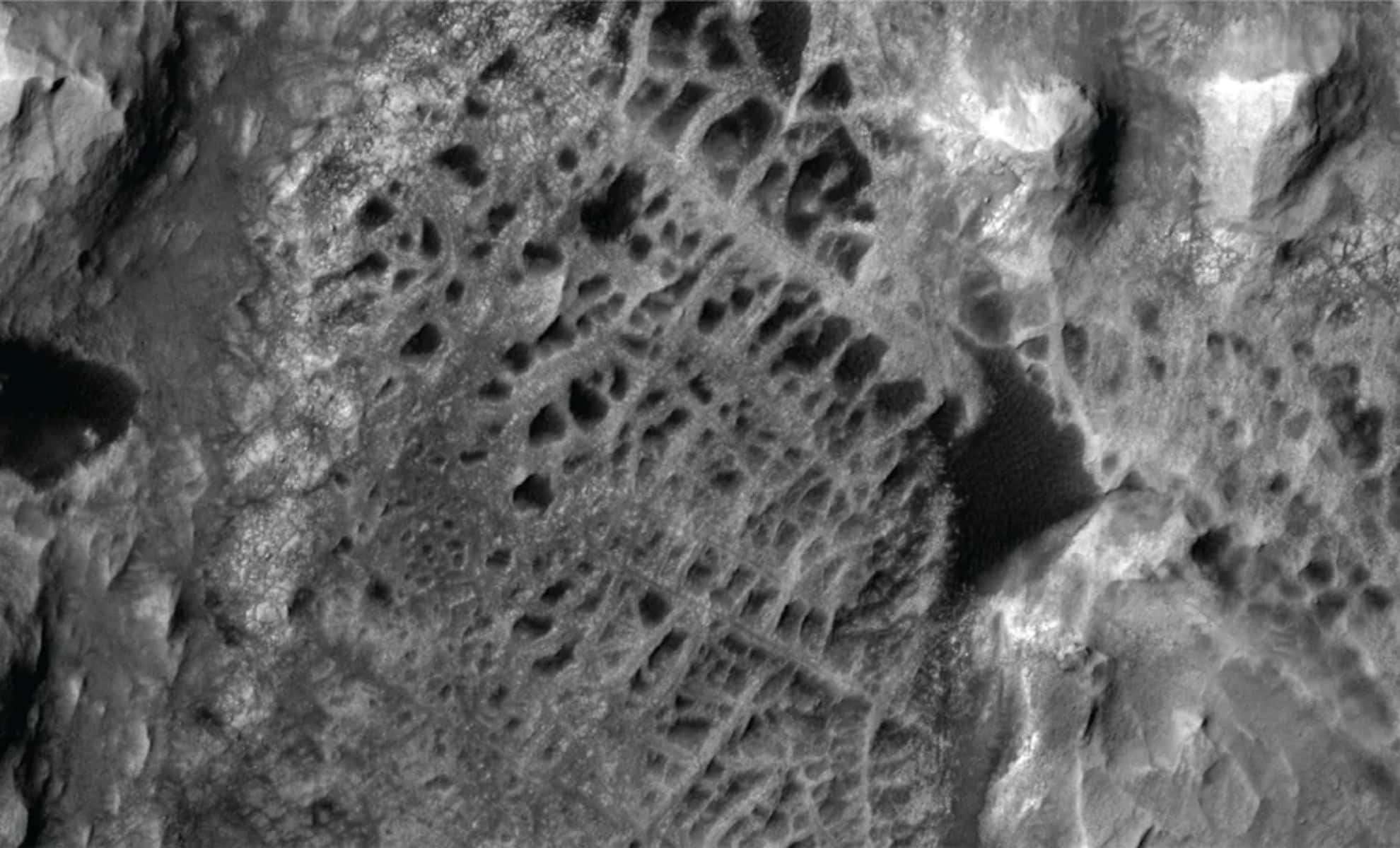
NASA’s Curiosity rover has recently delivered its first in-depth photographs of extraordinary, spiderweb-like formations on Mars. These large geological patterns, known as “boxwork,” have sparked significant curiosity among researchers due to their potential to unveil insights about the Red Planet’s ancient environment, especially concerning past water activity and the possibility of life beyond Earth.
Identifying the Martian ‘Spiderweb’ Patterns
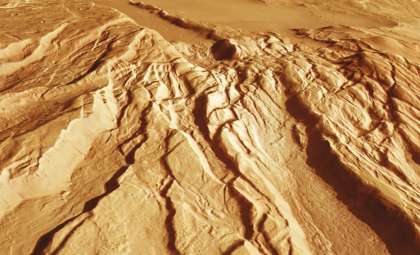
The boxwork features, stretching as wide as 12 miles (20 kilometers), consist of mineralized ridges arranged in an intersecting grid reminiscent of spider webs. Seen from above, their intricate criss-cross shape is strikingly similar to natural webs spun by spiders. These formations appear on Mount Sharp’s slopes, situated centrally within Gale Crater, the Curiosity rover’s long-term exploration site since 2012. They owe their origin to ancient groundwater flows that deposited minerals, which gradually solidified into robust structures.
Before Curiosity’s close approach, investigations into these formations relied solely on remote orbital imagery. The rover’s recent images provide an unprecedented detailed view, opening new avenues to unravel the history encoded in these geological marvels.

Examining the Formation Mechanism
Scientists on the Curiosity team propose that the boxwork ridges formed when mineral-laden groundwater permeated the rock fractures, leaving behind cement-like mineral deposits. Over vast timescales, Martian erosive forces wore away the less resistant rock, while these hardened veins persisted, resulting in the complex ridge network observed today.
On Earth, similar but smaller boxwork structures emerge within caves as mineral accretions akin to stalactites and stalagmites, offering valuable records of past conditions. Mars’ much larger boxwork provides scientists with a rare window into its aqueous history and the planet’s past capacity to support life, as detailed in the Mars research.
Surprising Mineral Find
Alongside these first high-resolution photos, Curiosity drilled nearby rocks to extract samples for composition studies. The rover detected veins of calcium sulfate, a mineral often linked to groundwater deposits. This discovery is noteworthy because calcium sulfate has not been previously detected at such an elevation on Mount Sharp.
“Finding this mineral so far up on Mount Sharp is quite unexpected,” explained Abigail Fraeman, deputy project scientist for Curiosity at NASA’s Jet Propulsion Laboratory. The presence of calcium sulfate adds to evidence that liquid water once traveled through this region, which might have played a vital role in Mars’ ancient habitability.
Tracing Mars’ Habitability Through Geological Clues
The Curiosity team prioritizes studying boxwork formations because they may harbor keys to understanding whether Mars once supported life. These mineral ridges likely crystallized deep underground under conditions that could have included briny liquid water flow at comparatively warmer temperatures.
The environment suggested by these ridges mirrors habitats on early Earth where microbes thrived. “Microbial life on early Earth survived in similar settings, making this an exciting site for exploration,” commented Curiosity mission scientist Kirsten Siebach from Rice University.
By analyzing the boxwork and associated minerals, researchers aim to better evaluate Mars’ potential for past or present microbial life. Curiosity’s discoveries could be fundamental in determining the planet’s habitability timeline and guiding future missions.
For now, scientific attention remains focused on detailed studies of the boxwork patterns and their mineral content, unlocking more secrets about Mars’ intriguing geological past and its capacity to have supported life.
- Categories:
- News




0 comments
Sign in to Comment