
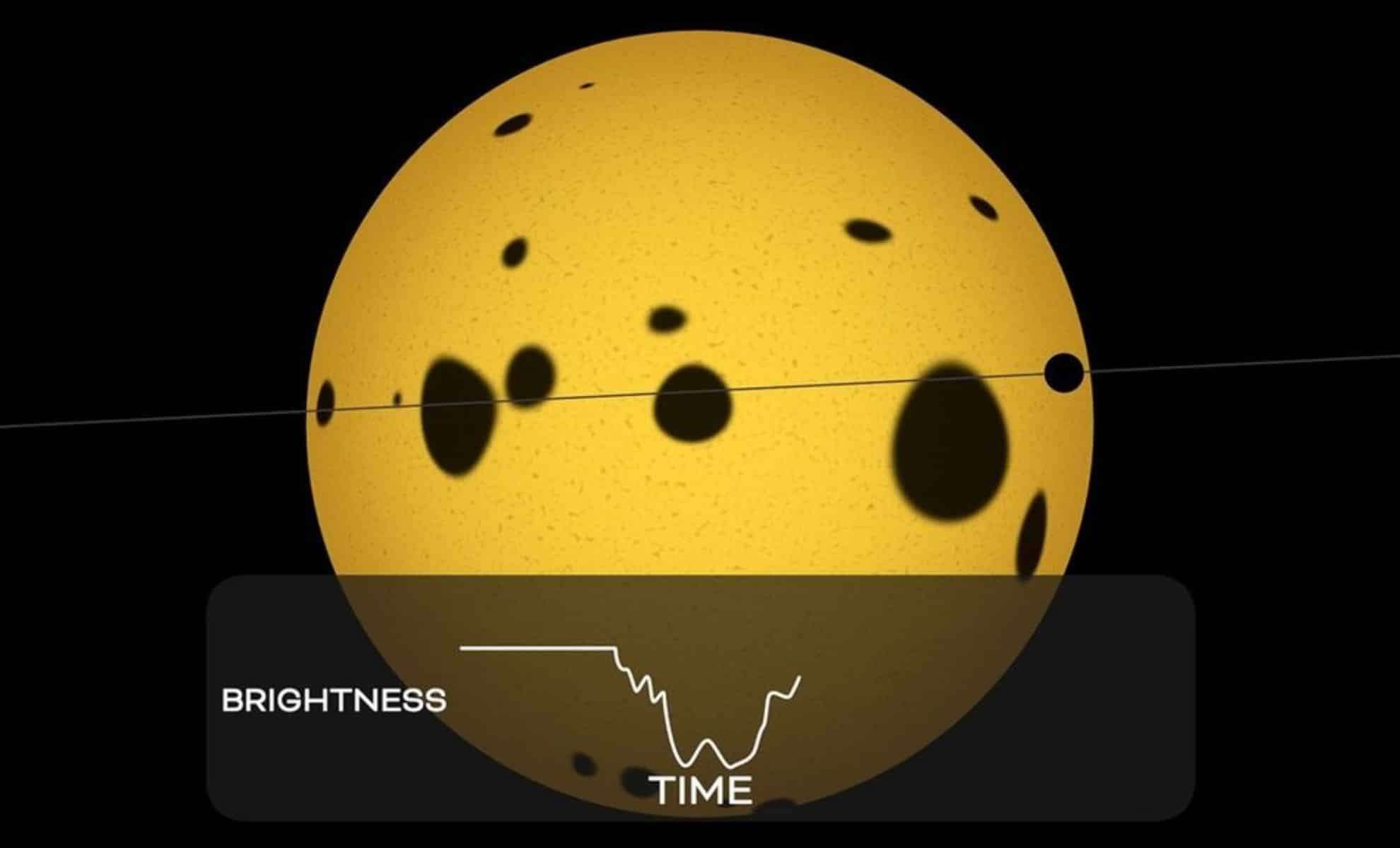
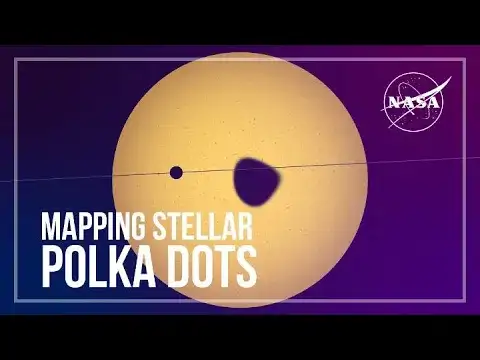
A recent article The Astrophysical Journal introduces an innovative technique to chart star spots, known as stellar “polka dots,” on far-off suns. Leveraging observations from NASA's TESS and Kepler missions, scientists have created a cutting-edge model called StarryStarryProcess that enables enhanced precision in measuring star spots and their impacts on stellar brightness fluctuations.
Decoding Star Spots and Their Influence on Light Curves
The complexity of stars has become increasingly apparent to astronomers. Traditional exoplanet studies often assume stars are uniformly illuminated spheres, a simplification that neglects critical surface features like star spots that affect light variations. Sabina Sagynbayeva, a graduate researcher from Stony Brook University, explains, “Many of the models researchers use to analyze data from exoplanets, or worlds beyond our solar system, assume that stars are uniformly bright disks. But we know just by looking at our own Sun that stars are more complicated than that.”
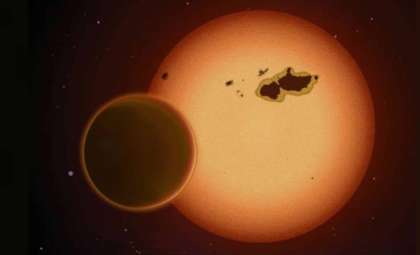
StarryStarryProcess refines this approach by providing detailed representations of star spot quantity, positioning, and brightness contrast. This clarity significantly improves the interpretation of light curves—graphs tracking star brightness shifts during a planet’s transit—where star spots can create complex anomalies that must be factored in for precise analysis.

Incorporating Stellar Rotation for Better Exoplanet Characterization
A distinguishing feature of StarryStarryProcess is its use of stellar rotation data. Beyond relying just on transiting planet observations, Sagynbayeva's model accounts for star rotation, revealing both the spot patterns and rotational behavior. This comprehensive perspective helps scientists derive more detailed information about the star’s properties and how they influence exoplanet observations, such as atmospheric makeup and thermal conditions.
Brett Morris, senior software engineer at the Space Telescope Science Institute, emphasizes the value of this approach: “Knowing more about the star in turn helps us learn even more about the planet, like a feedback loop.” By sharpening our grasp of stellar activity, researchers can better separate stellar signals from planetary ones, a critical step for identifying subtle atmospheric elements like water vapor—an important marker for potential habitability.
Practical Application: Investigating TOI 3884 b
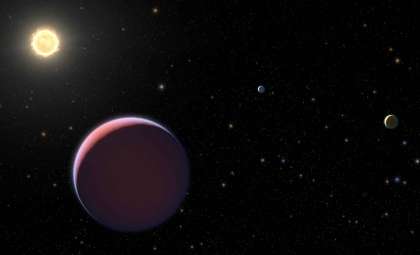
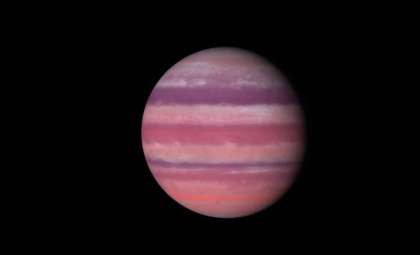
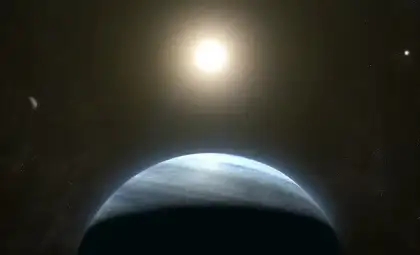
To validate their model, Sagynbayeva’s team applied it to data on TOI 3884 b, a gas giant exoplanet detected by TESS in 2022. Situated roughly 141 light-years away in the Virgo constellation, TOI 3884 b is about five times Earth's size. Analysis indicates that its star, TOI 3384, possesses star spots predominantly near the north pole, which coincide with the planet’s orbit. This relationship yields valuable insights into the star's magnetic activity and the planet’s atmospheric traits.
The integration of transit and stellar rotation data enhances astronomers’ ability to map the complex interplay between planets and their stars. Such detailed star-planet characterization aids in predicting planetary behavior under varying stellar conditions and enhances our quest to locate habitable environments.
Future Prospects with NASA’s Pandora Mission
Looking forward, NASA’s forthcoming Pandora mission is set to expand the frontier of exoplanet research by delivering extended, multiwavelength observations of planets and their stars. As part of NASA’s Astrophysics Pioneers Program, Pandora aims to pinpoint how stellar radiation interacts with exoplanet atmospheres, refining our comprehension of these distant worlds.
Allison Youngblood, TESS project scientist at NASA’s Goddard Space Flight Center, highlights Pandora’s potential impact: “The TESS satellite has discovered thousands of planets since it launched in 2018. While Pandora will study about 20 worlds, it will advance our ability to pick out which signals come from stars and which come from planets. The more we understand the individual parts of a planetary system, the better we understand the whole — and our own.” This mission promises to deepen the accuracy of atmospheric measurements, bolstering the search for viable habitats beyond Earth.



0 comments
Sign in to Comment