
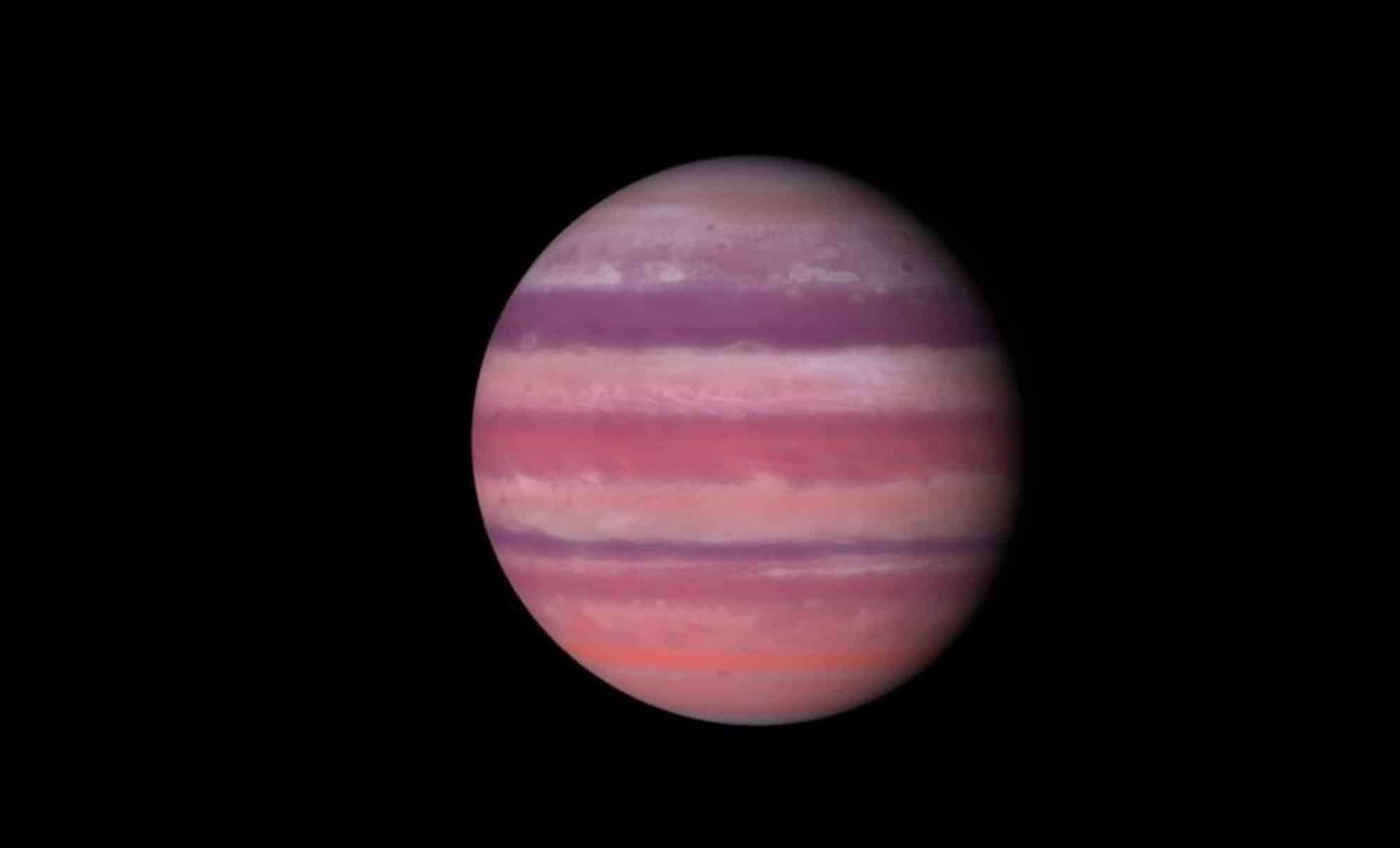
Astronomers have identified a huge new exoplanet within the Kepler-139 star system, one that had previously gone unnoticed. Named Kepler-139f, this colossal planet weighs roughly 35 times more than Earth and is nearly twice the diameter of Neptune. Its substantial size, combined with its unique orbital characteristics, prevented it from being detected during earlier observational campaigns.
Detecting Planets Beyond Transit Methods
The recent findings, documented in The Astrophysical Journal Letters, highlight the limitations of the Kepler space telescope’s reliance on the transit observation technique. This approach depends on spotting the temporary dimming of a star’s brightness as a planet passes directly in front of it. However, such measurements only succeed if a planet’s orbit is perfectly aligned with our vantage point here on Earth.
For planets like Kepler-139f, whose orbital plane does not intersect our line of sight, transit detection is ineffective. Instead, scientists utilize subtler methods such as radial velocity analysis and transit timing variations (TTVs) to infer their presence.

The breakthrough discovery of Kepler-139f was achieved by researchers including Caleb Lammers, a doctoral student at Princeton University, and co-author Joshua Winn. Their detailed examination of TTVs — minor shifts in the timing of known planets' orbits — allowed them to infer the existence of a previously hidden giant planet. The team also reanalyzed data associated with Kepler-139e, sharpening their insights and locating this new world.
Position and Role of Kepler-139f in Its System
The Kepler-139 star system, already a host to several rocky planets, posed a scientific mystery for researchers. Patterns in the orbital arrangements hinted at an additional planet filling a gap not accounted for by the previously discovered bodies. This new giant, Kepler-139f, occupies a niche between the outer super-Earth called Kepler-139c and a larger, gaseous neighbor, Kepler-139e.
The discovery also sheds light on previous anomalies observed in Kepler-139c, specifically its unexpectedly high density relative to other planets of similar size. Initially, scientists suspected these irregularities were influenced by the yet-undetected Kepler-139f. Now, with the new planet’s existence confirmed, Kepler-139c's density aligns more closely with expectations for a sub-Neptune type world.
Hints of Additional Undiscovered Planets
The unveiling of Kepler-139f also opens the door for the possibility of more hidden planets within this star system. Lammers and his research team propose that a gap between the orbits of Kepler-139b and Kepler-139c could indicate another unseen planet. Most exoplanet searches by Kepler and similar missions like the TESS (Transiting Exoplanet Survey Satellite) have concentrated on worlds close to their parent stars. This focus leaves more distant planets, especially those with inclined orbits that don't produce detectable transits, more elusive.
Future space missions with enhanced detection capabilities, such as the upcoming PLATO spacecraft scheduled for launch in 2026, are expected to improve astronomers’ ability to find such hidden exoplanets by monitoring transit timing variations more precisely in regions once observed by Kepler.
- Categories:
- News







0 comments
Sign in to Comment