
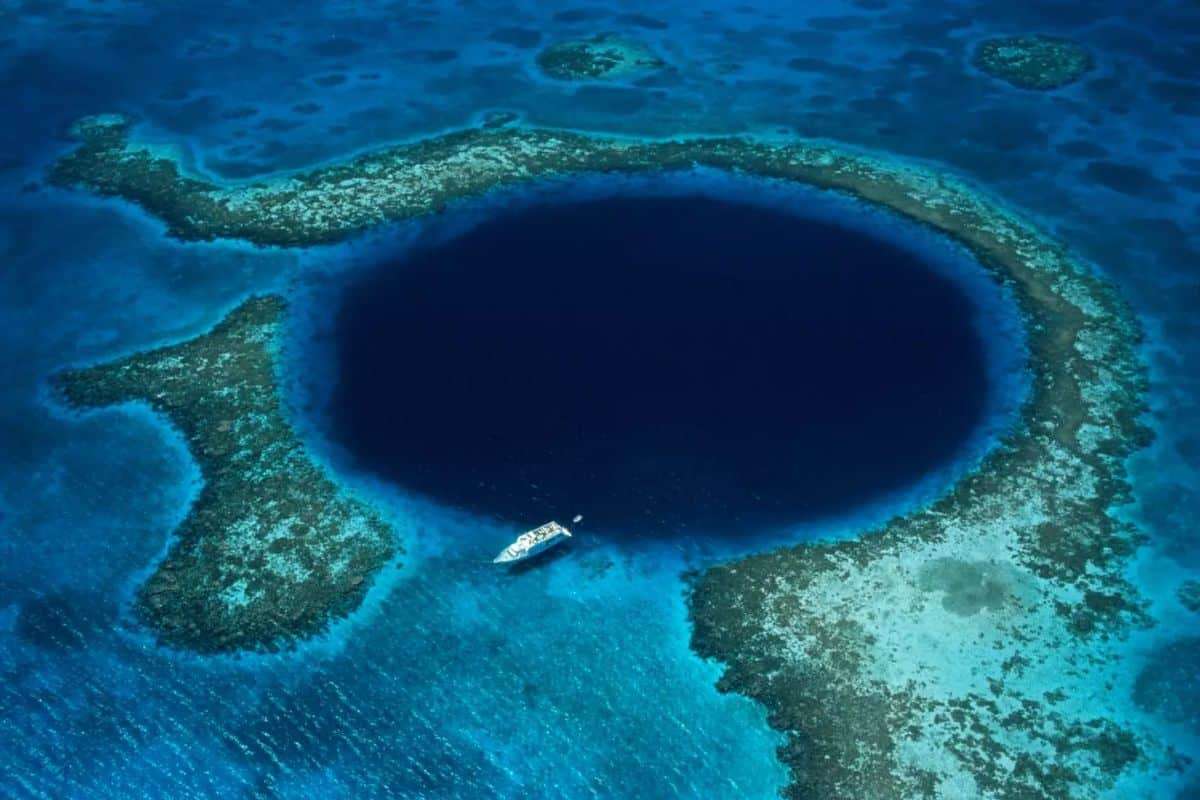
A recent scientific investigation into the Great Blue Hole, a giant marine sinkhole situated near Belize, has uncovered striking evidence pointing to a surge in the frequency and strength of tropical hurricanes in the area. By examining sediment deposits at the bottom of this underwater chasm, researchers have detected patterns indicating a significant boost in storm occurrences, which they connect to the accelerating impact of climate change. These discoveries enhance our understanding of how warming seas and changing atmospheric dynamics are reshaping storm behavior across the Caribbean.
Exploring the Past Through the Great Blue Hole
The Great Blue Hole is an enormous submerged sinkhole off Belize’s coast, renowned for its eye-catching formation and appeal among divers. Yet, its scientific value is rooted beneath the waves, where researchers have uncovered essential evidence about the historical climate of the region.
Led by geoscientist Dominik Schmitt from Goethe University Frankfurt, a research team retrieved a 30-meter sediment core from the sinkhole's base, capturing a detailed timeline of environmental changes over millennia.

Rising Tropical Cyclone Frequency Evidenced
The sediment core, documenting events spanning the last 5,700 years, revealed 694 individual “event layers” directly associated with tropical cyclone activity. These layers act as a detailed archive of historical storm events, each marking a significant meteorological occurrence in the region’s past.
Analysis of the data showed a discernible upward trend in the number of storms over time. Schmitt’s team attributes this increase to a southward movement of the Intertropical Convergence Zone (ITCZ), a key atmospheric feature influencing tropical storm genesis and trajectories across the Atlantic basin.
Connecting Storm Trends to Climate Change
A thorough investigation published in Geology on March 14, 2025 uncovers a concerning pattern: hurricane frequency in the Caribbean has progressively climbed over 5,700 years, with a marked spike in the last few decades. By extracting a 98-foot sediment core from Belize’s Great Blue Hole, scientists identified 694 distinct storm-related layers, creating a long-term record of tropical cyclone activity influenced by natural climate variability, such as the ITCZ’s southward shift.
More alarmingly, the research highlights a rapid increase in storm frequency over the past 20 years, surpassing historical trends. This sharp rise is directly linked to human-induced climate change, with industrial-era warming fostering conditions favoring more frequent and powerful hurricanes. Researchers predict that if current warming trends continue, as many as 45 tropical storms and hurricanes could strike the Caribbean this century—exceeding natural fluctuations observed over thousands of years.
The Importance of Sediment Layer Records
The sediment core extracted from the Great Blue Hole serves as a priceless record of Earth's climate evolution. Extracting and deciphering each layer is a meticulous process, as every stratum provides insight into the environmental state at its time of deposition.
“Due to the unique environmental conditions – including oxygen-free bottom water and several stratified water layers – fine marine sediments could settle largely undisturbed in the Great Blue Hole,” Schmitt explains.
These conditions have preserved a high-resolution archive of past storm events, with distinct layers marked by coarser sediment grains deposited during powerful cyclones.
Forecasting an Era of Intensified Storms
Based on their sedimentary findings, the study team anticipates tropical cyclone activity escalating to unprecedented levels in the near future.
“Our results suggest that some 45 tropical storms and hurricanes could pass over this region in our century alone,” said biosedimentologist Eberhard Gischler of Goethe University Frankfurt. “This would far exceed the natural variability of the past millennia.” This warning underscores the growing challenges posed by climate change and the increased severity of storms threatening the Caribbean and surrounding areas.
The implications extend beyond academic circles, impacting millions of residents in hurricane-prone zones. As the number of tropical cyclones grows, so does the risk of widespread devastation to communities, infrastructure, and natural habitats.
- Categories:
- News








0 comments
Sign in to Comment