
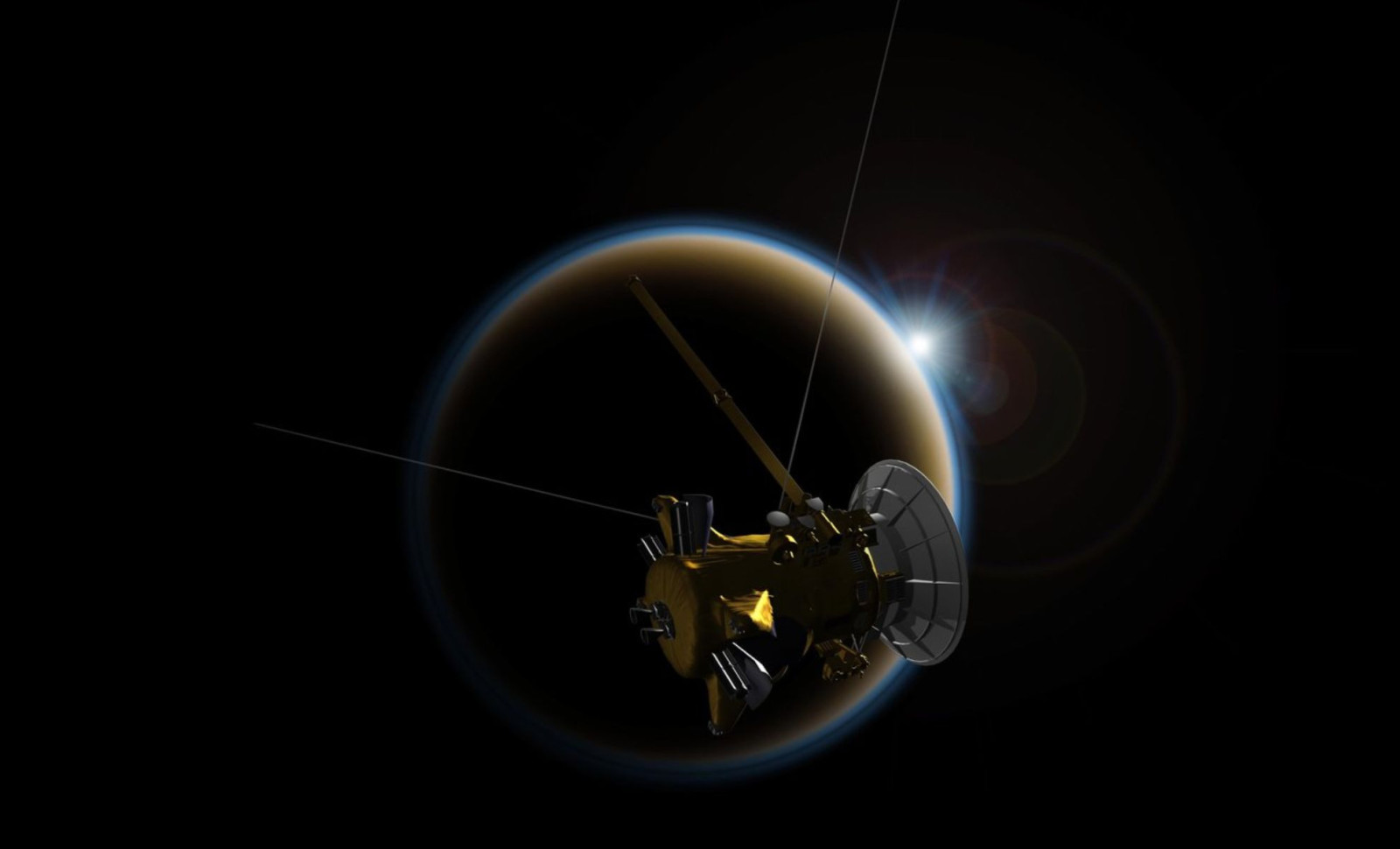
Titan, Saturn’s largest moon, may not possess the vast subsurface ocean once assumed. A fresh examination of NASA’s Cassini mission data suggests an interior composed of slushy ice rather than a liquid ocean.
Scientists revisited gravity and tidal deformation measurements from the Cassini spacecraft, revealing that beneath Titan’s icy exterior lies a partially frozen mixture of water and ice, not a continuous liquid ocean. This discovery changes Titan’s ranking as a potentially habitable moon but still leaves open the possibility of localized liquid water zones beneath the surface.
Rethinking Titan’s Hidden Ocean
Titan has been a focal point in the quest for life beyond Earth because of its dense atmosphere and methane lakes, combined with the long-held view that it harbored a subsurface ocean.

The initial conclusion, made in 2008, was based on Titan’s tidal flexing caused by Saturn’s gravity. These tidal effects, which influenced Cassini's velocity, were interpreted as proof of a liquid layer inside the moon. In a NASA JPL press release, senior researcher Julie Castillo-Rogez commented:
“It is important to remember that the data these amazing spacecraft collect lives on so discoveries can be made years, or even decades, later as analysis techniques get more sophisticated,” he added “It’s the gift that keeps giving.”
A New Model: Slushy Ice Instead of Liquid Ocean
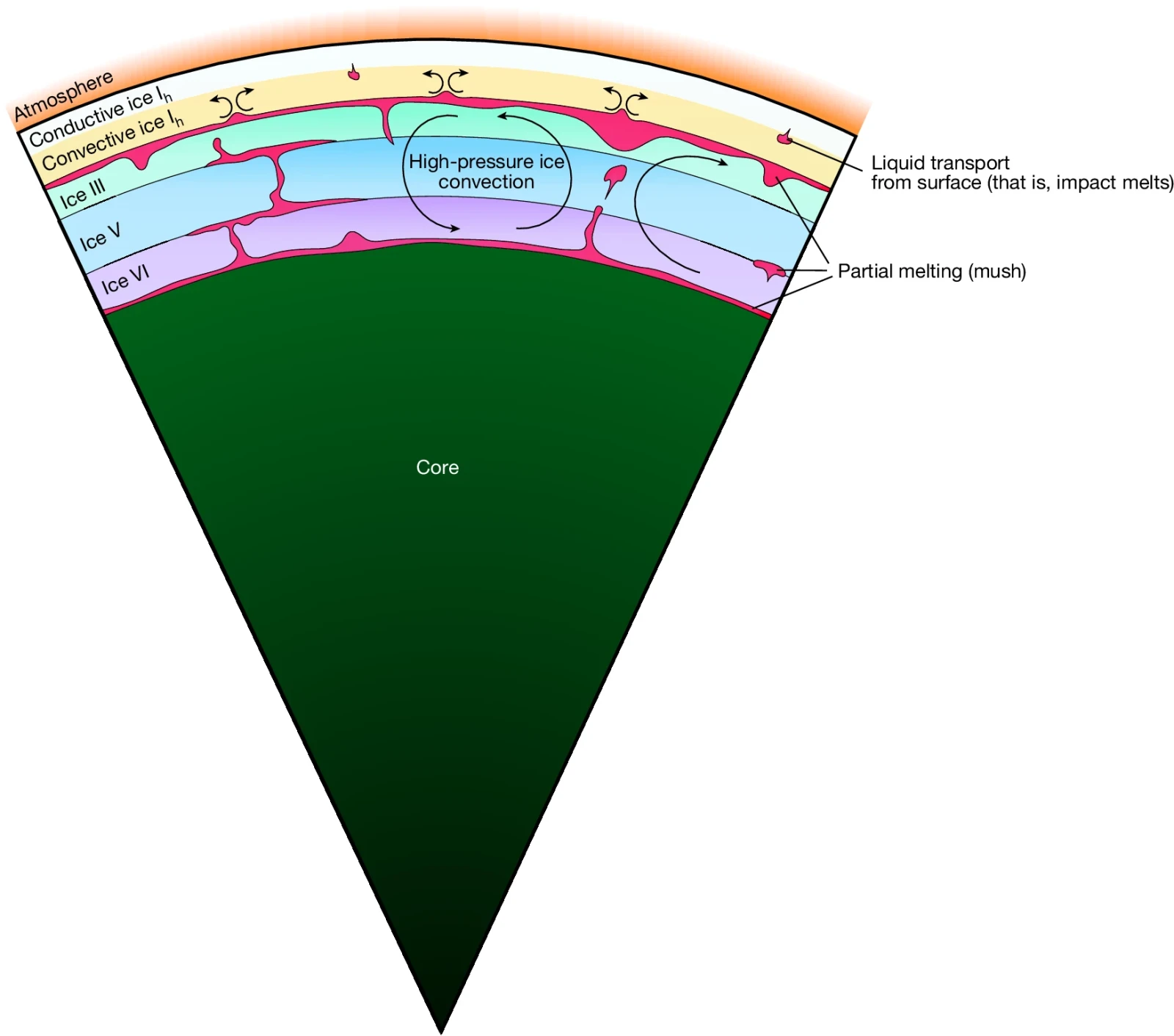
Released on December 17, 2025, in Nature, the updated interpretation portrays Titan’s inner layers as a thick, partially frozen blend of ice and water. By applying advanced filtering to remove noise from Cassini’s Doppler data, the team detected higher energy loss than anticipated for a liquid ocean.
This increased energy dissipation indicates that Titan’s interior flexes in response to Saturn’s gravity, yet lacks the fluidity to sustain a vast global ocean. Previous models suggested that tidal heating would generate enough warmth for a subsurface liquid ocean, but the new findings suggest the heat is absorbed and dispersed by slushy ice layers, preventing full melting.
Such a slushy interior can still produce tidal flexing, accounting for the observed behaviors initially attributed to a liquid ocean, but the actual internal structure is more complicated and significantly less oceanic than earlier thought.
Existence of Localized Warm Liquid Reservoirs
Although the concept of a global ocean is now in doubt, Titan is not entirely frozen beneath its surface. Flavio Petricca, a JPL postdoctoral scientist and study lead, suggests that small pockets of liquid water may persist near the rocky core.
“Our analysis shows there should be pockets of liquid water […] cycling nutrients from the moon’s rocky core through slushy layers of high-pressure ice to a solid icy shell at the surface,” he noted.
These isolated liquid regions hold promising implications for potential habitability by offering environments conducive to chemical interactions necessary for life or prebiotic processes. The likelihood of such pockets keeps Titan relevant in discussions about extraterrestrial habitability, albeit with a more nuanced perspective.
Cassini’s Legacy Provides Ongoing Discoveries
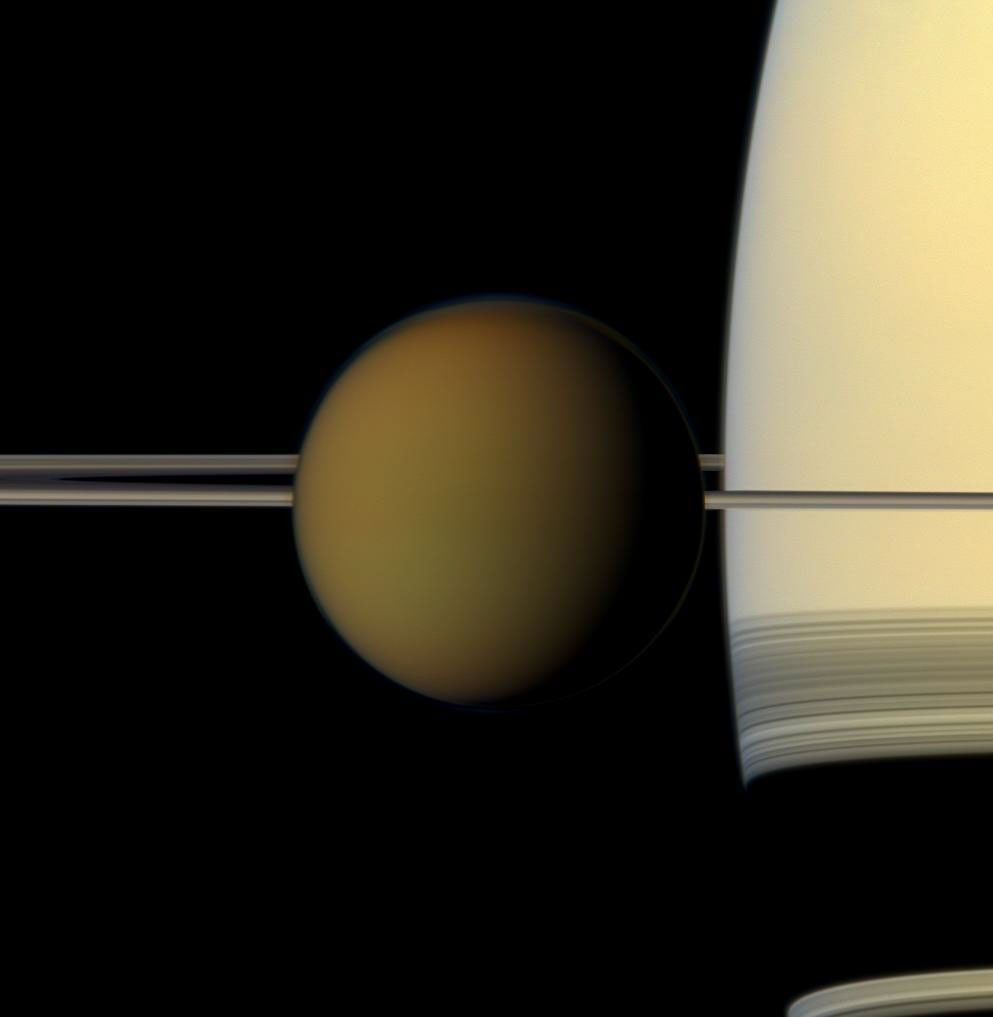
This study highlights the continuing importance of archival mission data, as even years after Cassini’s mission ended in 2017, its datasets still refine and challenge our understanding of planetary bodies.
“This research underscores the power of archival planetary science data,” said Castillo-Rogez of JPL.
Enhanced analysis methods applied to Doppler shifts — subtle changes in Cassini’s radio frequencies caused by Titan’s gravitational pull — enabled researchers to reveal an unprecedented view of the moon’s internal makeup.
- Categories:
- Nasa











0 comments
Sign in to Comment