
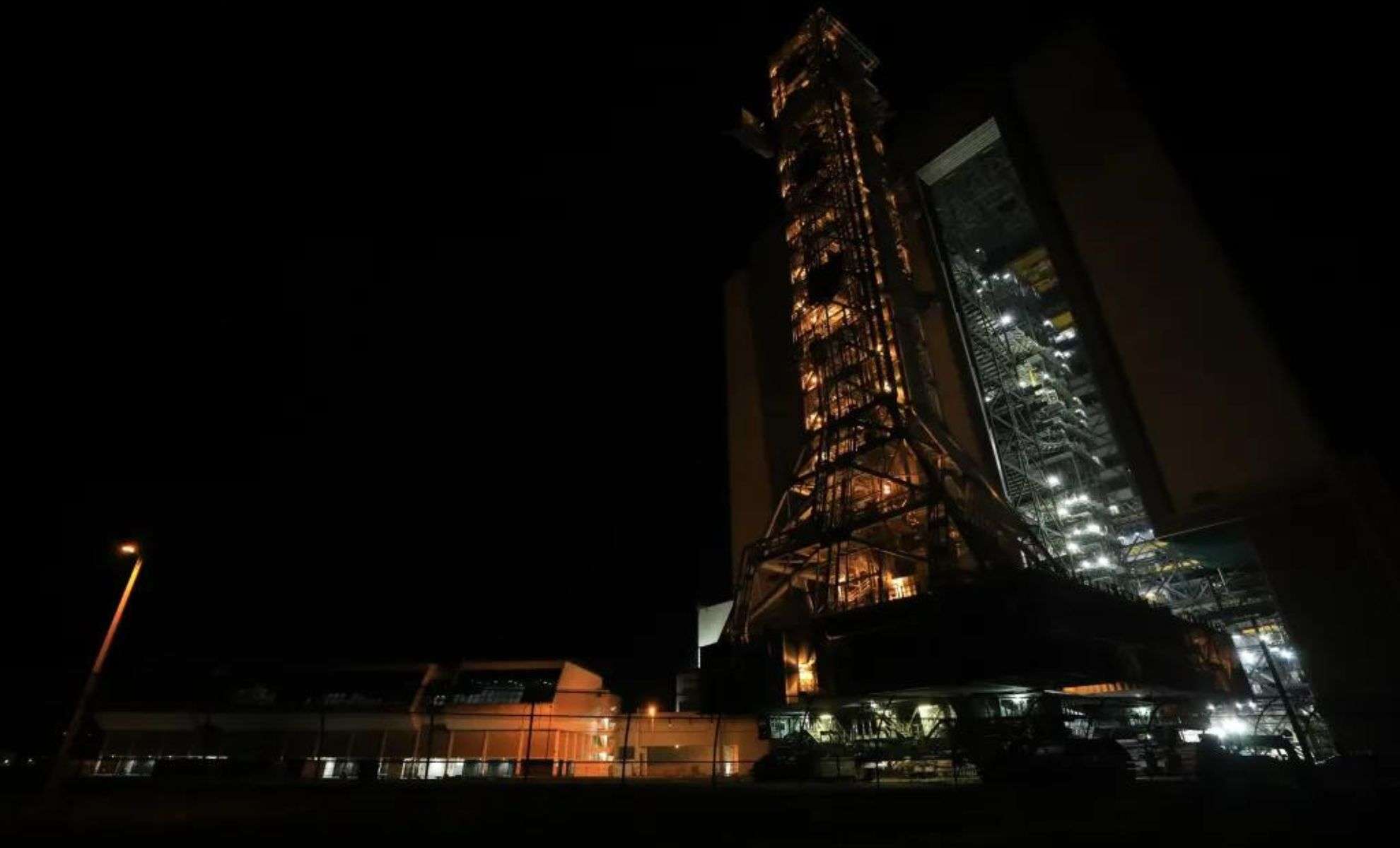
NASA is advancing steadily with preparations for the Artemis II mission, highlighted by a major achievement of its crawler-transporter 2 at the Kennedy Space Center. This development coincides with the return of the mobile launcher to the Vehicle Assembly Building (VAB) for final pre-launch work. Artemis II will be the first crewed lunar orbital mission since Apollo, carrying four astronauts on a critical voyage around the Moon and setting the stage for future deep space exploration and lunar landings.
Significant Milestone for NASA’s Crawler-Transporter
NASA’s crawler-transporter 2 recently surpassed a landmark milestone by traveling over 2,500 miles since being built in 1965. Weighing around 6.65 million pounds and larger than a baseball diamond, this immense vehicle holds the Guinness World Records title for the heaviest self-powered vehicle on the planet. It has been instrumental in NASA’s missions for nearly 60 years, hauling the Saturn V rockets during Apollo and later supporting the Space Shuttle program.

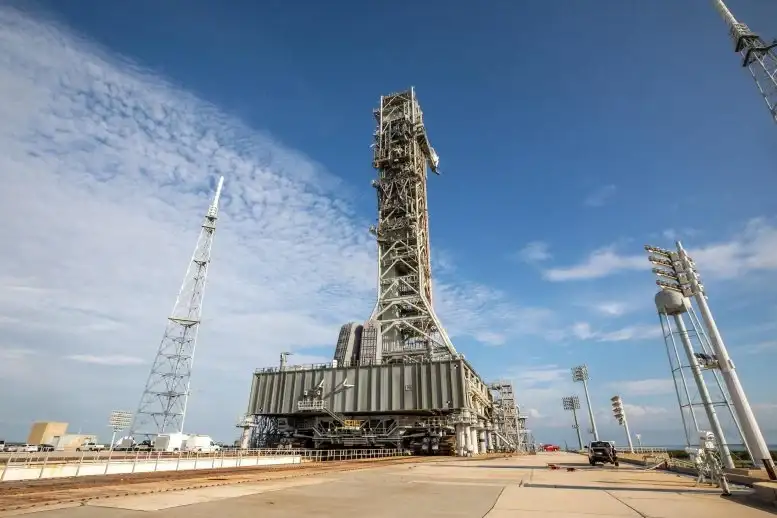
This milestone came as the mobile launcher made its 4.2-mile journey from Launch Complex 39B back to the VAB. The mobile launcher had been at the launch pad since August 2023 for rigorous testing and upgrades ahead of Artemis II. Enhancements included assessments of the liquid hydrogen sphere, water cooling systems, and emergency escape procedures, all essential for ensuring mission safety and efficiency.
Next Phase in Artemis II Readiness
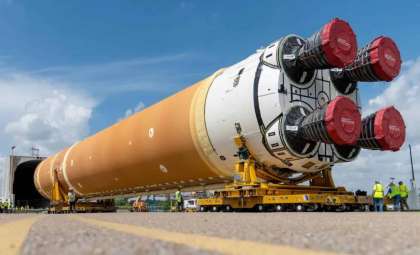
The mobile launcher’s arrival at the VAB marks a key moment in NASA’s Artemis II timeline. It will soon be assembled with the Space Launch System (SLS), NASA’s most powerful rocket, and the Orion spacecraft, which will transport the Artemis II astronauts. This assembly will take place inside the VAB, a facility central to the agency’s human spaceflight history.
Standing approximately 380 feet tall, the mobile launcher is equipped with intricate power, communications, fueling, and cooling systems to support the Orion and SLS during launch. Once fully integrated, it will return to the launch pad for a crucial tanking test, where the rocket will be loaded with propellants and system performance will be evaluated ahead of liftoff.
Slated for 2024, Artemis II represents NASA’s inaugural crewed mission in the Artemis program. The crew—Victor Glover, Christina Koch, Reid Wiseman, and Canadian Space Agency’s Jeremy Hansen—will journey around the Moon for roughly 10 days, testing spacecraft systems and paving the way for future lunar surface missions.
The Importance of Artemis II to NASA’s Long-Term Goals
Beyond being a lunar return mission, Artemis II plays a critical role in NASA’s overarching strategy of establishing a sustainable human presence on the Moon and preparing for Mars exploration. As part of the broader Artemis program, it aims to demonstrate the capabilities needed for long-term off-Earth missions.
By orbiting the Moon, Artemis II will validate the operations of the Orion spacecraft, ensuring its systems perform flawlessly before astronauts land on the lunar surface with Artemis III. These missions also provide opportunities to test infrastructure and protocols needed for prolonged deep-space expeditions.
NASA’s vision extends beyond lunar landings by developing the Lunar Gateway, a space station in lunar orbit that will act as a staging area for extended surface stays and support eventual crewed Mars missions.
A Pivotal Moment in Human Space Exploration
As Artemis II progresses, the milestones achieved by the crawler-transporter and mobile launcher emphasize the mission’s importance to advancing human spaceflight. This next phase signals an exciting era of exploration, as NASA and its partners worldwide join forces to push the boundaries of human presence beyond Earth.
Developments this year have brought humankind closer to the Moon’s surface and onward to Mars, with NASA refining technologies crucial for future explorers, opening a new chapter in humanity’s cosmic journey.





0 comments
Sign in to Comment