
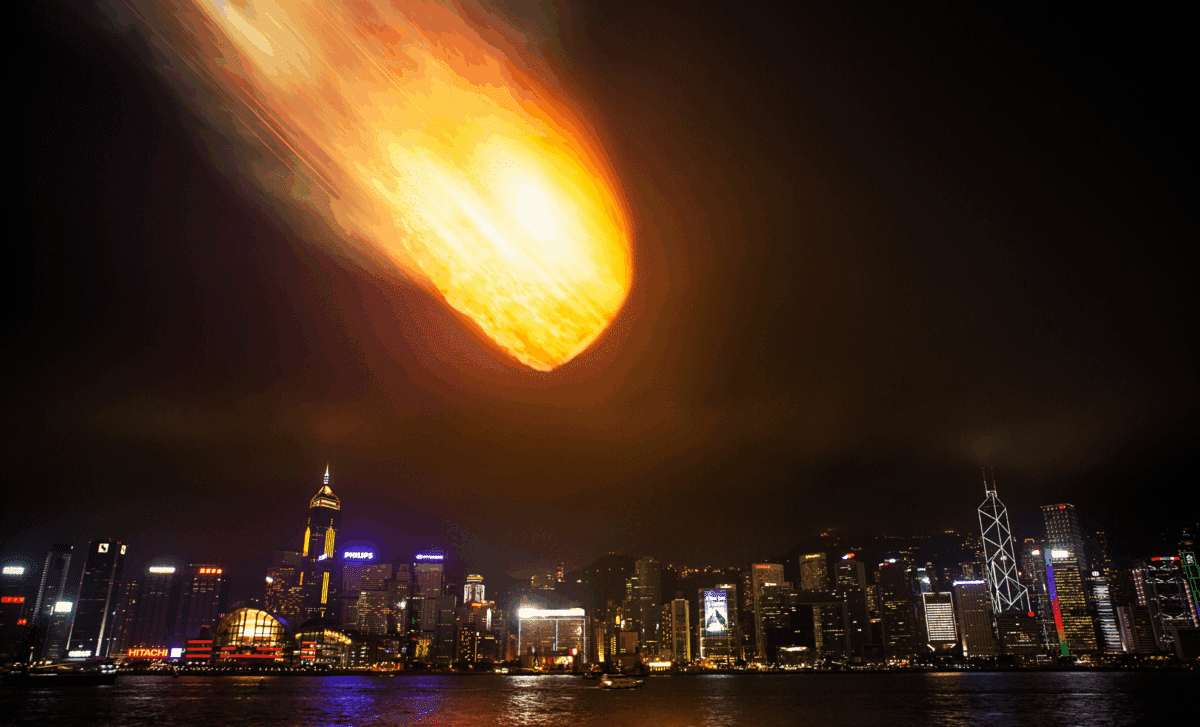
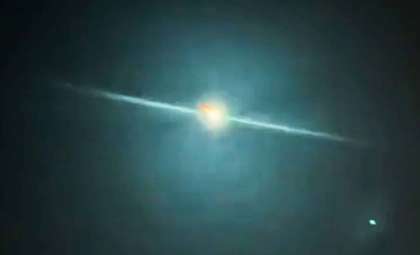
Consider a colossal meteorite striking Earth from beyond our solar neighborhood. Recent research, shared on the preprint archive arXiv, explores the potential timing and locations for impacts from such interstellar visitors. By analyzing their velocities and trajectories, scientists provide insight into how such events might unfold, despite no immediate threat detected.
Preferred Strike Areas: Focus on the Equator and Northern Latitudes
Scientists predicting where these interstellar meteors may collide with Earth have identified a notable pattern. Impact probabilities are highest near the equator, predominantly across the Northern Hemisphere. This distribution results from Earth’s motion within the Milky Way and its path through space. As our solar system journeys toward the solar apex, it aligns with particular star systems, which could be the origin of these meteors.
According to Seligman and colleagues in their arXiv study,

“Interstellar objects are more likely to impact the Earth at low latitudes close to the equator, with a slight preference for the Northern hemisphere due to the location of the apex.”
This geographic tendency arises from the Sun’s orbit through the galaxy and the gravitational influences involved. Given that many interstellar meteors possibly originate from abundant M-type red dwarf stars, their trajectories intersect Earth’s orbit nearer the equator.
Seasonal Clues: Why Winter Holds a Higher Risk
While pinpointing an exact date for an interstellar meteor strike is unfeasible, the study suggests greater impact potential during Earth’s winter season. This corresponds to Earth’s position in its solar orbit when it faces away from the Sun’s galactic direction, known as the solar antapex. During this time, Earth’s path aligns with incoming objects’ trajectories, raising the chance of collision.
“The highest velocity impacts are most likely to occur in the spring when the Earth is moving towards the solar apex,” Seligman and his team said.
However, they also note that high-speed impacts are less common than slower ones, which peak in winter. This shows a complex relationship between Earth’s seasonal movement and interstellar object paths, indicating certain seasons carry greater risk—although overall chances remain slim.
Lower-Speed Objects Carry a Bigger Impact Threat
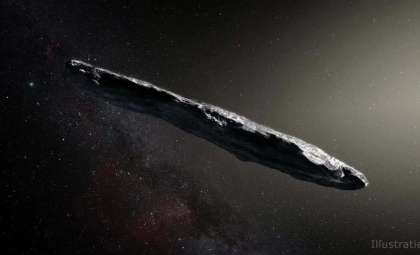
A surprising outcome of the research is that slow-moving interstellar objects pose a higher threat compared to their faster counterparts. Objects with slower speeds are more effectively influenced by the Sun’s gravity, which can pull them into collision courses with Earth. In contrast, fast-moving objects with highly elliptical orbits—such as the transient ‘Oumuamua observed passing through our system—are less likely to hit.
Though interstellar visitors like comets 2I/Borisov and 3I/ATLAS have traversed near Earth without causing damage, the data indicates that objects on nearly linear, hyperbolic trajectories could have increased impact risks. Approaching the Sun can modify their orbital paths, heightening collision probabilities.
No Immediate Danger, but Preparedness Matters
Despite identifying potential risks, Earth is currently not in danger from these cosmic projectiles. Seligman clarified,
“The search for larger scale interstellar impactors has been debated for over a century; however, there remain no conclusive detections of interstellar meteors.”
This means that while the possibility exists theoretically, no confirmed large interstellar meteor impact events have been recorded. This research enriches our understanding of these rare phenomena and aids in future detection efforts, but it does not signal an urgent threat.
The key takeaway is that the study advances knowledge of how interstellar objects move and occasionally enter our solar system, offering foresight into timing and locations for potential future impacts—without immediate cause for concern.
- Categories:
- News






0 comments
Sign in to Comment