
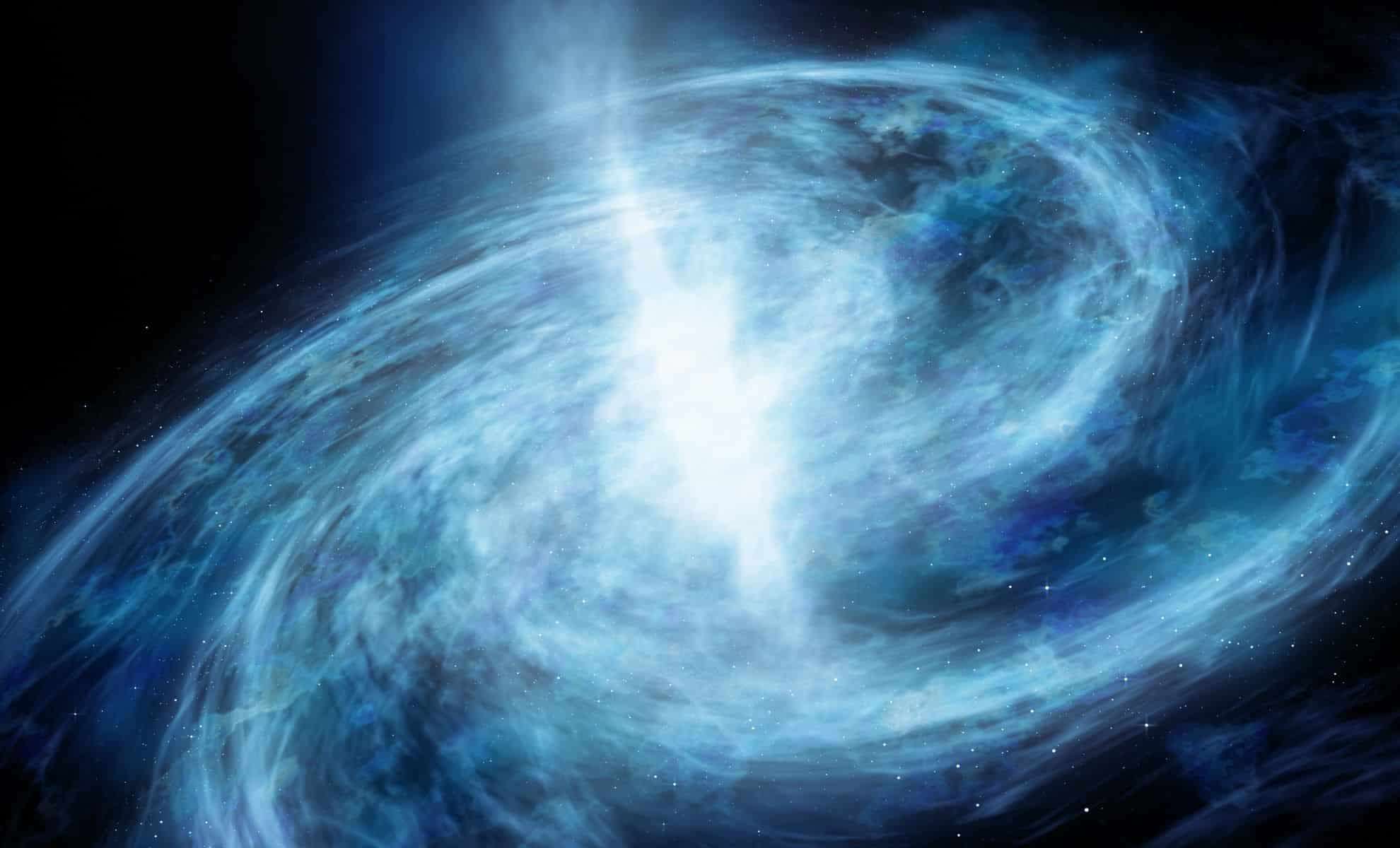
During the recent Royal Astronomical Society’s National Astronomy Meeting in Durham, England, scientists unveiled compelling findings proposing that Earth and the Milky Way reside within an enormous cosmic void. If this scenario holds true, it could dramatically reshape our comprehension of the universe’s layout and the mechanics behind its expansion. The research draws from analyzing signals echoing from the Big Bang and posits that this void might be a crucial element in resolving the persistent Hubble Tension — a cosmological puzzle baffling experts for years.
Understanding the Hubble Tension and Its Cosmological Impact
Astronomers have long grappled with the Hubble Tension, a notable disagreement between two principal approaches used to gauge the universe’s expansion rate. Observations from the Hubble Space Telescope, supplemented more recently by the James Webb Space Telescope, offer different measurements. One strategy involves analyzing the cosmic microwave background (CMB), the residual radiation from the Big Bang’s dawn. This method yields an expansion rate near 67 kilometers per second per megaparsec (km/s/Mpc), consonant with predictions from the standard cosmological model.
Contrastingly, measurements relying on Cepheid variable stars to estimate distances to proximate galaxies suggest a higher value around 73.2 km/s/Mpc. While this difference appears subtle, it challenges the foundational cosmological model and hints at gaps in our cosmic knowledge. This discrepancy has fueled diverse hypotheses, ranging from novel characteristics of dark energy and matter to radical modifications in understanding the cosmic fabric.

Is a Local Void Behind the Expansion Rate Puzzle?
Dr. Indranil Banik, who led the investigation showcased at the Durham event, suggests Earth’s location at the core of an expansive cosmic void might be the missing piece. “A potential solution to this inconsistency is that our Galaxy is close to the center of a large, local void,” Banik commented. This vast emptiness could modify local expansion dynamics and offer an explanation for conflicting Hubble constant values. His model describes how the denser surroundings’ gravity could draw matter outwards, progressively clearing the void and leading to accelerated expansion within it compared to denser cosmic zones, thereby biasing observational data.
While the local void idea isn’t entirely new—it has circulated since the 1990s—debates persist. Prior research noted fewer galaxies in our vicinity than expected, prompting speculation about a cosmic gap. Critics argue that the void might contain unseen matter, such as dark matter, which doesn’t emit light but influences gravity, complicating interpretation.
Baryon Acoustic Oscillations Bolster the Void Scenario
To further probe this concept, Banik’s team analyzed baryon acoustic oscillations (BAOs), primordial sound waves from the Big Bang. These waves became imprinted in matter distribution when the universe cooled enough for neutral atoms to form, acting as a cosmic yardstick for measuring expansion. “These sound waves traveled for only a short while before becoming frozen in place once the universe cooled enough for neutral atoms to form,” Banik explained. “They act as a standard ruler, whose angular size we can use to chart the cosmic expansion history.”
Examining BAO data spanning the last two decades, researchers concluded it is a hundred times more probable that Earth lies within a cosmic void than in an average-density zone. This evidence lends strong support to the void hypothesis and suggests that our unique vantage point within this vast emptiness might underlie the unusual measurements of cosmic expansion in our region.
- Categories:
- News




0 comments
Sign in to Comment