
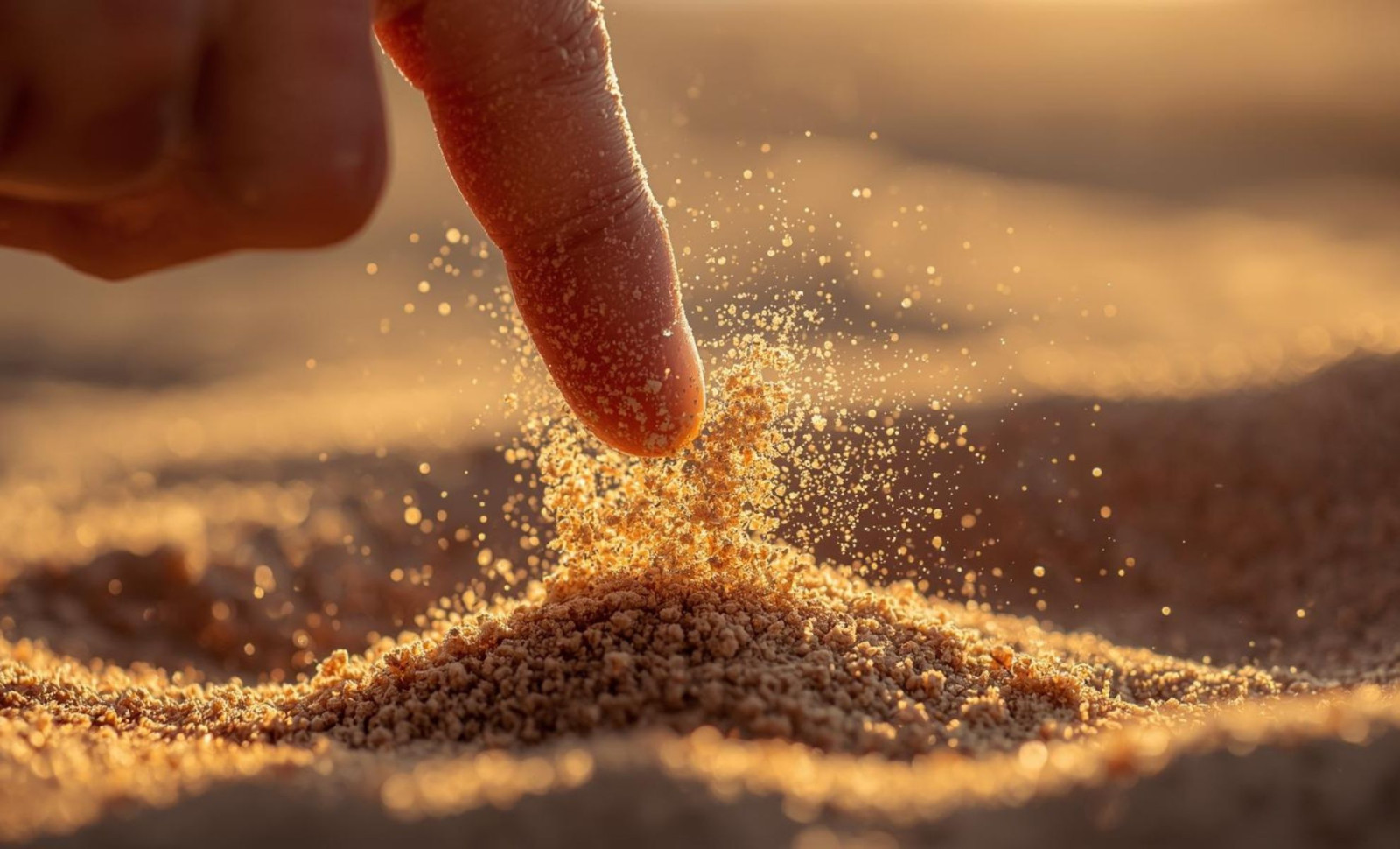
When a fingertip glides over dry sand, subtle but undetectable resistance occurs. The sand's grains move imperceptibly, yet our tactile sense picks up on these minor shifts. Beneath the surface, concealed several centimeters below, an object is present.
In a groundbreaking experiment conducted in London, twelve volunteers accomplished something neuroscientists had not yet quantified: they identified objects hidden beneath sand without making physical contact. Impressively, they succeeded in over 70% of attempts, detecting items from almost the maximum distance theoretically possible for tactile cues traveling through sand.
Presented in September 2025 at an IEEE engineering conference and later published in the IEEE Xplore digital library, this discovery does not reveal a brand-new sense. Instead, it demonstrates an ancient sensory ability functioning beyond previously tested spatial limits.

Consistent Detection Ranges Validated With Humans and Robots
Scientists from Queen Mary University of London and University College London sought to determine the maximum distance at which a human finger can perceive an unseen object buried below sand without direct contact.
Participants traced their index fingers over dry sand surfaces, guided by LED-marked paths. Some trials contained a buried cube; others did not. Participants were instructed to halt movement as soon as they sensed the object’s presence, without actually touching it. In all successful detections, fingers avoided contact with the cube entirely.
The published results report a correct detection rate of 70.7 percent, with a mean detection range of 6.9 cm and a median distance of 2.7 cm. These findings aligned closely with physical models predicting tactile signal propagation limits through granular materials. The model’s predicted maximum distance was about seven centimeters, closely matching the observed human performance.
In parallel, a robotic test employed a tactile sensor-equipped mechanical arm paired with a Long Short Term Memory (LSTM) neural network. This system detected objects from an average of 7.1 cm away, slightly surpassing the human average, with a median detection distance of 6 cm, significantly better than humans. However, the robot’s precision was only 40%, due to frequent false alarms.
The research team detailed this difference at the 2025 IEEE International Conference on Development and Learning, stating, “While the robotic system could sense objects from somewhat greater distances than humans, it lacked reliability, as indicated by a 40% precision rate and numerous false positive detections.”
Granular Mechanics, Not Extrasensory Abilities, Drive Detection
This ability does not rely on any extrasensory phenomena, magnetic detection, or novel physical receptors beyond the well-known mechanoreceptors in the skin. As the finger slides over sand, it displaces grains ahead. A hidden object disrupts this displacement pattern, altering the resistance and vibration transmitted back up the sand column to the fingertip. The brain interprets these mechanical variations as evidence of nearby objects.
The work drew inspiration from shorebirds such as sandpipers and plovers that detect prey buried in sediment by sensing mechanical disturbances. Lorenzo Jamone, an associate professor of robotics and AI at UCL, highlighted how human and robotic experiments complemented one another in insights, as stated through Queen Mary University.
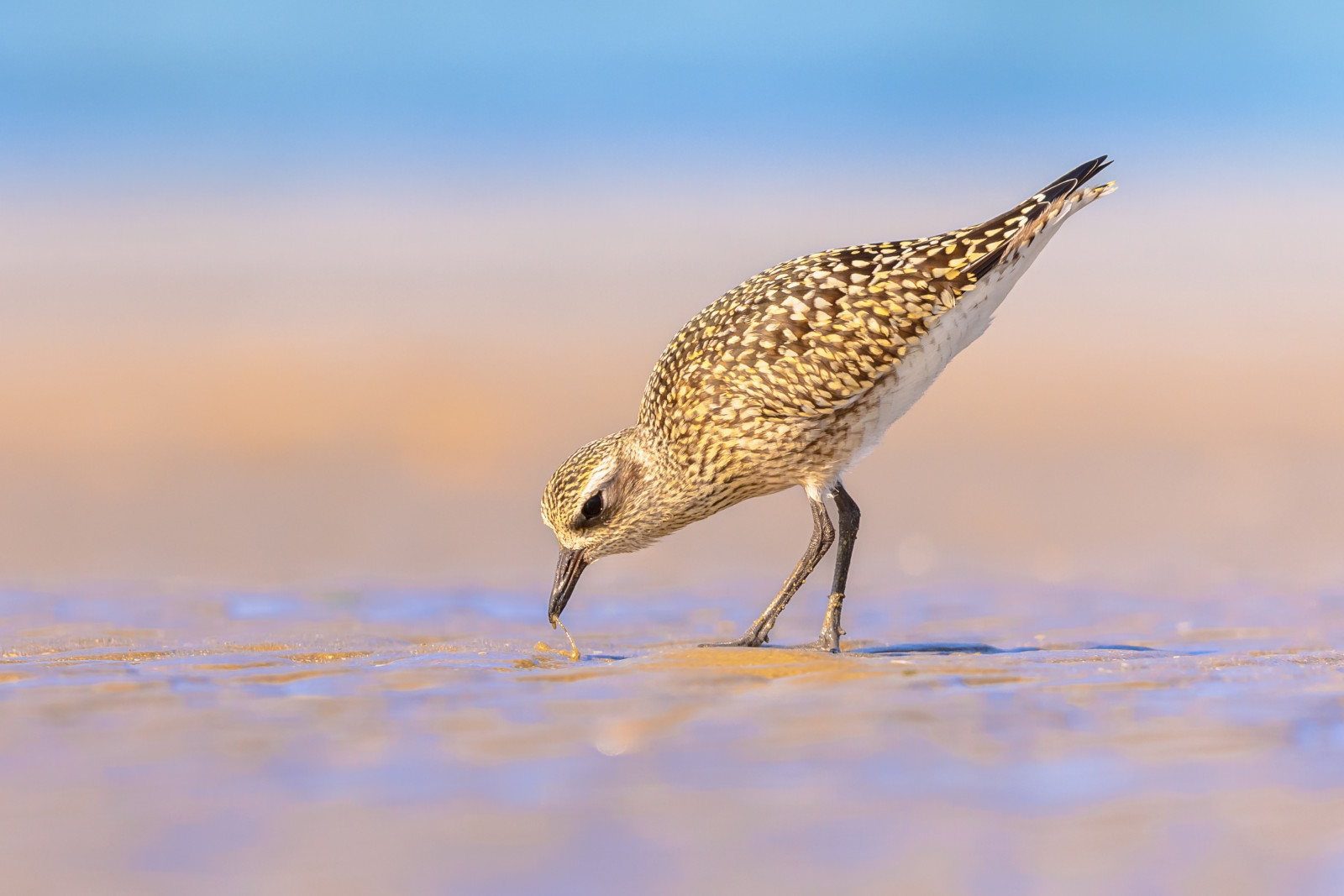
“The combined human and robotic research provided new perspectives, with human data directing robot learning methods and robot outcomes shedding light on human tactile detection,” Jamone said.
Unlike birds equipped with specialized bill tip sensors, humans rely on a more generalized mammalian tactile perception system. This study demonstrates that, despite lacking specialized anatomy for probing sediments, humans can extract meaningful cues from granular media.
However, the study notes its results are limited to specific conditions: dry, homogenous sand; slow, unidirectional finger movements; and consistent object shapes. Whether this ability extends to wet or mixed sand, varied motions, or irregularly shaped items remains untested.
Terminology Sparks Discussion Amid Media Attention
News outlets often described the findings as revealing a “hidden seventh sense” or a type of remote touch. The researchers themselves, however, refrained from such terminology in their paper, instead characterizing the discovery as “a tactile ability not previously documented in humans,” defining its spatial range and accuracy without asserting a new sensory category.
Elisabetta Versace, lead author and senior psychology lecturer at Queen Mary, commented in several media interviews, “This is the first systematic study of remote touch in humans. It reshapes our understanding of perceptual boundaries—the receptive field—across species including humans.”
This distinction is important for neuroscience and applied sciences. If the ability signals a newly identified sense, researchers would need to uncover its anatomical structures and neural pathways. If it simply reveals an unrecognized feature of existing touch, focus shifts to elucidating why it was previously undetected and how the brain filters tactile information so efficiently.
Potential Uses Are Promising but Require Further Research
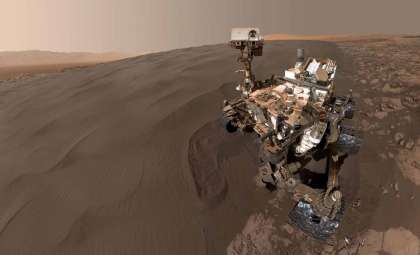
The scientists suggest possible real-world applications in fields like archaeology, where gently locating buried relics without excavation would be advantageous, or planetary science, where exploration robots might identify subsurface features on Mars or ocean beds without direct contact. Zhengqi Chen, a doctoral researcher at Queen Mary’s Advanced Robotics Lab and coauthor, explained these prospects in a university press release recorded by IEEE Xplore.
“This finding could inspire tools and assistive technologies that expand human tactile perception capabilities. It could also guide the creation of sophisticated robots to perform delicate tasks like uncovering archaeological artifacts without disturbance or conducting explorations over sandy terrains such as Martian soil or ocean floors,” Chen noted.
Currently, no such technologies exist. The robotic system tested, although capable of detection, produced too many false alarms to be dependable outside the lab, with its 40% precision falling short of the untrained humans’ 70.7%. It remains uncertain if this discrepancy stems from sensor limitations, machine learning design, or fundamental distinctions between biological and synthetic touch sensing.
The experiment did not explore whether training enhances human tactile sensitivity, differences between individuals, or how sensing may change with age or experience. These questions remain open and are targeted for upcoming studies, as reported in the November 2025 media coverage of the conference findings.
- Categories:
- Science








0 comments
Sign in to Comment