
A recent peer-reviewed investigation has uncovered that our solar system is moving through the Milky Way at a speed more than triple the rate scientists had estimated before. Published in November 2025, these revelations could challenge foundational concepts in cosmology.
Scientists from Bielefeld University in Germany analyzed data gathered from radio telescopes and determined that our solar system's velocity defies the conventional models accepted in astrophysics. This discovery implies that current measurements of the rotation speed of the Milky Way, and perhaps other galaxies, may require substantial revision.
Appearing in Physical Review Letters, the research depends on observations of radio galaxies to calculate the solar system’s pace as it orbits the galactic center. The team found the speed to be over three times greater than previous estimates suggested. This significant variation not only challenges existing numbers but also raises questions about the Lambda Cold Dark Matter model, a leading cosmological theory. How fast and in which direction our solar system moves affects our interpretation of the universe's large-scale framework.

Directional Bias Discovered Through Radio Galaxy Observations
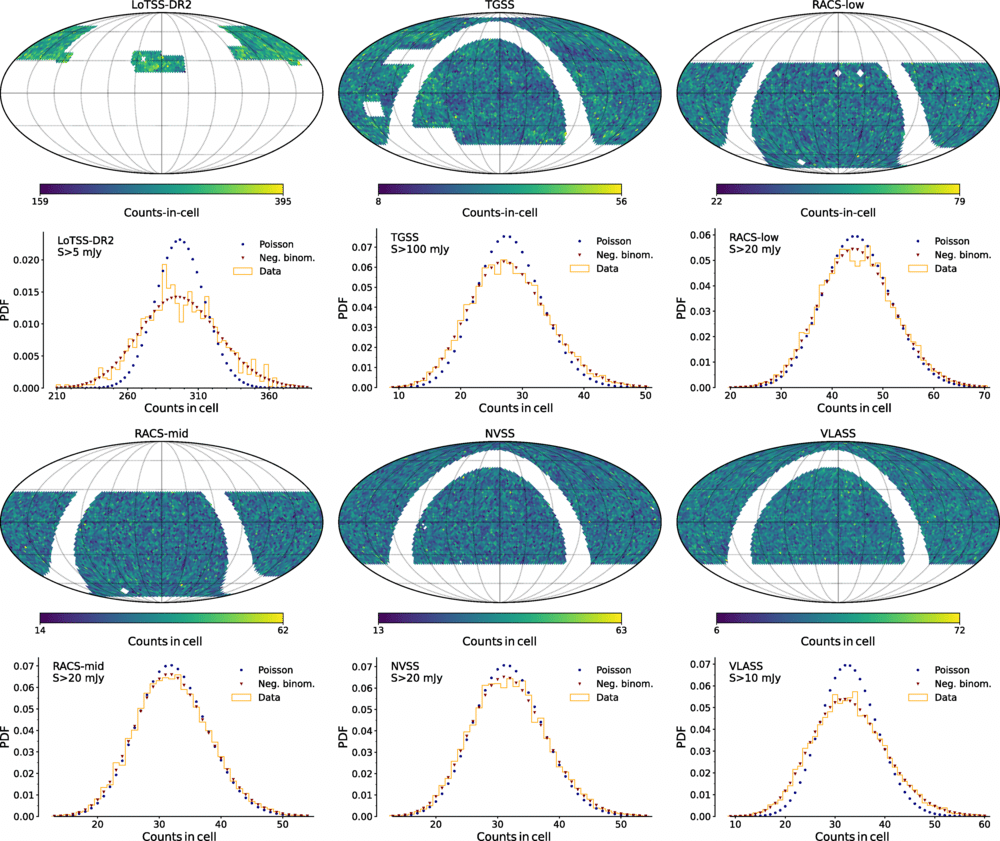
The research detailed in Physical Review Letters is based on the examination of radio galaxies, celestial objects that emit strong radio waves. Because radio emissions can penetrate cosmic dust that obscures visible light, they provide a clearer window into far-reaching cosmic structures. Utilizing data from two radio observatories combined with the Low Frequency Array (LOFAR) network spanning Europe, researchers meticulously counted the radio galaxy sources and charted their spatial arrangement.
The analysis revealed a noticeable skew: more radio galaxies appeared concentrated in the direction of the solar system’s travel, akin to encountering a cosmic “headwind.” While this effect has been theorized, the magnitude of the asymmetry measured here was unexpected.
“Our analysis shows that the solar system is moving more than three times faster than current models predict. This result clearly contradicts expectations based on standard cosmology and forces us to reconsider our previous assumptions.” said Lukas Böhme, lead author of the study and physicist at Bielefeld University.
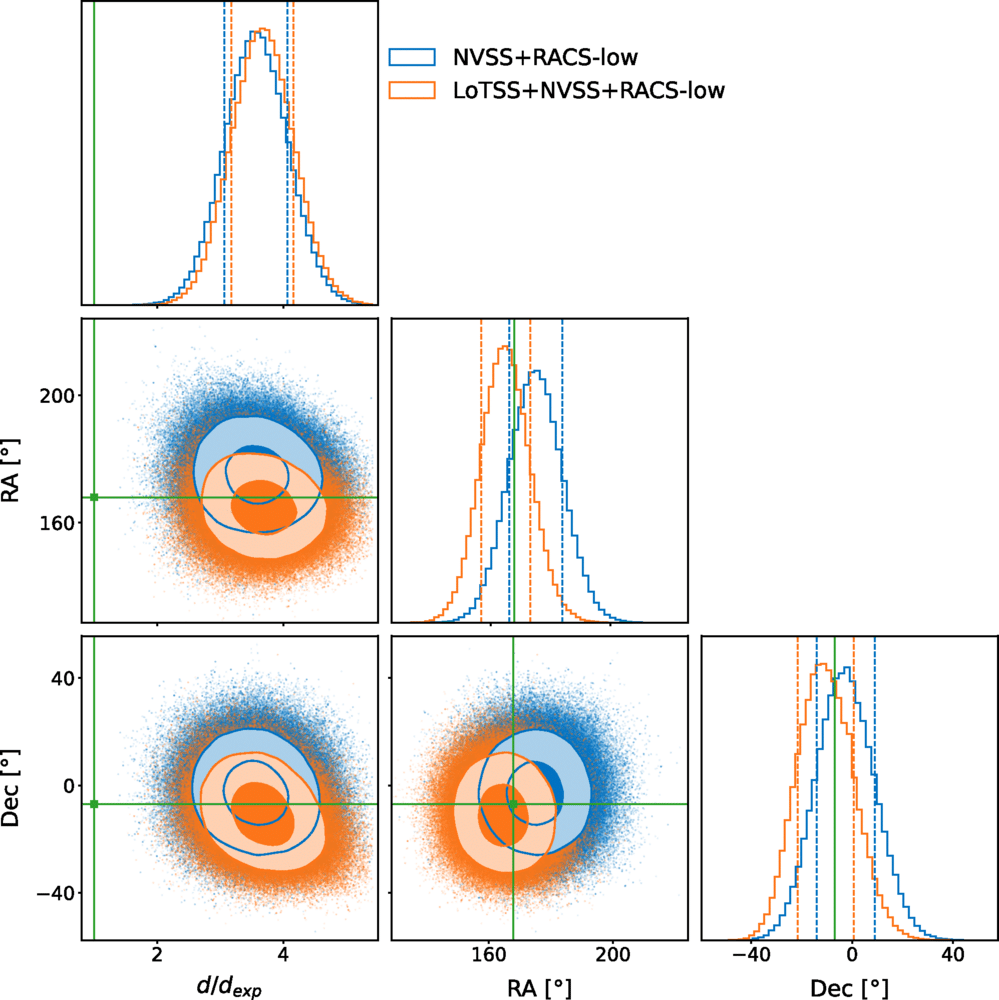
The asymmetry identified was approximately 3.7 times greater than what existing cosmological theories would forecast.
Findings Call for a Rethink of Established Cosmology
This notable discrepancy carries profound consequences. If the solar system truly moves at this accelerated pace, it implies a reassessment of the cosmic microwave background dipole — the phenomenon where the cosmic microwave background radiation appears uniform in all directions.
The study reports a 5-sigma deviation, a strong statistical indication that these results are unlikely due to random fluctuations. As co-author Dominik J. Schwarz of Bielefeld University explained, the data hint that either radio galaxies are distributed less evenly than previously assumed, or that the large-scale cosmic architecture behaves in ways that defy current theoretical expectations.
“Alternatively, the distribution of radio galaxies itself may be less uniform than we have believed. In either case, our current models are being put to the test”, he added.
Method Mirrors a Simple Real-World Analogy
To clarify the speed measurement approach, the researchers described it using a relatable comparison. Like how raindrops hit a car’s windshield more frequently when moving forward, astronomers observed many more radio galaxies in the solar system’s direction of motion. As reported by EarthSky, this increased count toward the front forms the basis of their detection strategy, allowing them to determine the solar system’s velocity without relying entirely on internal galactic references.
This external perspective contrasts with earlier methods that calculated motion from inside the galaxy. The advantage of radio observations lies in their ability to penetrate interstellar dust and uncover deep cosmic features invisible at other wavelengths.
Though the wider implications of this discovery are still under examination, it is already prompting the scientific community to reconsider long-standing ideas about the universe’s structure and dynamics.
- Categories:
- Science










0 comments
Sign in to Comment