
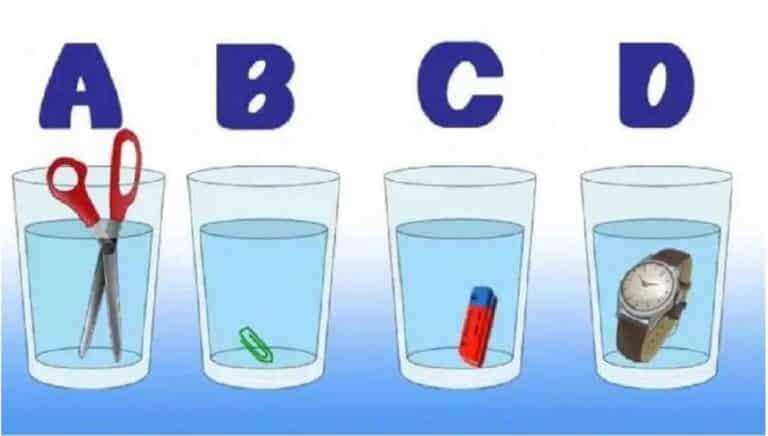
Recently sweeping across social media is a captivating visual puzzle that has users worldwide pondering: which glass actually contains the greatest amount of water? Known as the illusion-based water glass test, this challenge goes beyond a simple guess, revealing how our perception can be easily tricked.
Decoding the puzzle: Which glass truly holds the most?
At a glance, the task appears simple—a lineup of glasses partially filled with water, inviting participants to pick out the container with the largest volume. However, surface impressions can mislead, as this puzzle cleverly manipulates perception to baffle even the most observant.
This test leverages common mental shortcuts, especially the habit of estimating volume by height alone. Such assumptions often cause errors, since the geometry and width of the vessels significantly impact their capacity. Key elements adding complexity include:

- Varied glass styles (like tulip-shaped, tumblers, and wine glasses)
- Differing fill heights
- Visual distortions from reflections and shadows
- Angle and perspective effects in the photos
Approaching the puzzle demands a critical eye and readiness to question initial impressions, reminding us how careful observation and analytical thinking are vital both in puzzles and practical life.
How human perception influences volume judgments
This water glass challenge taps into deep-seated aspects of perception and cognition. Our brains often use heuristics, or mental shortcuts, to interpret our surroundings rapidly. In estimating volume, we frequently succumb to the vertical-horizontal illusion, whereby vertical measurements appear exaggerated compared to horizontal ones.
Extensive studies by psychologists and neuroscientists reveal that even adults face difficulties accurately judging volumes when vessel shapes differ. The table below outlines typical misconceptions:
Container ShapeCommon AssumptionActual CaseTall, slender glassAppears to hold more liquidCan actually contain less than a wider, shorter glassShort, broad bowlSeems to hold lessFrequently holds a larger amount than expectedVessels with unconventional shapesVolume estimation is challengingCareful attention to all dimensions is necessary
By recognizing these cognitive biases, participants can better approach the challenge and improve their accuracy in estimating liquid quantities.
Effective techniques for cracking the water glass puzzle
Those looking to conquer this tricky visual test can apply several strategies to correctly identify the container with the greatest water volume. Consider these approaches:
- Mentally pour the water: Visualize transferring the contents into a uniform measuring cup.
- Estimate base width: Wider bases often suggest larger volume capacity.
- Assess the overall shape: Observe how the width varies from bottom to top.
- Use common reference points: Compare water levels against shared markers if available.
- Resist jumping to quick judgments: Take time to analyze each glass carefully before deciding.
Applying these tips not only aids in solving this puzzle but hones spatial reasoning and critical analysis skills applicable across diverse real-world challenges.
Beyond the game: Real-world relevance of visual perception
While entertaining, the viral water glass test also highlights how we interpret visual information daily. It exemplifies the decision-making dilemmas where visual cues can mislead, underscoring the need for thorough evaluation.
In professions ranging from engineering and science to culinary arts and mixology, accurately judging volume is crucial. This puzzle encourages questioning initial impressions and seeking further evidence before concluding. Moreover, it emphasizes the growing importance of visual literacy as images dominate communication in today's world, equipping individuals to critically analyze and understand visual data.
As we navigate increasingly complex and visually deceptive scenarios, lessons from this deceptively simple puzzle remind us to look deeper and weigh multiple viewpoints before reaching decisions.
- Categories:
- Trends










0 comments
Sign in to Comment