
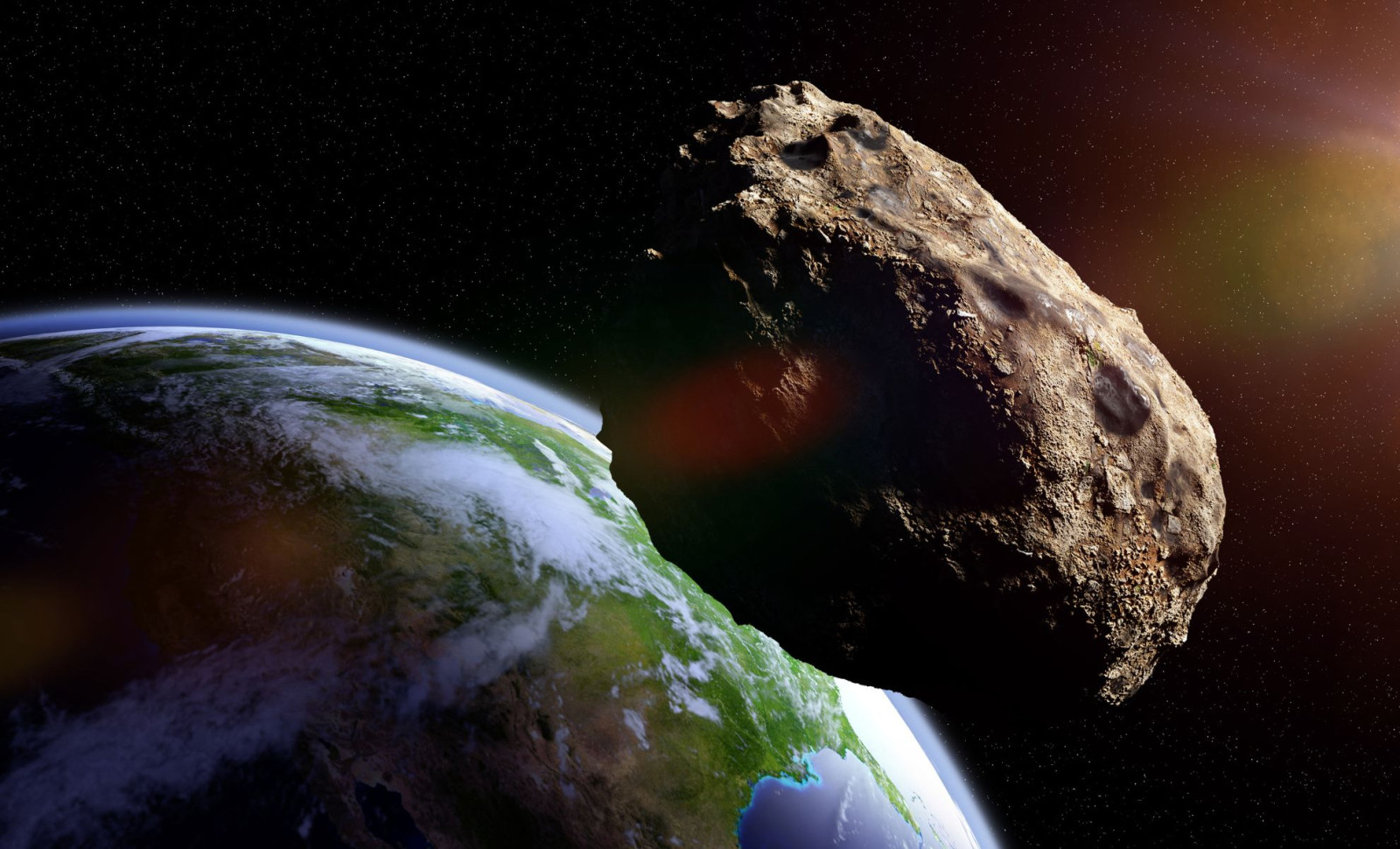
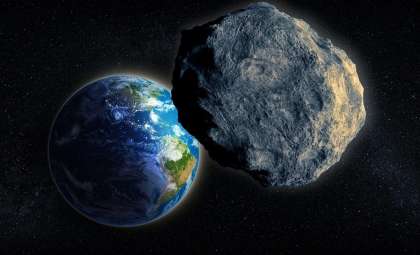
An asteroid recently detected near Earth, designated 2026 JH2, is predicted to zoom past our planet unusually close on May 18, 2026. Experts emphasize that this close approach does not pose any threat to Earth.
The space rock was identified just days ago by astronomers collaborating across multiple facilities, including the Mount Lemmon Survey and Farpoint Observatory in Kansas. Since its detection, scientists have closely monitored its trajectory as it nears the Earth-Moon neighborhood.
Continuous observation of near-Earth asteroids is crucial because a few come close enough to warrant attention. Initial orbit assessments classify 2026 JH2 as an Apollo-class near-Earth object, indicating its path crosses Earth's orbital route around the Sun.

Asteroid’s Initial Pass Near the Moon
Before its closest approach to Earth, 2026 JH2 is expected to pass near the Moon. The encounter is estimated to occur around 6:51 pm UTC on May 18, though astronomers note a timing uncertainty of approximately five hours due to limited tracking information obtained so far.
The asteroid should come within 0.00284 astronomical units of the Moon. (One astronomical unit or AU represents the average distance between Earth and the Sun.)
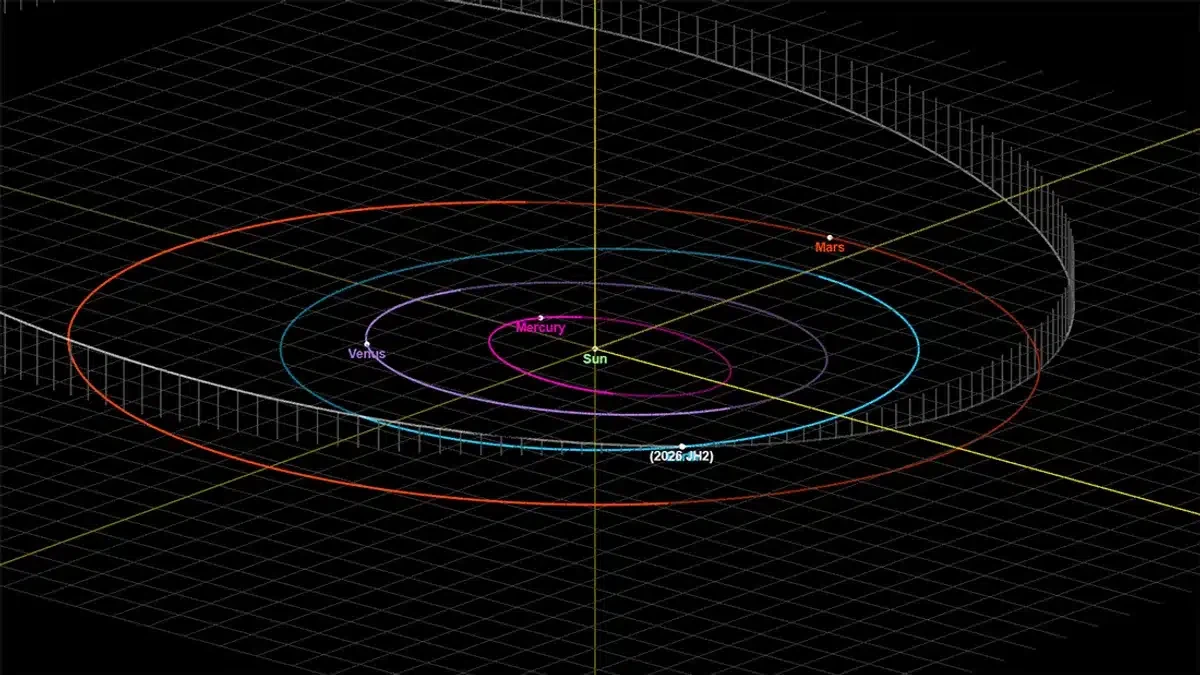
Additional observations are expected to refine the asteroid’s orbit. Newly found asteroids often require multiple data points before accurately determining their size, speed, and exact trajectory.
Ongoing global monitoring—both human and automated—continues to follow 2026 JH2 as it moves through the near-Earth environment.
Close Encounter with Earth Scheduled Hours Later
Following its lunar pass, the asteroid will approach Earth, with its nearest point predicted for about 9:23 pm UTC on the same day. According to published data, 2026 JH2 is expected to come within 0.00064 astronomical units from Earth, with some predictions narrowing this to as close as 0.00058 AU. While these distances might seem alarming, Forbes reports the asteroid will still be about 90,000 kilometers (around 56,000 miles) away from our planet.
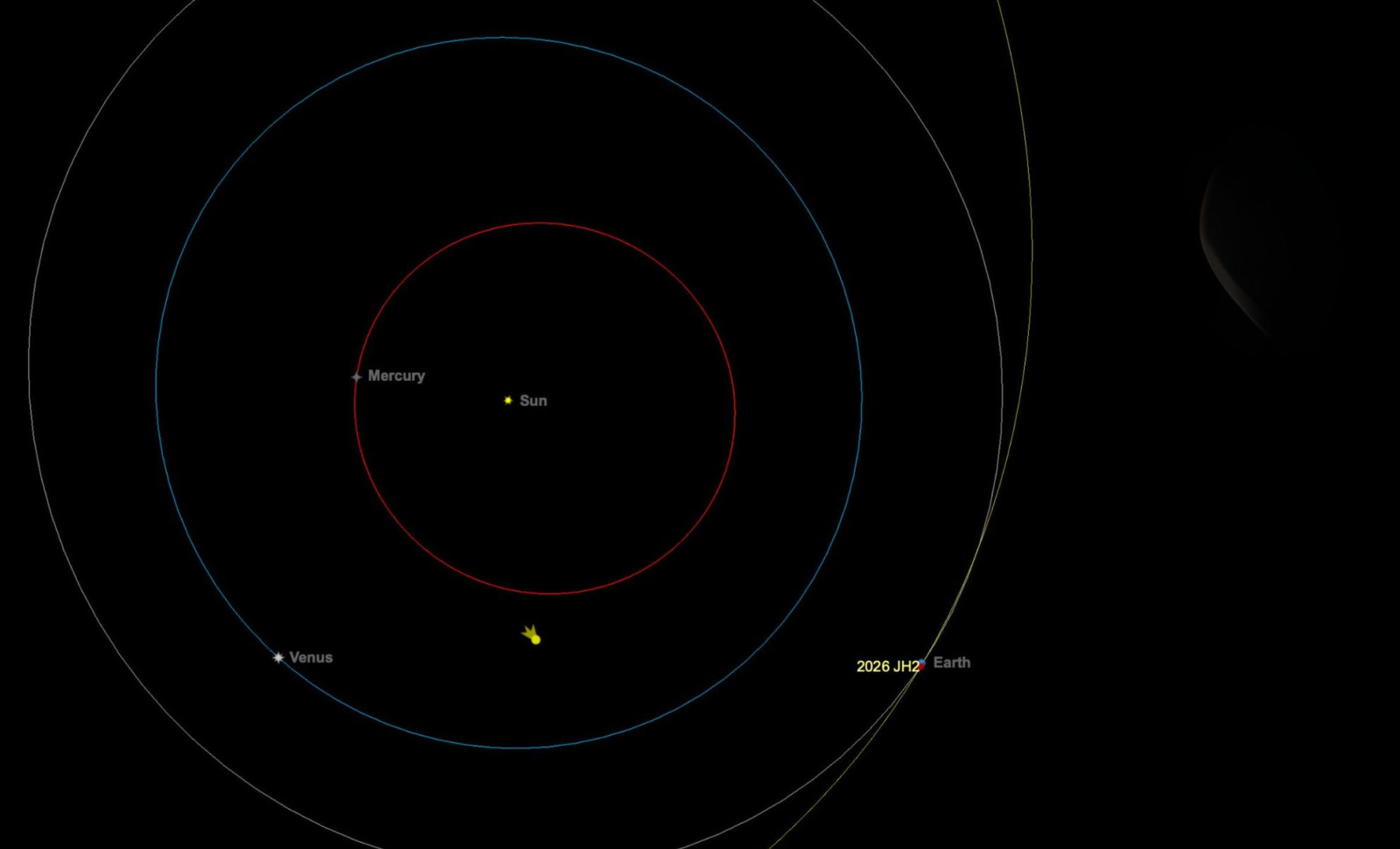
Scientists tracking the event confirm there is no risk of impact. The distance equates to nearly 24 percent of the average distance between Earth and the Moon, which is close astronomically but still well beyond the reach of Earth’s atmosphere.
This asteroid’s approach has attracted attention due to the infrequency of such close passes, particularly by objects recently discovered.
Opportunity for Amateur Astronomers to Observe
The asteroid's near pass will likely render it observable with mid-range telescopes. The Virtual Telescope Project estimates it could reach a brightness magnitude of around 11.5, making it accessible to many amateur astronomers under clear conditions.
This group plans to livestream the asteroid’s flyby starting at 7:45 pm UTC on May 18, enabling those without telescopes or under cloudy skies to witness the event remotely.
Public participation is crucial during such events, as additional observations help refine orbital paths and reduce uncertainties—especially when objects have only recently entered our radar.
- Categories:
- Space






0 comments
Sign in to Comment