

China is gearing up for its inaugural asteroid deflection experiment targeting the near-Earth object 2016 WP8. Scheduled for December 2027, the mission will employ a kinetic impactor strategy to change the asteroid’s trajectory, inspired by NASA’s successful DART mission. As space agencies worldwide intensify efforts to shield Earth from possible asteroid collisions, China’s planned test marks a pivotal advancement in planetary defense initiatives.
China’s Groundbreaking Step in Planetary Protection
According to Space News, China is slated to conduct a planetary defense demonstration mission in late 2027. The operation focuses on asteroid 2016 WP8, a small Aten-type asteroid, utilizing the kinetic impactor method first proven by NASA’s DART in 2022. This mission symbolizes a major leap toward demonstrating China's ability to modify the orbit of an asteroid crossing Earth's path.
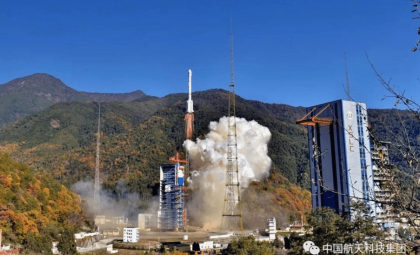
The launch vehicle will be a Long March 3B rocket departing from the Xichang Satellite Launch Center. The payload includes two spacecraft: one impactor meant to collide at high speed with the asteroid and an observer craft to analyze the collision from a safe distance. This two-pronged approach ensures thorough data collection on how kinetic impacts can adjust asteroid movement, bolstering preparedness against future asteroid encounters.

Why 2016 WP8 Was Selected for This Mission
Asteroid 2016 WP8 has garnered attention for its classification as an Aten asteroid, which means it crosses Earth’s orbit but primarily resides inside it. This trait makes 2016 WP8 a suitable candidate for deflection testing, representing a potential future threat. Altering its orbit would allow China to showcase its deflection approach while adding critical information to global asteroid mitigation research.
China’s space agency followed rigorous standards when choosing 2016 WP8. The asteroid met criteria such as a low orbital inclination under five degrees, sufficient brightness for observation, and an accessible launch window between 2025 and 2027. Combined with the scientific value of studying its makeup and path, these factors made 2016 WP8 optimal for this landmark test.
Advancing China’s Space Exploration Goals
This defense mission is a crucial component of China’s expansive space agenda detailed in its Five-Year Plan (2026-2030). The test underscores China’s progress toward mastering advanced space technologies. Efforts include simulating high-velocity impacts and refining deflection models—key elements to the mission’s eventual success and vital contributions to international planetary protection.
China’s growing space exploration portfolio also envisions reusable launch vehicles, deep-space probes, and potentially orbiting observatories dedicated to tracking near-Earth objects (NEOs). The upcoming planetary defense trial is one facet of China's comprehensive strategy to strengthen its capabilities, from space station operations to commercial space endeavors.
Significance for Global Asteroid Defense Efforts
Deflecting a threatening asteroid before impact remains a critical goal for space programs on a global scale. While NASA’s DART experiment proved the viability of the kinetic impactor technique, China’s mission will provide complementary data and insights. As international interest in planetary defense grows, this mission could play a central role in shaping unified asteroid threat mitigation strategies.
With the increasing focus on Earth's defense against cosmic hazards, China’s planetary protection mission adds an important dimension to this collective effort. Its achievements may foster enhanced global collaboration, improving predictive and response capabilities. The knowledge gained promises to refine existing methods and pave the way for more effective asteroid deflection techniques in the future.
- Categories:
- Space








0 comments
Sign in to Comment