
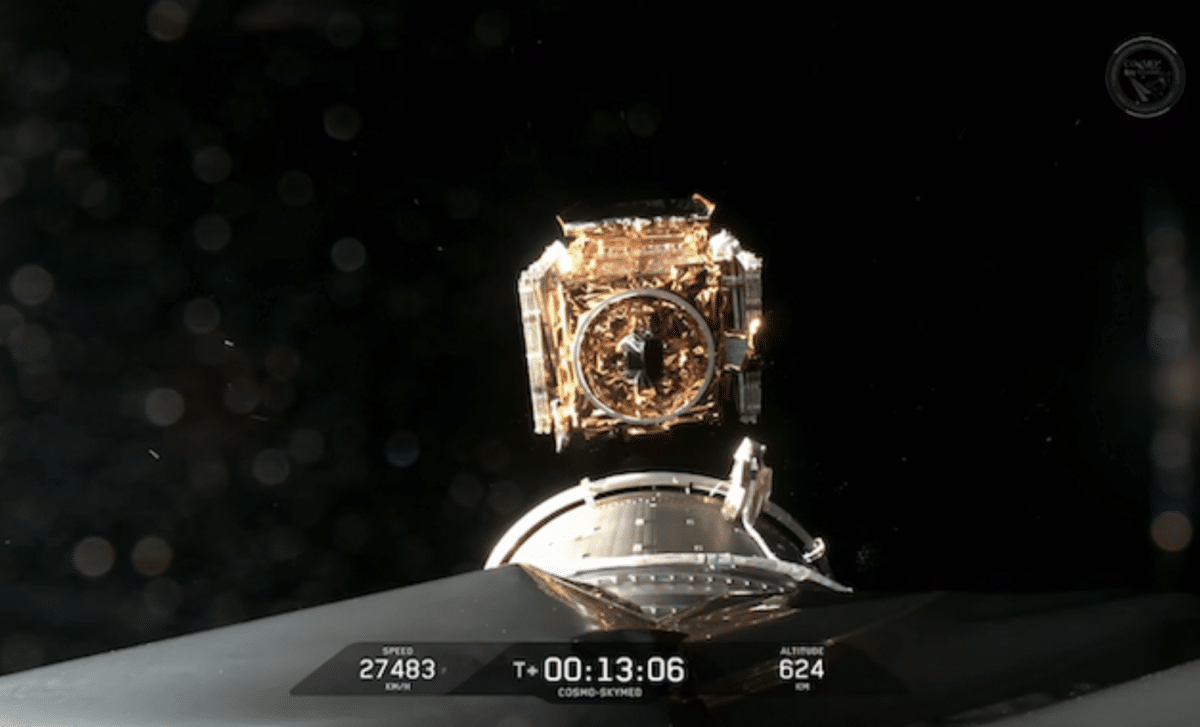
SpaceX kicked off 2026 by successfully deploying Italy’s newest Earth observation satellite, the latest addition to the COSMO-SkyMed Second Generation fleet. The Falcon 9 rocket took off from Vandenberg Space Force Base, marking a significant advancement for Europe’s Earth imaging capabilities and a strong opening to SpaceX’s launch schedule this year.
Falcon 9 Launches CSG-FM3 from California After Technical Hurdles
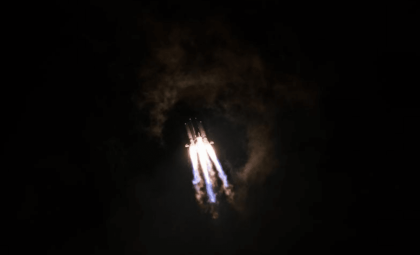
At 6:09 p.m. PST on January 2, 2026, a Falcon 9 rocket departed from Vandenberg’s Space Launch Complex 4 East, carrying the COSMO-SkyMed Second Generation Flight Model 3 (CSG-FM3) into low Earth orbit. The launch experienced multiple delays caused by technical challenges, including an issue with the pad’s hydraulic hold-down clamps. Originally planned for December 27, 2025, the launch was rescheduled after extensive diagnostics.
Following these postponements, the mission progressed smoothly with Falcon 9 following a precise flight path and conducting a successful booster landing at Landing Zone 4 just 8.5 minutes after liftoff. This marked the 554th successful Falcon booster recovery and the 31st at this particular landing site. The Falcon 9 booster, tail number B1081, was on its 21st mission, previously supporting NASA's Crew-7, PACE, and TRACERS efforts, as noted by SpaceFlightNow.

The satellite was deployed roughly 13 minutes post-launch, entering a 620 km sun-synchronous orbit. It is expected to operate effectively for around five years.
Italy’s Dual-Use Satellite Enhances Civil and Military Applications
The COSMO-SkyMed Second Generation initiative is a dual-purpose Earth observation program spearheaded by Italy’s Ministry of Defense alongside the Italian Space Agency, with manufacturing led by Thales Alenia Space. CSG-FM3 is the third satellite in a second-generation series aimed at upgrading and eventually replacing the original constellation. Equipped with a cutting-edge synthetic aperture radar (SAR) operating in the X-band, the satellite can deliver high-resolution imaging regardless of cloud cover or nighttime conditions, an essential tool for both defense intelligence and disaster management.
Italian Defense Minister Guido Crosetto highlighted the collaborative spirit of the project in a social media statement:
“The Cosmo-SkyMed program is one of the most outstanding examples of cooperation between Defense, the Italian Space Agency, and national industry. It is a model of public-private synergy that shows how innovation, research, and development can integrate with security and defense needs, generating strategic value for the Country.”
This partnership exemplifies a broader trend toward shared civil and military space resources worldwide, serving diverse functions such as national security, scientific exploration, agriculture management, city planning, and climate monitoring.
A Growing Satellite Fleet Expanding Italy’s Global Imaging Reach
The addition of CSG-FM3 brings the operational satellites in the constellation to five—two from the first generation and three from the second—enhancing global observation with improved image resolution and frequency. This advance positions Italy as a leader in radar-based remote sensing technology.
As SpaceFlightNow reports, the COSMO-SkyMed program is part of Italy’s broader vision to strengthen its role within the European space landscape while contributing vital data to initiatives like the European Space Agency (ESA) and the Copernicus program. The constellation’s data aids in a broad range of activities, including emergency response coordination, environmental surveillance, and international peacekeeping efforts, alongside domestic military uses.
Thales Alenia Space, a European aerospace company based in France and Italy, led the satellite’s design and construction, also delivering similar radar imaging satellites globally. Their collaboration with SpaceX highlights an increasingly interlinked relationship between European satellite development and US launch providers within the commercial space sector.
SpaceX’s 2026 Launches Begin With International Success
This CSG-FM3 mission marked the start of SpaceX’s 2026 launch activities after a 16-day hiatus, the longest break in years. The pause coincides with a temporary slowdown in Starlink satellite launches as the company tackles technical challenges with its satellite platforms.
The flawless deployment of the satellite and the smooth recovery of booster B1081 once again confirm Falcon 9’s reliability, reinforcing SpaceX’s reputation as the go-to launch provider for government, commercial, and scientific missions worldwide. By serving international clients like Italy alongside Starlink and NASA operations, SpaceX continues to dominate the spaceflight market.
This launch also underscores the strategic value of California’s Vandenberg site for missions targeting polar and sun-synchronous orbits, a common trajectory for Earth observation satellites. With numerous launches already scheduled at Vandenberg for 2026, SpaceX is poised to maintain a steady pace for the year ahead.
Collaborative Investment in Space-Based Earth Monitoring
The COSMO-SkyMed constellation exemplifies how public and private resources can create space systems that fulfill diverse objectives—civil, military, and international cooperation. Despite increasing geopolitical challenges, projects like CSG-FM3 demonstrate space’s potential to foster partnership and technological progress across borders.
As Earth monitoring technology advances and becomes more commercially significant, nations are striving to secure independent, reliable satellite data and intelligence capabilities. Italy’s ongoing COSMO-SkyMed program, now enhanced with its third second-generation satellite, places the country at the forefront of this evolving trend.
With 2026 just underway, the successful COSMO-SkyMed launch by Italy and SpaceX has set an optimistic tone for a year marked by further space collaboration and innovation.
- Categories:
- Space









0 comments
Sign in to Comment