
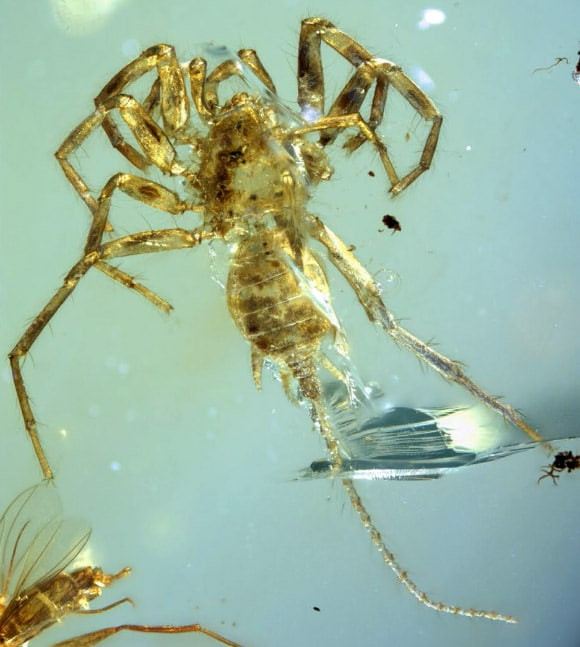
A minuscule spider encased in amber dating back 100 million years is reshaping scientists' understanding of spider evolutionary history. This ancient arachnid possessed spinnerets akin to modern spiders, yet also featured a distinctive long tail.
Unearthed from Myanmar’s dense forest landscapes, the fossil presents a unique species exhibiting both primitive and contemporary spider characteristics. Exceptionally preserved in Cretaceous-era amber, this find offers tangible proof that early spider ancestors once bore tails—a concept previously only theorized.
A Tailed Arachnid Linking Past and Present
The species has been named Chimerarachne yingi, inspired by the mythic Chimera due to its blend of unusual traits. It was discovered in a largely unexplored region, adding to its intrigue.

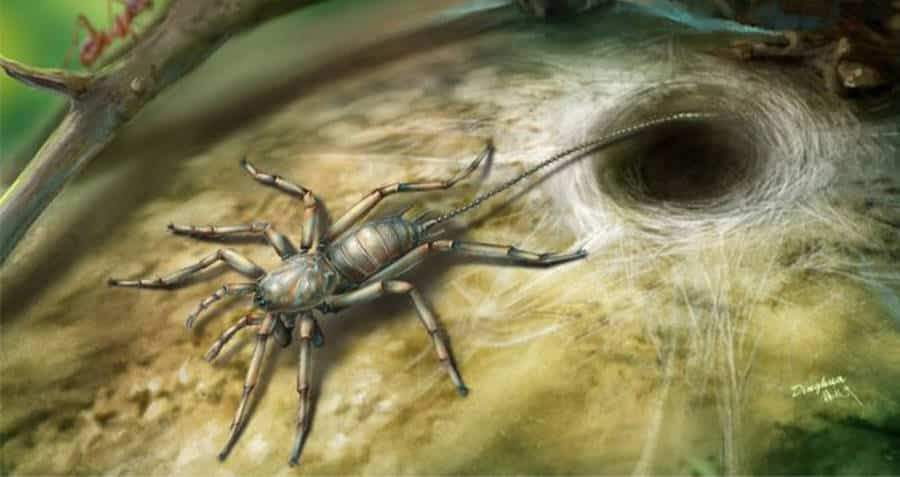
The study, featured in Nature Ecology & Evolution, unveils a fossil exhibiting a rare mix of traits in one specimen. It includes spinnerets similar to those found in current spider species capable of producing silk, alongside a tail reminiscent of scorpions or extinct uraraneids, an ancient arachnid group. As noted by Dr. Russell Garwood from the University of Manchester:
“We have known for a decade or so that spiders evolved from arachnids that had tails, more than 315 million years ago.” he added, “We’ve not found fossils before that showed this, and so finding this now was a huge (but really fantastic) surprise.”
Although Chimerarachne yingi could produce silk, there’s no evidence it spun webs like present-day spiders. Scientists speculate it may have utilized silk for other functions such as lining shelters or crafting egg sacs, but direct behavioral evidence is absent. The fossil indicates that web construction likely emerged later, following the loss of the tail.
Amber's Role in Exceptional Fossil Preservation
This arachnid was found in Burmese amber, attributed to the mid-Cretaceous epoch, approximately 100 million years ago. The clarity of the amber enabled researchers to scrutinize both external and inner bodily details with extraordinary precision. According to Dr. Ricardo Perez-De-La Fuente from the Oxford Museum of Natural History, the preservation's quality is remarkable.
“Chimerarachne fills the gap between Palaeozoic arachnids with tails known from rocks (uraraneids) and true spiders, and the fact the new fossils have been wonderfully preserved in Burmese amber has allowed an unmatched detail of study,”
Detailed imagery shows tiny hairs, legs, and the segmented tail, which appeared to move freely behind the body.
The fossil's preservation is so comprehensive that researchers could closely examine features like spinnerets and tail segments under magnification, affirming its identity and role in arachnid evolutionary history.
Uncharted Species Might Still Be Out There
While Chimerarachne yingi is considered extinct, scientists do not completely rule out the existence of related species. Myanmar’s vast, biodiverse rainforests, where the fossil was found, remain largely unexplored. According to Dr. Paul Selden from the University of Kansas, such diminutive, secretive creatures could easily go unnoticed.
“We haven’t found them, but some of these forests aren’t that well-studied, and it’s only a tiny creature,” Selden explained.
The notion is not that Chimerarachne itself survives today, but that relatives might persist within secluded or rarely surveyed habitats.
- Categories:
- Science





0 comments
Sign in to Comment