
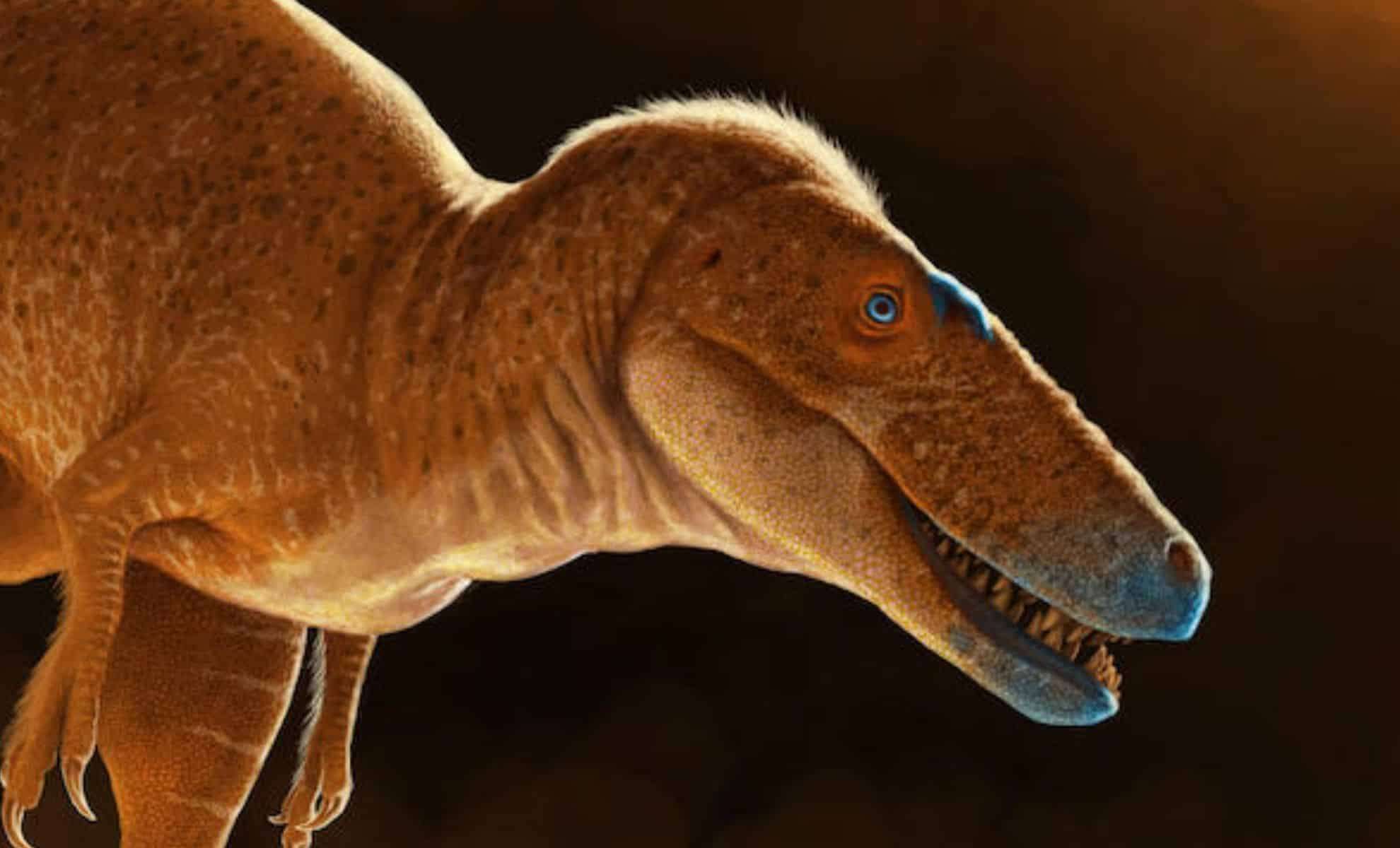
Scientists have identified a previously unknown tyrannosaur species that could significantly reshape our understanding of how the legendary Tyrannosaurus rex evolved. The species, named Khankhuuluu mongoliensis, was a medium-sized predator that roamed the Earth approximately 86 million years ago. Often described as a “missing link,” this discovery fills a vital gap in the fossil timeline, revealing how smaller, more nimble dinosaurs gradually transformed into the colossal apex predators that T. rex exemplifies.
A Mongolian Dragon Prince Unearthed
Honoring Mongolia’s mythical “Dragon Prince,” Khankhuuluu mongoliensis provides a rare window into tyrannosaur life long before their reign as dominant predators. Researchers identified the species from two incomplete fossil skeletons that had been preserved in a museum since the early 1970s.
The team, led by Darla Zelenitsky and Jared Voris of the University of Calgary, chose the name Khankhuuluu to represent its early, more modest stature, contrasting it with the later massive tyrannosaurs. According to Zelenitsky, this dinosaur was "more of a prince than a king compared to its larger tyrannosaur descendants."

A Swift and Smaller Predator
In contrast to the enormous T. rex, which could reach lengths of up to 13 meters and weigh around 8.8 tonnes, Khankhuuluu mongoliensis measured about 2 meters tall at the hips and approximately 6 meters in length. It weighed near 750 kilograms, making it considerably smaller than its famous successors. Its long, delicate legs suggest it was built for speed and agility.
Additionally, its lightweight skull points to weaker bite forces than those of the powerful, bone-crushing jaws of the larger tyrannosaurs. Voris remarked that Khankhuuluu serves as “a transitional species bridging smaller ‘tyrannosauroid’ ancestors to the massive apex predators that followed.”
Rewriting the Tyrannosaur Evolutionary Story
The finding of Khankhuuluu mongoliensis deepens our comprehension of tyrannosaur lineage. The fossil evidence has historically been lacking for intermediate-sized species that connect early small ancestors to the later gigantic predators.
Khankhuuluu occupies this crucial evolutionary position, living some 20 million years prior to Tyrannosaurus rex and linking smaller early tyrannosaurs like Suskityrannus and Moros intrepidus with the towering giants that followed.
The Dynamic Evolution of Tyrannosaurs
While it is often believed that tyrannosaurs simply grew from tiny ancestors into massive hunters, their evolutionary path was far more intricate. Over millions of years, tyrannosaurs evolved across multiple continents. Species such as Tarbosaurus and Qianzhousaurus thrived in Asia, whereas the larger tyrannosaurs eventually migrated to North America, where T. rex became the dominant predator.
This transcontinental movement over ages is key to understanding why T. rex shares a closer relationship with Tarbosaurus than with other North American tyrannosaurs like Daspletosaurus.
Young T. rex individuals were smaller and swifter, possibly hunting different prey than their huge adult counterparts. At the same time, Asian tyrannosaurs occupied diverse ecological roles, with species like Tarbosaurus reigning as the apex predator, while smaller, faster species such as those in the Alioramini group, including Qianzhousaurus, filled more specialized niches.
- Categories:
- News










0 comments
Sign in to Comment