
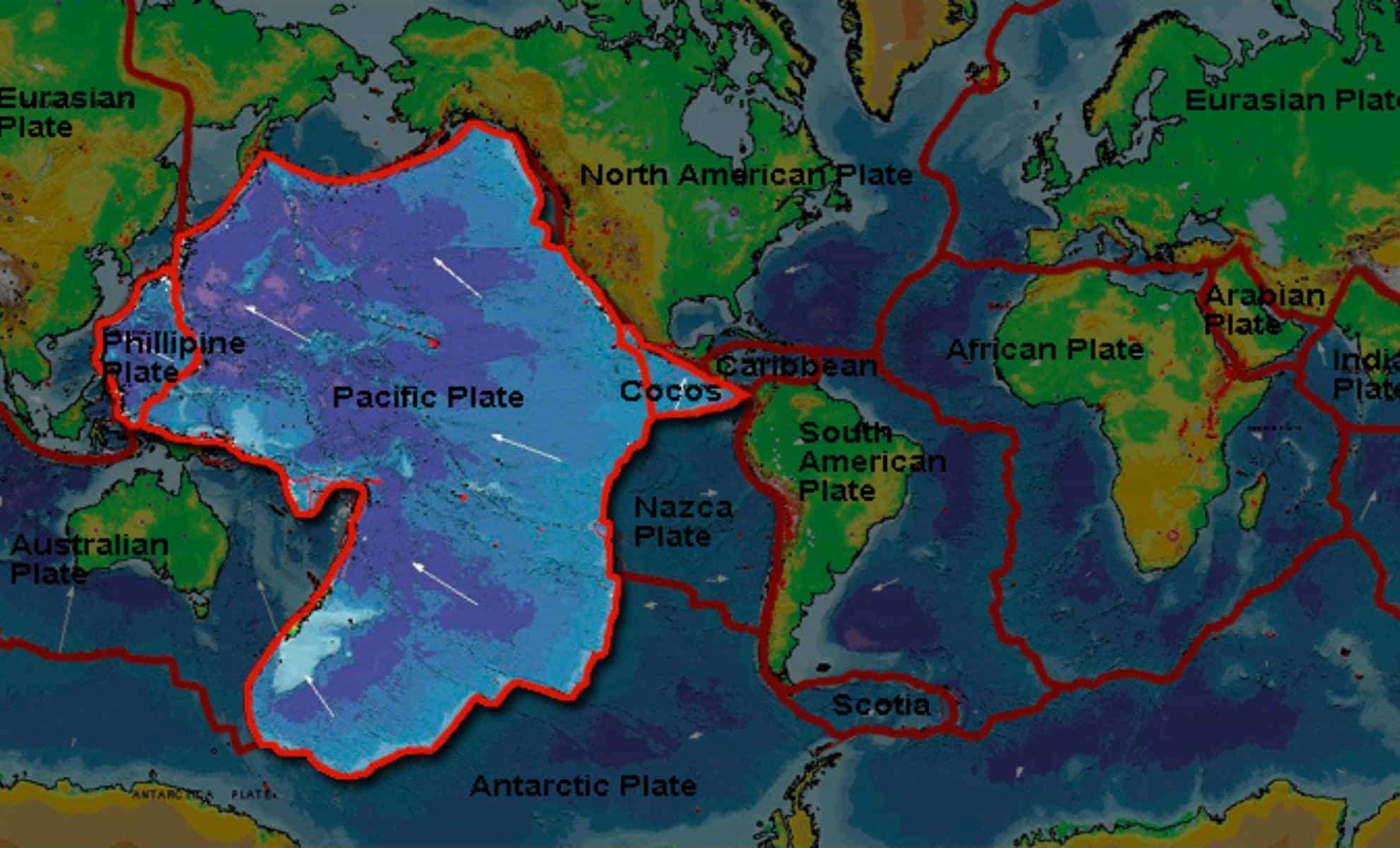
Researchers from the University of Toronto have unveiled groundbreaking evidence that reshapes our understanding of plate tectonics. Their study, featured in Geophysical Research Letters, exposes how the Pacific Plate, a major section of the ocean floor, is fracturing along extensive submerged faults. This challenges the prevailing view that oceanic plates remain largely intact as they drift over the Earth's mantle.
Previously, scientists assumed ocean plates maintained structural integrity during their movement. Yet, this investigation reveals significant internal disruptions within the Pacific Plate, especially around the submarine plateaus of the Western Pacific’s Ring of Fire. These formations, once believed to be robust due to their thickness, are now recognized as vulnerable points where the plate is breaking as it subducts beneath the Earth’s crust.
Fragmentation Within the Pacific Plate
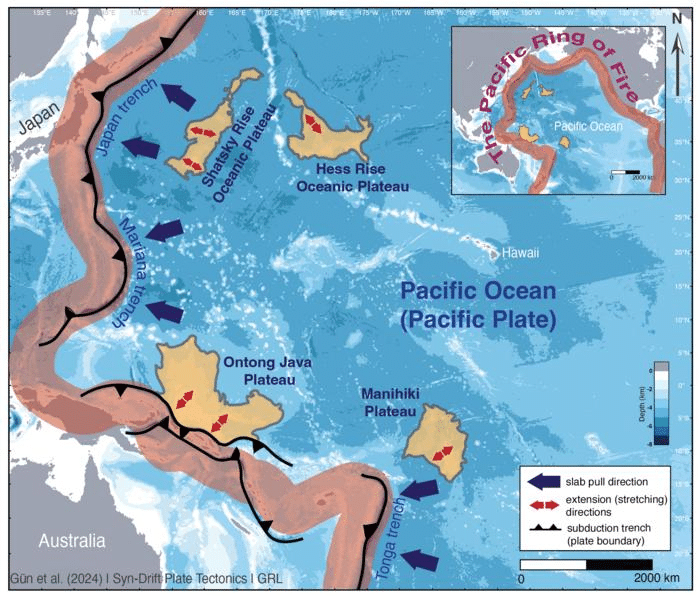
The scientific team concentrated on four major plateaus in the western Pacific: Ontong Java, Shatsky, Hess, and Manihiki. Utilizing supercomputer simulations and seismic data, they identified large-scale fault structures within these submerged regions. The immense tectonic forces moving the Pacific Plate westward create stress that causes these fractures as the plate approaches subduction boundaries.

Erkan Gün, a postdoctoral scholar at the University of Toronto, shared:
“We knew that geological deformations like faults happen on the continental plate interiors far from plate boundaries. But we didn’t know the same thing was happening to ocean plates.”
As the Pacific Plate shifts west and descends into the mantle, the intense stresses result in the oceanic crust splitting. The faults detected serve as direct evidence of this fracturing process, overturning earlier beliefs that oceanic plates remain undisturbed throughout their journey.
Reevaluating Stability of Oceanic Plates
A striking revelation from the research is that thick oceanic plateaus, long regarded as steadfast sections of tectonic plates, are actually among the most fragile areas prone to rupture. These zones are especially susceptible to tearing where the subduction zones—extending from Japan to New Zealand—draw the plate downward. Russell Pysklywec, professor of Earth Sciences at the University of Toronto, noted:
“What we’re doing is refining plate tectonics — the theory that describes how our planet works — and showing those plates really aren’t as pristine as we previously thought.”
The updated model highlights uneven stress distribution across the plate, with plateau regions more likely to fracture due to their unique composition. This insight might clarify patterns of seismic and volcanic activity in these areas, potentially linking the faults to past volcanic eruptions.
Links to Earthquakes and Volcanoes
The team proposes that the breakage of the Pacific Plate could correlate with historical volcanic episodes in the region. Gün commented:
“There is evidence that volcanism occurred at these sites in the past as a result of this type of plate damage — perhaps episodically or continuously — but it isn’t clear if that’s happening now.”
While the current data does not conclusively establish ongoing volcanic activity linked to these faults, it paves the way for more in-depth research into the connections between tectonic plate deformation, earthquakes, and volcanism in the Pacific basin. Since many of these plateaus lie deep beneath the ocean, obtaining additional data remains crucial to understanding these dynamic processes.
Transforming the Plate Tectonics Paradigm
This revelation adds new complexity to the classic concept of plate tectonics, emphasizing that oceanic plates are more dynamic and vulnerable than once thought. Rather than being rigid and unchanging, these plates are subject to powerful forces that cause them to tear and shift in surprising ways.
Pysklywec summarized:
“Now we know this fault damage is tearing apart the centre of an ocean plate—and this could be linked to seismic activity and volcanism.”
The findings underscore that while plate tectonics theory has evolved considerably, many fundamental questions about how Earth’s plates interact remain unanswered. These insights not only deepen our understanding of the Pacific Plate’s behavior but also offer new perspectives on the geological forces sculpting our planet.
- Categories:
- News







0 comments
Sign in to Comment