
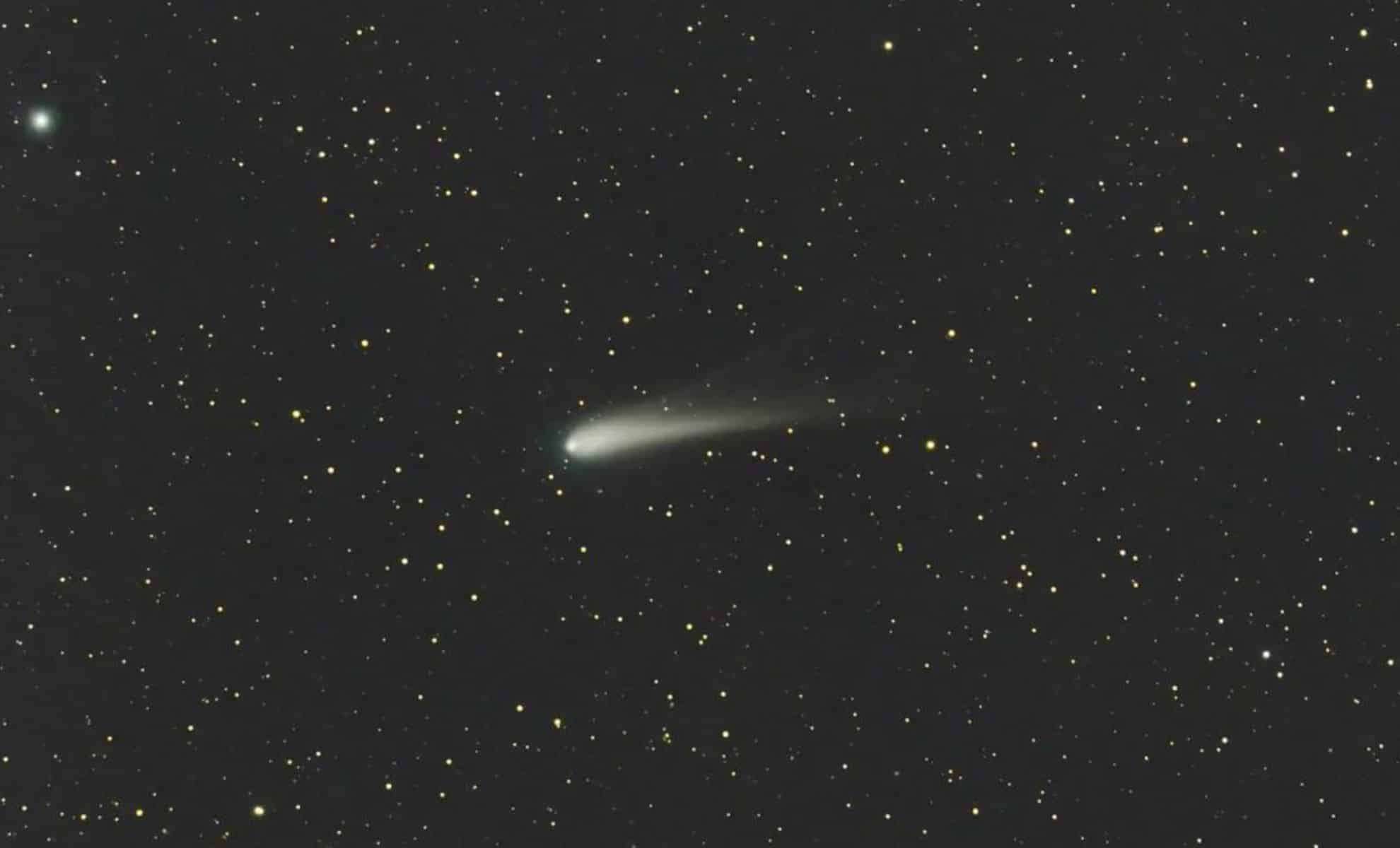
Discovered earlier this year in January 2023, Comet C/2023 A3 (Tsuchinshan-ATLAS) is heading toward becoming one of the standout events in this year’s night sky. As it draws nearer to both the Sun and Earth, the comet is expected to brighten enough to be seen without any optical aids, thrilling observers worldwide. Its spectacular tail and increasing luminosity might even match or surpass well-known planets such as Jupiter and Venus at its peak.
Best Viewing Times and Locations for Comet A3
The comet promises optimal visibility from late September into October 2024, with two crucial dates to mark:
- September 27, 2024: This day marks the comet’s perihelion, its closest approach to the Sun. At this time, it will be visible mainly in the Southern Hemisphere just before sunrise. Located within the constellation Leo, it will shine brightest as it passes roughly 36.4 million miles (58.6 million kilometers) from the Sun.
- October 12, 2024: Comet A3 will be at its nearest point to Earth, around 44 million miles away. Observers in the Northern Hemisphere will have the best viewing opportunity after sunset, with the comet appearing in the constellation Ophiuchus, near the western horizon.
Experts anticipate the comet to rank among the fifty most luminous objects in the night sky. Some estimates even suggest it might outshine Jupiter, making it a breathtaking spectacle.

The Radiant Tail and Light Scattering Effects
A highlight of this comet is its potential tail, expected to be particularly striking. Like other comets, its tail consists of dust and ice particles released as the core nucleus warms up near the Sun. Uniquely, Comet A3 might display two separate tails—one glowing white and the other shimmering blue—depending on how solar radiation interacts with its materials.
The phenomenon of forward scattering is also expected to brighten the comet significantly. This occurs when sunlight is scattered directly back toward Earth, enhancing the comet’s apparent brightness. According to Jamie Carter in Forbes, this astronomical arrangement “should play in our favor,” potentially amplifying the light we see during the comet’s most brilliant phase.
Tips for an Ideal Comet Watching Experience
To ensure the best chance of observing Comet Tsuchinshan-ATLAS, proper planning is key. Consider the following:
- Choose a dark location: Reduce light interference by finding spots far from urban lighting, such as Dark Sky Preserves or isolated rural areas.
- Watch for clear weather: Viewing conditions when the comet is near the horizon require clear, cloudless skies.
- Time your observation: For the Southern Hemisphere, look before dawn between September 27 and October 2. For Northern Hemisphere observers, check the western sky just after sunset starting October 9.
- Bring binoculars or a telescope: Although the comet should be visible unaided, optical equipment can reveal intricate details of its tail.
Astronaut Perspectives from the International Space Station
As Comet Tsuchinshan-ATLAS nears its closest approach to the Sun, astronauts aboard the International Space Station (ISS) have already observed the comet. Matthew Dominick, ISS crew member, shared an impressive video showing the comet rising over Earth from the station’s cupola windows. On X (formerly Twitter), he commented: “So far Comet Tsuchinshan-ATLAS looks like a fuzzy star to the naked eye looking out the cupola windows. But with a 200mm, f2 lens at 1/8s exposure you can really start to see it. This comet is going to make for some really cool images as it gets closer to the sun. For now, a timelapse preview.”
So far Comet Tsuchinshan-ATLAS looks like a fuzzy star to the naked eye looking out the cupola windows. But with a 200mm, f2 lens at 1/8s exposure you can really start to see it. This comet is going to make for some really cool images as it gets closer to the sun. For now anbsp;pic.twitter.com/JstaSLJ4Ui
12; Matthew Dominick (@dominickmatthew) September 19, 2024
Dominick’s vantage from orbit provides a unique view, showing the comet as a small, fuzzy point without magnification. As it closes in on the Sun, however, the comet’s brightness is anticipated to surge, offering exceptional photographic opportunities both from space and Earth.
What Makes Comet Tsuchinshan-ATLAS Truly Exceptional
Unlike typical short-term visitors, this comet is a long-period comet originating from the distant Oort Cloud on the solar system’s boundary. With an orbit spanning roughly 80,000 years, it has journeyed through the outer solar system for millennia. Its 2024 passage into the inner solar system presents a once-in-a-lifetime chance to witness this celestial traveler.
Identified independently by astronomers at China’s Tsuchinshan Observatory and the Asteroid Terrestrial-impact Last Alert System (ATLAS) in South Africa, the comet offers invaluable insights into far-flung regions of space. As Dr. Alfredo Carpineti from IFLScience highlights, the comet is “just a day away from its closest encounter with the Sun,” with naked-eye visibility already confirmed. After perihelion, the comet will be observable only before dawn for a few days but starting October 9, it should be easy to spot at sunset.
- Categories:
- Astronomy ,
- News ,
- Space











0 comments
Sign in to Comment