
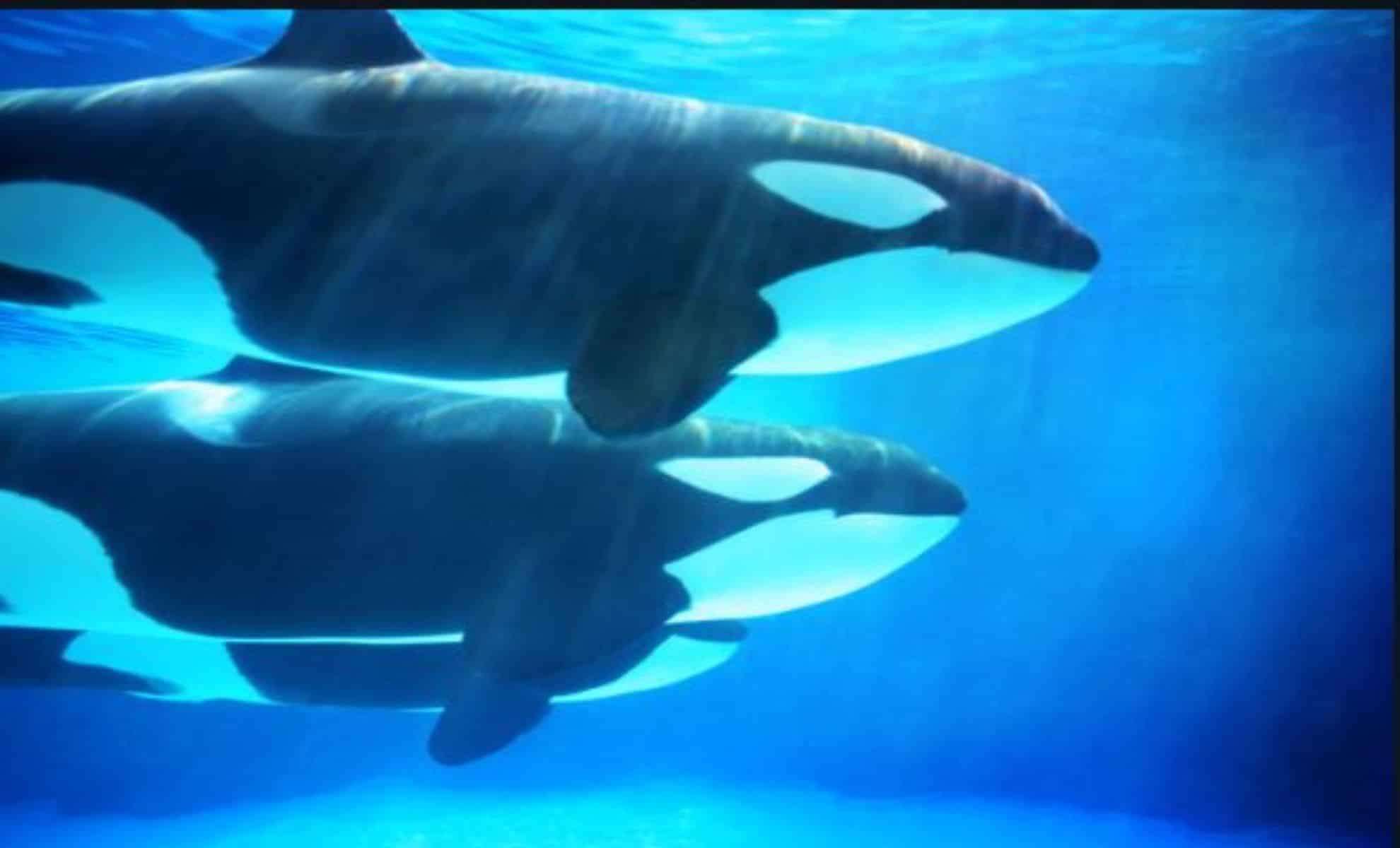
Orcas, commonly known as killer whales, have long fascinated scientists due to their intelligence, sophisticated hunting techniques, and complex social behavior. Recently, a remarkable discovery revealed an unexpected skill in these marine mammals: the ability to imitate human speech. A 14-year-old female orca named Wikie amazed researchers by clearly mimicking words such as “hello,” “one, two,” and “bye-bye.” These haunting recordings of her vocal attempts have intrigued listeners worldwide, blending fascination with an eerie sense of familiarity.
A collaborative research effort by scientists from Germany, Spain, the UK, and Chile set out to investigate the extent of vocal learning in orcas. Their study sheds new light on cross-species vocal mimicry, opening fascinating avenues for understanding orca communication and social structures in the wild.
Details of the Experiment
Documented in the Proceedings of the Royal Society B, this innovative study focused on testing orca vocal flexibility. Researchers worked with Wikie, a 14-year-old captive orca, training her first to copy three orca sounds produced by her calf before introducing her to five unfamiliar orca sounds she had never encountered.

The most striking phase involved presenting Wikie with six human sounds, including words like “hello,” “Amy,” “ah ha,” “one, two,” and “bye-bye.” To the team’s surprise, Wikie was able to reproduce many of these vocalizations on her initial tries, demonstrating a rapid capacity for sound adaptation.
“We wanted to challenge them with sounds outside their usual repertoire, and ‘hello’ is certainly not something a killer whale would naturally vocalize,” explained Josep Call, co-author of the study and professor at the University of St. Andrews.
The audio recordings showcased Wikie’s impressive skill at mimicking human speech nuances, although her vocal physiology imparted an otherworldly quality to the sounds. This imitation underscores her capacity to modify her own vocal emissions to approximate human speech patterns.
Insights into Orca Communication
Wikie’s speech-like mimicry provides intriguing clues about how killer whales might acquire diverse sounds in their natural environments. Orcas exhibit unique dialects that differ among pods, a reflection of their complex social interactions and learned vocal behavior. This new research supports the idea that vocal imitation plays a crucial role in the development of these dialects, as orcas learn and exchange sounds specific to their social groups.
“This could well explain the dialect differences we observe in the wild,” Call said, emphasizing how this finding deepens our understanding of the social and cultural dimensions of orca communication systems.
Barriers and Breakthroughs in Mimicking Human Speech
Although Wikie’s mimicry is remarkable, it highlights the extraordinary adaptability of the vocal anatomy in killer whales. Their vocal structures differ greatly from those of humans, making their ability to approximate human speech all the more impressive.
“Despite significant differences in anatomy, orcas can produce sounds that surprisingly resemble those of another species—us,” Call remarked. This ability reflects their cognitive and physical sophistication; orcas possess some of the largest brains among marine mammals.
Still, Call clarified that while Wikie successfully replicated sounds, there’s no proof she comprehended their meanings. “There’s no indication that they grasp what their ‘hello’ means,” he said, tempering expectations regarding orcas’ language comprehension.
Public Response to the Otherworldly Sounds
The recordings of Wikie’s mimicry have elicited diverse public reactions. Many listeners are captivated by the complexity and beauty of her vocalizations, while others find them eerily unsettling due to their striking resemblance to human speech. Feedback ranges from admiration to describing the sounds as “ghostly” or “spooky,” illustrating a mix of wonder and discomfort.
Social media users have expressed awe at the sophistication of killer whale communication; one commenter shared, “This truly moves me, reminding us of the incredible creatures inhabiting our planet.” Conversely, some have likened Wikie’s “hello” to something from a supernatural tale, highlighting the uncanny nature of her imitation.
Future Directions in Orca Vocal Research
Wikie’s vocal experiments mark just the beginning of ongoing investigations into orca communication. Scientists aim to perform similar studies with wild populations to better understand how these animals learn and transmit sounds naturally. Such research could offer further evidence of cultural transmission in orca pods and illuminate the complexity of their social interactions.
Although many questions remain, this study reinforces the exceptional intelligence and adaptability of orcas. Wikie’s haunting yet fascinating mimicking serves as a powerful reminder of the hidden mysteries within the animal kingdom and our continuing quest to comprehend the remarkable species sharing our world.










0 comments
Sign in to Comment