
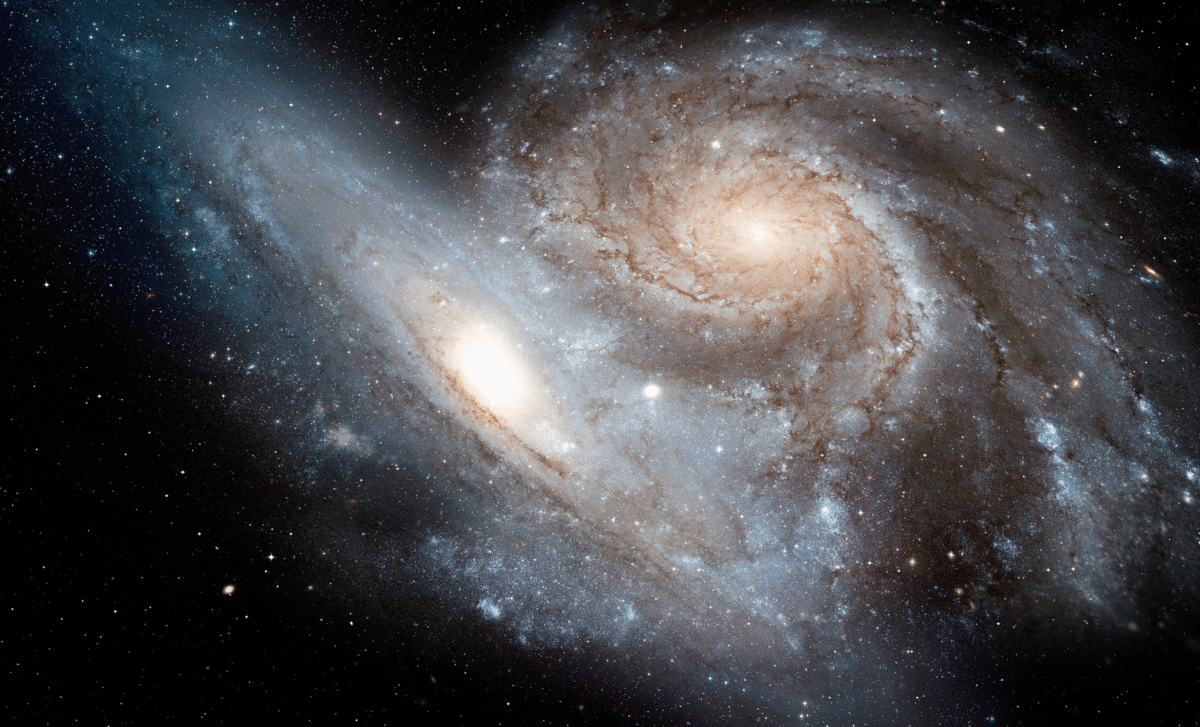
Billions of years in the past, the Milky Way was dramatically reshaped by a massive merger event that disrupted its structure and propelled stars into new, unusual orbits. Now, as reported by The Conversation, our galaxy is entering another crucial evolutionary stage influenced by the gravitational pull of the Large Magellanic Cloud, its largest nearby satellite galaxy. What looks like a peaceful starry sky actually tells the story of an ever-changing galaxy, enduring cosmic turmoil and transformation.
Examining the Galaxy’s Turbulent History
Galactic researchers such as Vasily Belokurov liken the study of the Milky Way to unearthing an ancient civilization—only instead of artifacts, they analyze stars. Among the vast populations observed, certain stars stand apart because they originated beyond our galaxy and were later integrated through cosmic collisions. As noted by The Conversation, these external stars move incongruently with the Milky Way’s disk rotation and exhibit lower levels of heavy elements compared to native stars—evidence of their slower evolution inside smaller dwarf galaxies before merging. Tracking these stellar migrants enables scientists to reconstruct the galaxy’s ancient merger events, shedding light on how these encounters fundamentally transformed the Milky Way’s architecture.
The Gaia-Sausage-Enceladus Collision: A Galactic Reset
One of the most impactful mergers involved the Gaia-Sausage-Enceladus galaxy, which collided with the Milky Way approximately 8 to 11 billion years ago. This violent encounter flung stars from the original galactic disk into the halo, creating a population of displaced stars far from their birthplace. Additional star clusters were gained during this event, leaving enduring markers in their movement and chemical makeup. Beyond visible consequences, the merger likely shifted the Milky Way’s disk orientation and warped its dark matter halo, the invisible gravitational cocoon enveloping the galaxy. Observations from Gaia reveal this halo is not simple or spherical but dynamically flexible, responding to massive cosmic interactions much like a ship tilting in stormy seas.

The Beginning of a New Galactic Interaction
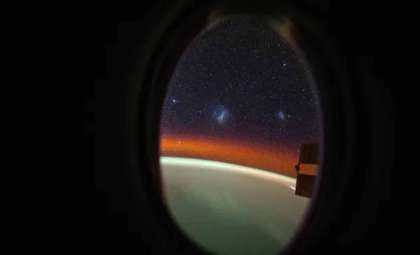
Following eons of relative stability, the Milky Way now experiences a fresh disruption caused by the gravitational influence of the Large Magellanic Cloud (LMC), its largest neighboring dwarf galaxy. This pull disturbs the outer halo and sets the entire galaxy into a complex, spiraling motion. Unlike prior internal evolutionary processes, this current interaction introduces an external force reshaping the Milky Way. Astronomers predict that in the long term, one of the two galaxies—the Milky Way or the LMC—may endure largely unscathed while the other faces more significant transformation. This evolving cosmic relationship echoes the upheaval of the earlier sausage merger, proving that even galaxies perceived as serene are subject to continuous change.
Stellar Motions Illuminate the Galaxy’s Outlook
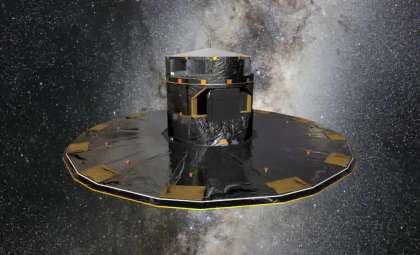
The Gaia space observatory has provided an unparalleled galactic map by charting nearly two billion stars and their motions. These detailed stellar trajectories not only uncover the Milky Way’s collision history but also grant insights into the elusive dark matter that governs the galaxy’s outer gravitational field. By analyzing how stars react to gravitational tugs from mergers and galactic companions, astronomers can forecast future distortions and deepen understanding of the cosmic framework. The calm night sky, therefore, is a brief snapshot capturing a dynamic galaxy that has been disrupted, rebuilt, and is now quietly moving toward its next major cosmic evolution.
- Categories:
- News

0 comments
Sign in to Comment