
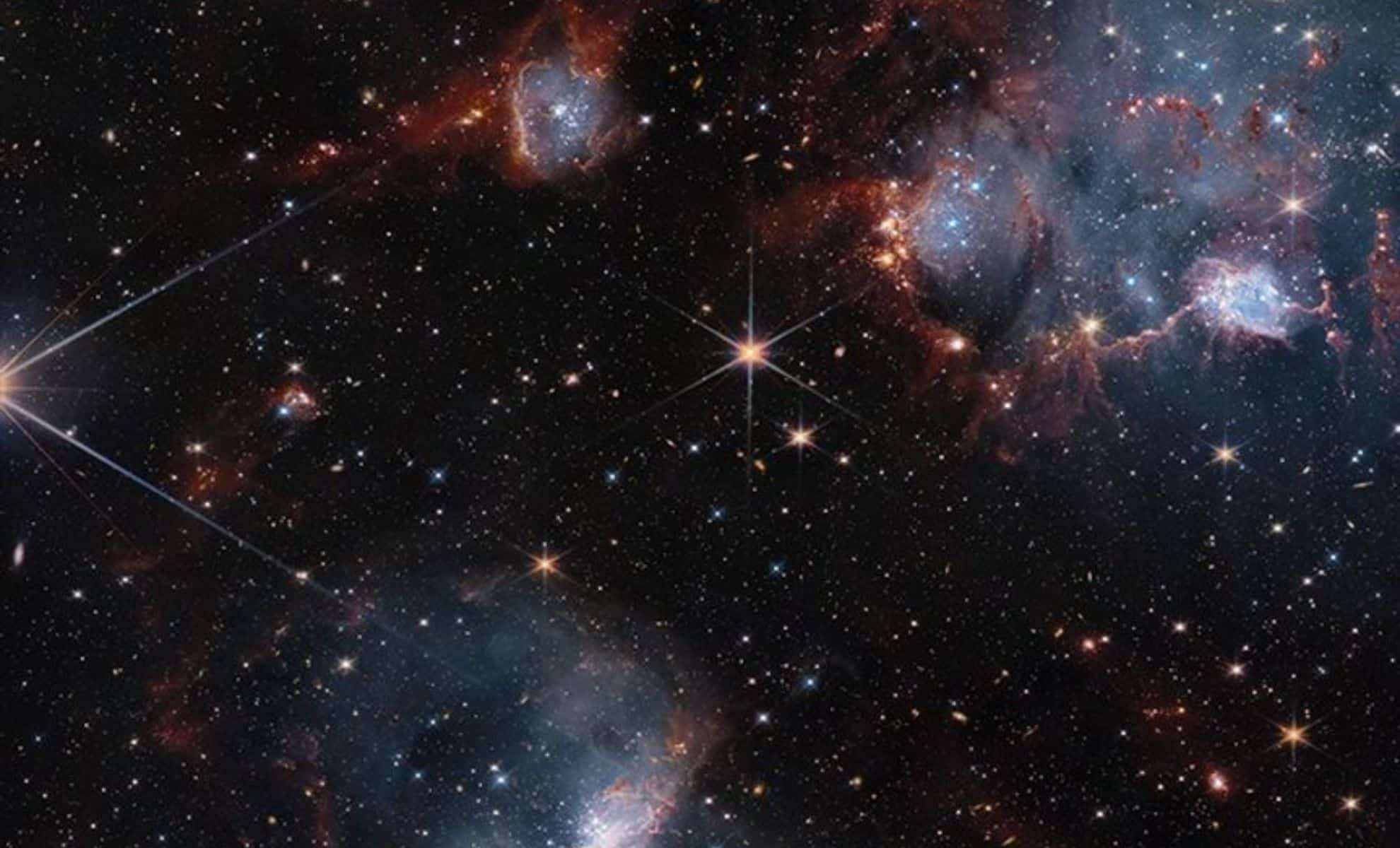
On July 7, 2025, NASA released remarkable images captured by the Hubble and Webb space telescopes, highlighting the complex nature of two star clusters named NGC 460 and NGC 456. Situated within the Small Magellanic Cloud (SMC), a dwarf galaxy companion to the Milky Way, these clusters offer a unique window into the mechanisms of star birth and growth in an environment reminiscent of early cosmic times. By integrating Hubble’s visible-light data with Webb’s infrared observations, researchers gain a multidimensional perspective on how stars form and evolve alongside their surrounding interstellar material.
These vibrant images display the interplay between gas, dust, and stars, enabling a detailed examination of the star formation process. The Small Magellanic Cloud’s distinctive chemical makeup acts as a natural testbed for studying stellar physics under conditions akin to those of the young universe. Beyond their striking beauty, these observations provide crucial clues about the interaction between galaxies, star-forming clouds, and the interstellar medium that connects them.
Understanding the Importance of Star Clusters
Star clusters are fundamental to decoding the life cycles of stars — from their origins to their eventual demise. These clusters arise from large, collapsing clouds of gas and dust bound by gravity. The clusters under study, NGC 460 and NGC 456, are categorized as open clusters, containing dozens to thousands of stars. Typically, these stars are young, hot, and energetic, distinctly different from older stars like the Sun.

Given their youth, ranging from one to ten million years old, these clusters are prime subjects for observing active stellar phenomena such as strong stellar winds and ongoing nuclear fusion. These processes actively sculpt their environments, forming nebulae and triggering the next generation of stars. This continuous interaction between stars and interstellar gas and dust is a hallmark of the interstellar medium, where new stellar life is constantly emerging.
Within the vicinity of NGC 460 and NGC 456 reside rare, massive O-type stars, known for their intense brightness and brief lifespans. These stars consume fuel rapidly, undergoing swift evolutionary stages. Studying such luminous, short-lived stars sheds light on the intense but transient star formation episodes that have shaped the universe over time.
How Hubble and Webb Provide Complementary Insights
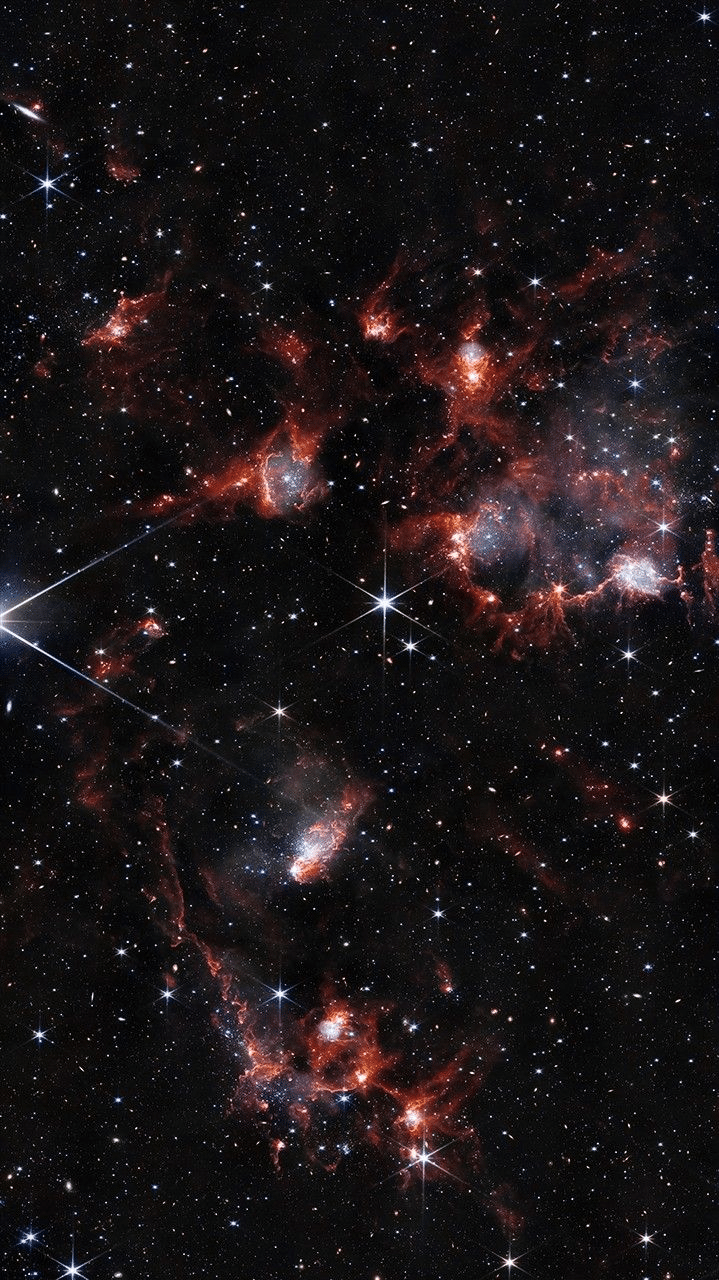
The synergy between Hubble and Webb telescopes marks a significant advance in space observation. Hubble’s visible-light imaging captures the glowing ionized gas within these stellar nurseries, revealing bubble-like structures formed by the energetic radiation emitted by young stars. These glowing zones often appear in blue hues, illustrating the effect of powerful stellar radiation.
Meanwhile, Webb opens a window into the otherwise concealed regions by detecting infrared light emitted from warm dust that remains hidden in visible wavelengths. As starlight warms dust particles, they radiate infrared energy detectable by Webb’s instruments, unveiling intricate filaments and dense dust clouds essential to star formation. Combining data from both telescopes enables astronomers to assemble a fuller picture of the relationships between gas, dust, and stars—a feat unattainable when relying on a single telescope.
Webb’s infrared images redefine dust from a mere visual barrier to an active player in star creation. While Hubble captures dust as dark silhouettes against bright stars, Webb’s observations reveal how dust absorbs starlight and re-radiates it, offering detailed knowledge about the composition and density of the Small Magellanic Cloud’s interstellar medium.
- Categories:
- News




0 comments
Sign in to Comment