
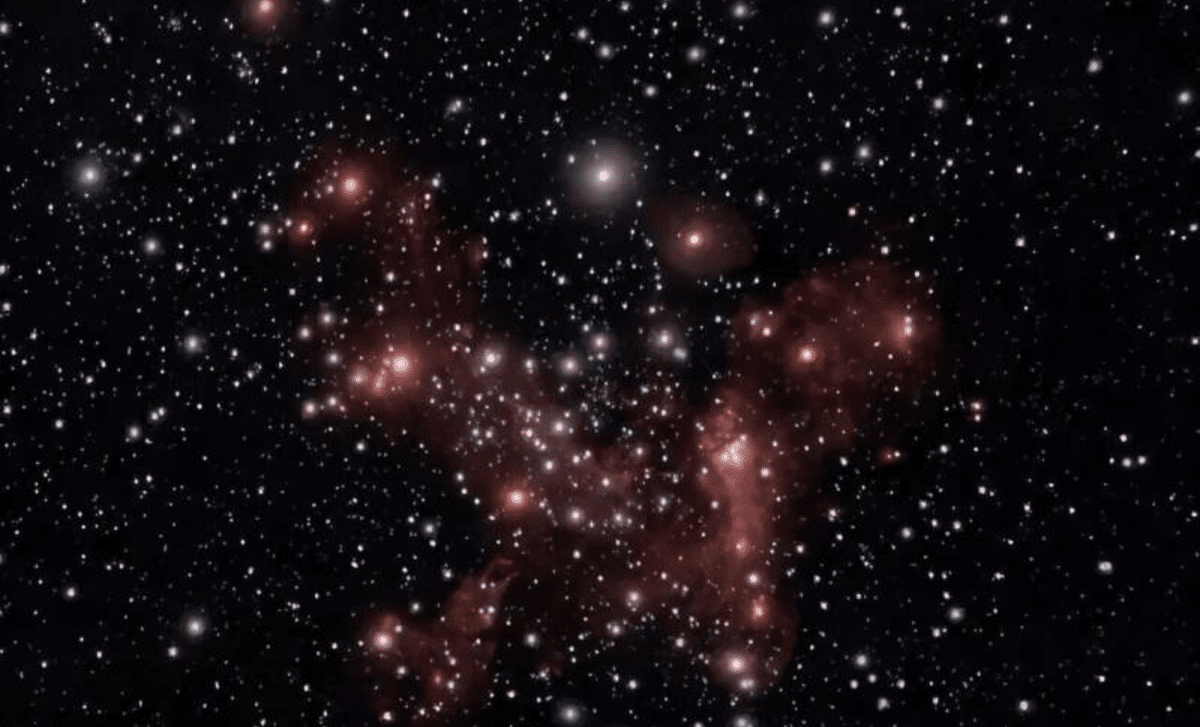
Decades of curiosity about puzzling gas clouds close to the Milky Way's central black hole may soon be resolved. Recent research published in Astronomy & Astrophysics points to a massive binary star system as the likely origin of these mysterious gas formations orbiting near Sagittarius A*. This breakthrough changes our understanding of how material behaves around one of the cosmos’ most intense regions.
A Turbulent Core in Our Galaxy
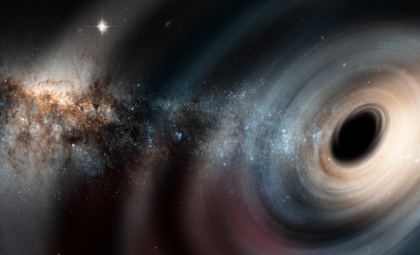
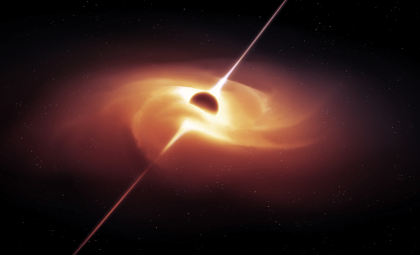
The vicinity of Sagittarius A* is an extraordinarily dynamic zone teeming with dense stars, swirling gas, and powerful gravitational effects. Astronomers have long viewed this area as a key environment for exploring black hole interactions with surrounding matter. Among its fascinating elements are compact gas clouds, dense pockets of ionized gas that travel along elongated orbits towards the black hole.
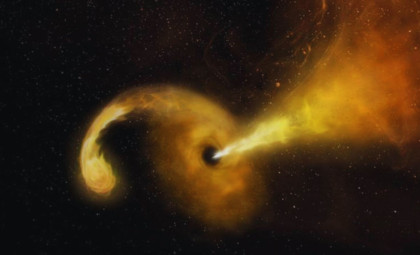
First spotted via infrared imaging, these clouds have confounded scientists due to their unusual composition: too compact to be mere gas structures but too diffuse to be traditional stars. Their paths reveal they are slowly being stretched and torn apart by tidal forces near the black hole, making them invaluable indicators of how material falls inward.

Pinpointing their origins has been essential to explaining how Sagittarius A* continues to draw in matter, sustaining its activity through a consistent inflow of material.
Unraveling the G-Cloud Mysteries
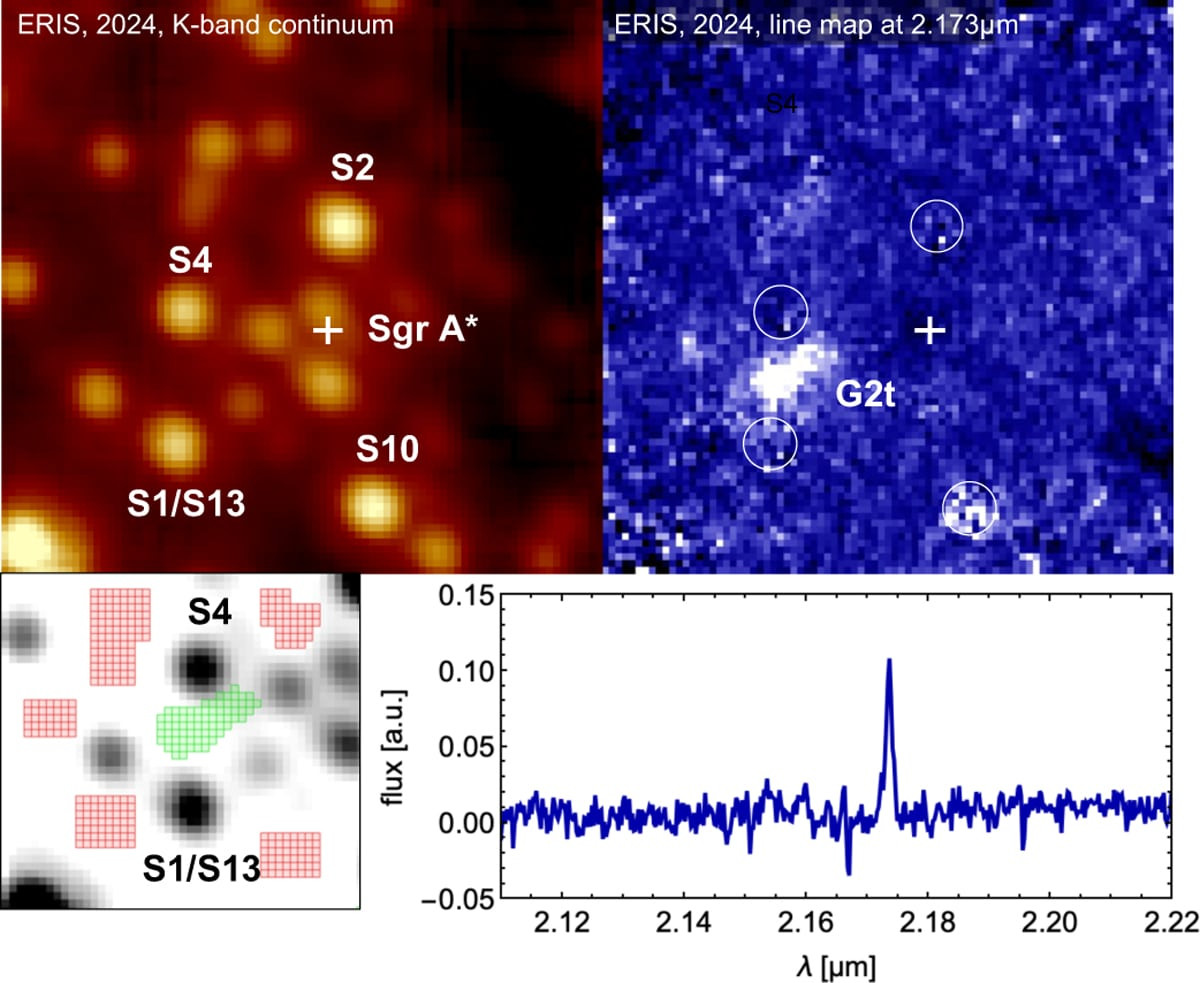
Adding complexity to the puzzle, several related gas objects were detected over time. The first, known as G2, was identified in 2012 as a compact cloud with mass similar to several Earths. It was soon complemented by G1, an earlier object on a parallel orbit, and a trailing feature called G2t.
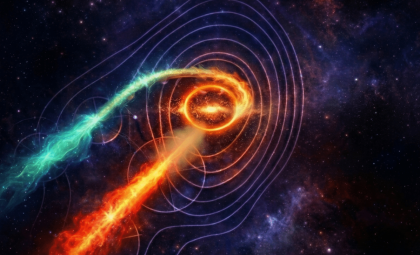
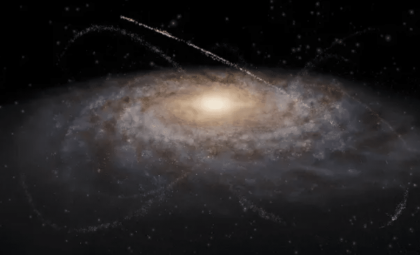
Subsequent studies showed these clouds belong to a larger, linked structure—a gas streamer collectively called the G1–2–3 system. Their nearly identical orbital paths suggest they share a common origin.
This alignment seemed too precise to be coincidental, prompting scientists to propose a single continuous source generating these gas clumps.
Such a feeding mechanism could supply the black hole with roughly one Earth mass of gas per decade, enough to maintain its observed state. These clouds appear to be a direct way material is funneled inward, connecting small-scale gas dynamics to the galaxy’s broader evolution.
Tracing the Source to a Binary Star System
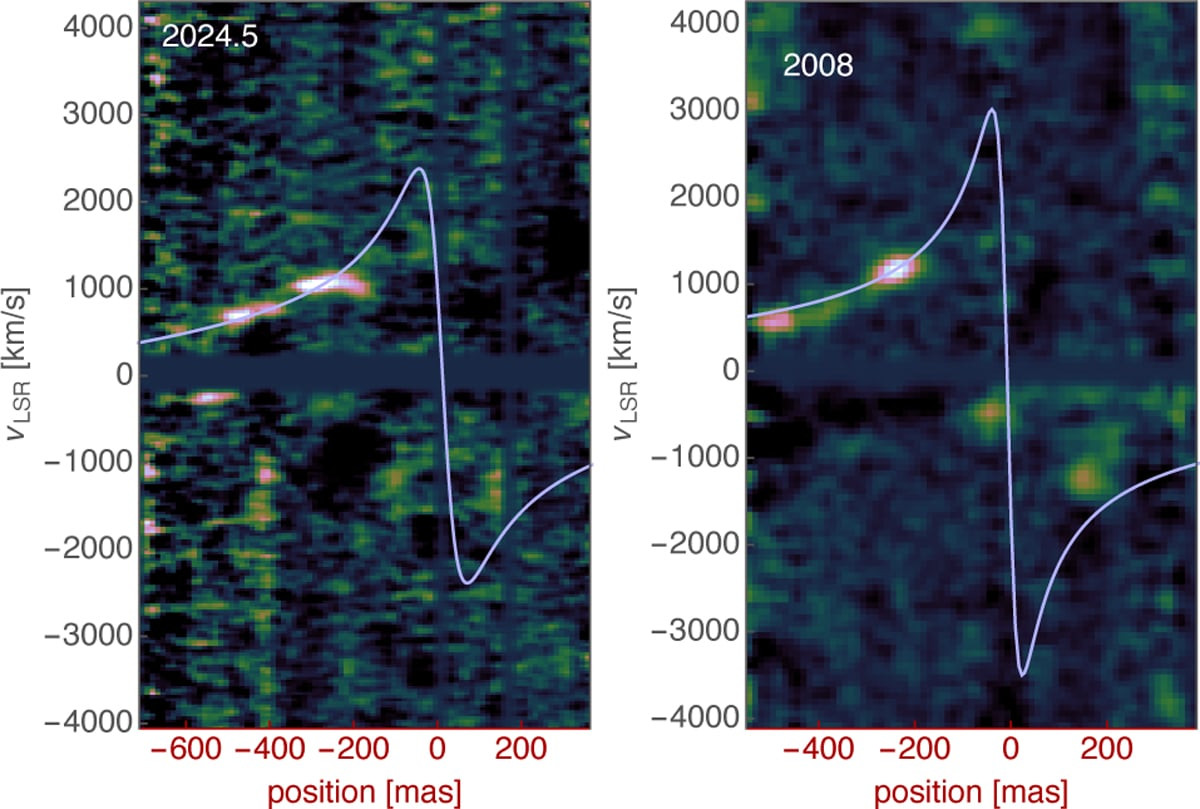
Researchers achieved a major breakthrough by backtracking the paths of these gas clouds using sophisticated equipment such as SINFONI and ERIS. Detailed analysis focusing on the Brackett-γ spectral line allowed them to precisely reconstruct the clouds' journeys over time.
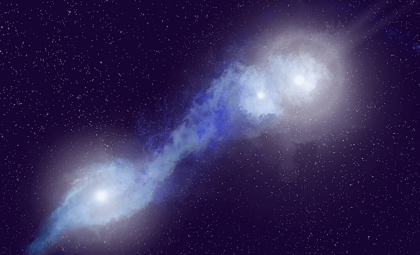
The evidence points firmly to IRS 16SW, an enormous contact binary star system nestled within a disk of youthful stars surrounding the galactic center. This pair of stars orbits closely, with their violent stellar winds crashing against each other, producing shock zones where gas condenses.
Hydrodynamical models back this idea, showing that the interactions between the stellar winds and nearby material create dense gas pockets. These pockets eventually break away and plunge inward, appearing as the observed G1, G2, and related clouds.
Variations in the gas clouds’ orbits can be explained by the movement of the binary system itself, reinforcing this interpretation. What once seemed like isolated events now fits within a unified, moving system shaped by stellar dynamics.
Connecting Stellar Activity with Black Hole Growth
This finding goes beyond resolving a gas cloud riddle; it establishes a vital connection between stellar life cycles and black hole fueling. Massive stars like those in IRS 16SW actively influence their environment and contribute material to the central black hole’s growth.
Published in Astronomy and Astrophysics, the study shows how stellar winds from massive binary stars can provide a sustained stream of gas, feeding the black hole in chunks that we can observe. This process may be common not only in our galaxy but across many others, offering new insights into universal black hole feeding mechanisms.
By linking star evolution, gas dynamics, and black hole growth, this research brings a clearer, more comprehensive view of how galaxies operate. Those mysterious gas clouds are now understood as integral components of a continuous cycle sustaining one of our galaxy’s most formidable entities.
- Categories:
- Astronomy

0 comments
Sign in to Comment