
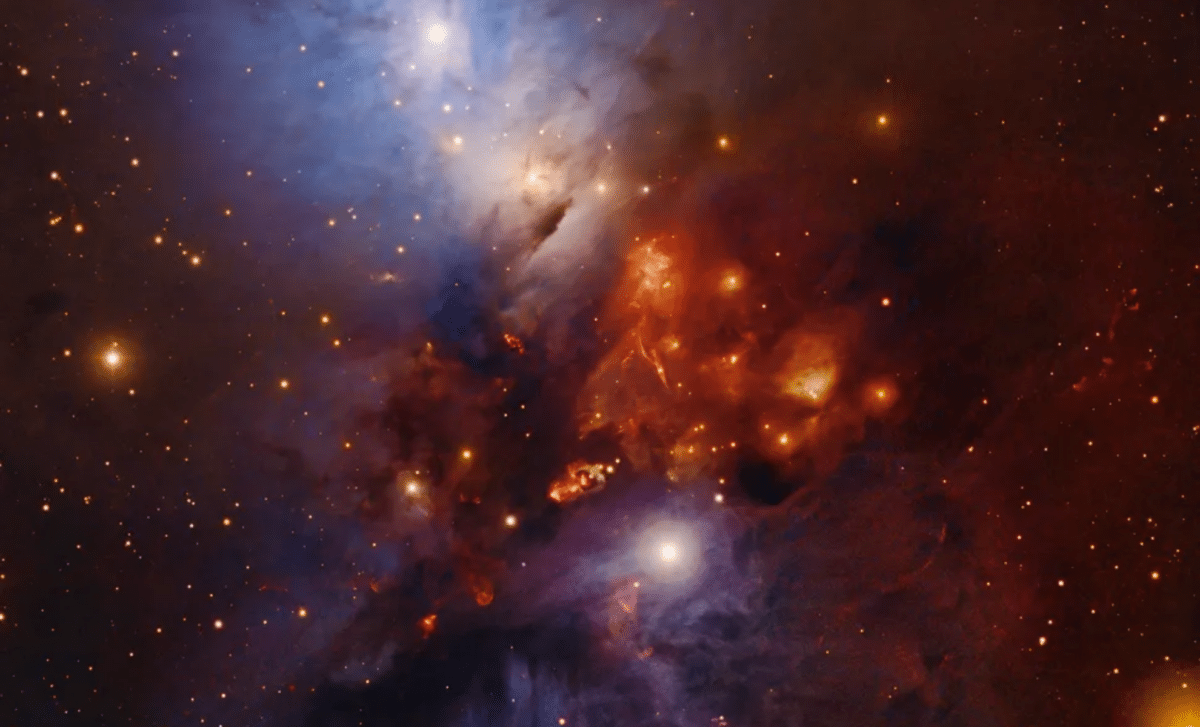
In a remarkable finding featured in Nature Astronomy, researchers have uncovered a stellar phenomenon that could resolve a three-decade puzzle about how stars grow in their earliest phases. While studying the binary star system SVS 13 inside the NGC 1333 reflection nebula, situated about 1,000 light-years away in Perseus, astronomers discovered upwards of 400 bow-shaped arcs formed by intense outflows from a young star.
Tracing the Explosive Timeline of a Young Star
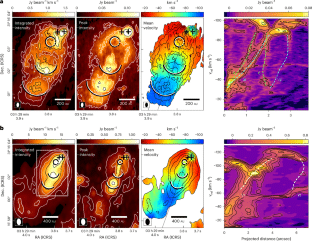
Using the precise capabilities of the Atacama Large Millimeter/submillimeter Array (ALMA), scientists explored the turbulent history of one star in the SVS 13 pair. Their observations unveiled more than 400 nested rings, each one marking an individual explosive event when the star forcefully pushed material outward at high speeds.
Analogous to how tree rings reveal a forest’s environmental past, these molecular layers chronicle the cyclical phases of accretion and expulsion that shape the star’s formation. Significantly, the most recent ring matches a recorded bright eruption from the early 1990s, linking a historical flare to the star’s physical surroundings.

“This breakthrough provides a novel method to decode a young star’s past,” explained co-author Gary Fuller, professor at the University of Manchester. “Each ring cluster acts as a timestamp of a past eruption, offering new perspectives on stellar growth and the shaping of emerging planetary systems.”
The discovered ring pattern not only supports existing theories but delivers a vivid visual story illustrating the cycles that dominate early stellar evolution.
Direct Proof Supporting Long-Held Theories
The discovery’s significance extends beyond its stunning visuals. For many years, astrophysicists have theorized that young stars amass mass through sudden, irregular infall of matter from their encircling disks, triggering energetic jets that eject material into space. Until now, direct observational evidence had been missing. Published in Nature Astronomy, this research fills that gap decisively. The ultra-thin rings exhibit bow shapes, confirming they arise from shock waves moving through interstellar gas.
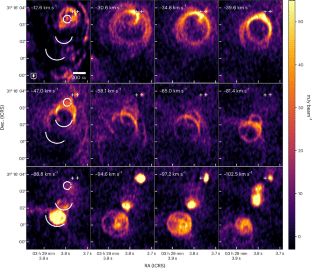
The uniform spacing and symmetry indicate these outbursts occur in a regular pattern, likely triggered after the star accumulates a critical mass. The youngest ring, linked to the documented outburst three decades ago, strengthens this episodic model by providing a live record of star formation activity. The blend of detailed imaging and archival data creates a clear bridge between theoretical models and tangible observation.
Insights on Planet Formation From These Rings
Though still in its infancy, this star’s behavior holds clues for planetary genesis. The forceful jets seen in the SVS 13 system influence the star’s ability to retain material and how much remains available for building planetary disks. This natural regulation, now evidenced by the ringed structures, directs the layout of the entire emerging planetary system.
As gas and dust are expelled, density waves travel outward, reshaping the physical conditions within the surrounding disk. These waves could affect the birth of gas giants and the movement of protoplanets throughout the system.
With hundreds of rings acting as chronological markers, astronomers can reconstruct a detailed sequence of early planetary system conditions. This finding not only illuminates star formation processes but opens the door to unraveling how systems like our own solar system could have developed under similar dynamics.
NGC 1333: A Stellar Nursery Yielding New Discoveries
NGC 1333 has fascinated scientists as an active star-forming locale. Although obscured in optical wavelengths, it shines brightly in infrared and radio bands, showcasing an array of protostars, jets, and molecular clouds. The latest observations from ALMA place NGC 1333 at the forefront of contemporary astrophysical research.
The binary configuration of SVS 13 adds complexity, as gravitational interactions between the two stars might influence the timing and intensity of eruptive episodes. Future monitoring aims to track the changes in these rings and search for similar features in other star-forming regions to broaden understanding. Researchers hope this system will become a standard for studying stellar birth universally.
The discovery of over 400 rings carved into the interstellar medium offers a rare combined snapshot and historical record of a star’s chaotic early years. Correlating a decades-old optical flare with a present-day physical signature creates an unprecedented link between theory and observation. For the first time, scientists can chronicle star growth by examining the marks it imprints on its environment.
- Categories:
- Astronomy






0 comments
Sign in to Comment