
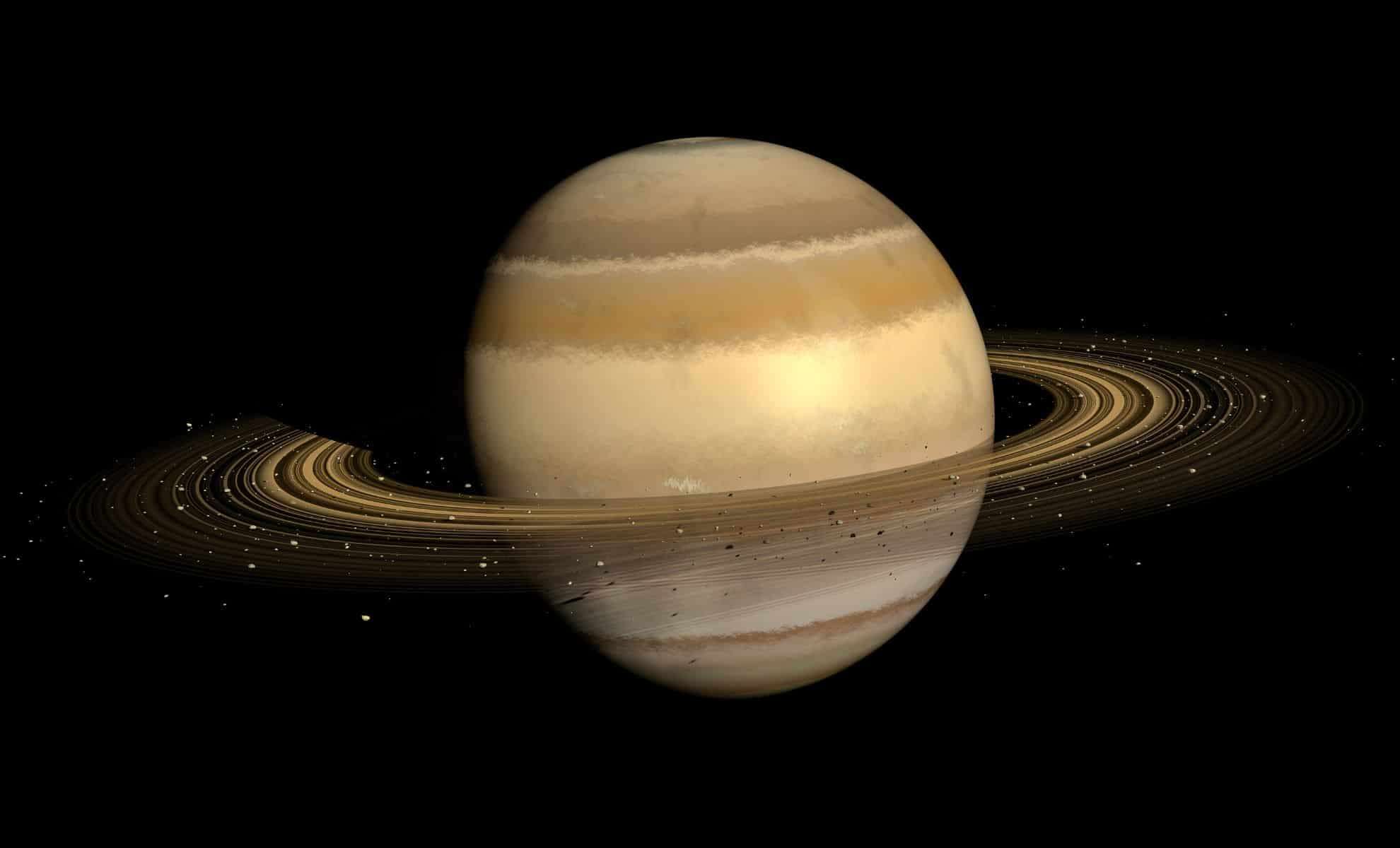
An extraordinary astronomical event is set to take place as Saturn’s celebrated rings will seemingly vanish from our view. This rare phenomenon occurs when the planet’s rings align edge-on with Earth, rendering them nearly invisible despite their vast expanse covering over 175,000 miles. The rings’ remarkable thinness becomes apparent during this alignment, causing them to almost disappear from sight. While Saturn’s rings have long been a subject of fascination, this fleeting disappearance offers both scientists and casual observers a unique way to experience the planet, showcasing the ever-evolving dynamics of our solar system.
The Optical Trick Behind Saturn’s Rings Fading Away
The temporary dimming of Saturn’s rings stems from their specific tilt relative to Earth’s vantage point. Although they span an enormous distance, Saturn’s rings are astonishingly thin—only about 30 feet thick. When viewed edge-on, the rings’ slim profile greatly minimizes their visibility. Dr. Amy Simon, Senior Scientist for Planetary Atmospheres at NASA’s Goddard Space Flight Center, likens this to a “planetary sleight of hand.” She elaborates, “The rings perform a kind of planetary ‘sleight of hand,’ whereby their edge-on view causes them to almost vanish (imagine a sheet of paper, which looks broad when facing upwards but gets thinner as you tilt it).” This analogy highlights the paradox of Saturn’s rings: vast in scale but incredibly narrow. Their diminished appearance during this alignment creates a captivating optical illusion that has intrigued experts for many years.
Though this effect may seem like a mere visual curiosity, it holds significant scientific value. The precise orientation of the rings, their slender thickness, and their alignment with Earth enable this phenomenon, providing researchers a rare chance to examine Saturn’s ring dynamics from an uncommon perspective. Viewing Saturn under this geometry allows astronomers to study ring-atmosphere interactions and observe structural changes, offering vital insights into one of our solar system’s most iconic features.

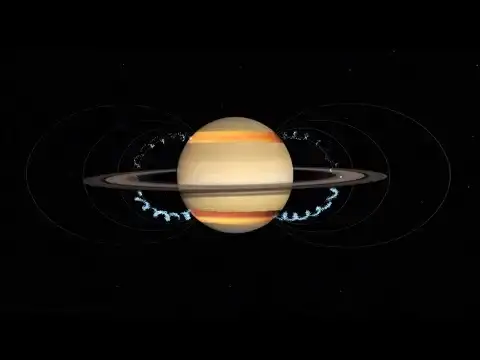
Viewing Challenges and Insights During Saturn’s Ring Dimming
While this rare disappearing act will excite astronomers, it also poses obstacles for observers aiming to witness it firsthand. Dr. Simon notes that Saturn will be situated extremely close to the Sun in the sky during this period, complicating observations with smaller telescopes. “Unfortunately, Saturn’s proximity to the Sun in March will make it tricky to catch this event through small telescopes,” she said. The planet’s closeness to the Sun causes it to blend with the intense solar glare, making the subtle ring appearance difficult to discern for amateur viewers equipped with conventional telescopes. Even those with larger instruments may find it challenging due to the overpowering sunlight.
For dedicated astronomers, this event demands precise timing and more powerful optics. There is, however, a silver lining later in the year. Dr. Simon explains, “A similar ring alignment will happen in November, when Saturn’s position in the sky is more favorable. Although the rings won’t be perfectly edge-on then, making them faintly visible, it offers a better chance to observe them.” This shift means that during the fall, the rings will appear thinner than usual, providing an intriguing glimpse into the planet’s iconic features without their complete disappearance.
Significance of This Rare Saturnian Phenomenon
Though the apparent fading of Saturn’s rings may capture casual interest, it represents a vital observational window for astronomers. Studying the planet when its rings lie edge-on allows scientists to delve into the composition and architecture of these icy and rocky structures in ways not otherwise possible. The rings’ fragile nature and variable dynamics have long intrigued researchers. This event offers a rare opportunity to observe interactions between the rings, Saturn’s atmosphere, and its moons. Importantly, it highlights the ongoing evolution of Saturn’s rings, which are gradually deteriorating. The progressive loss of ring material reminds us how even seemingly timeless celestial features undergo change.
Beyond examining the rings, this event offers a fresh vantage point on Saturn itself. The planet’s enormous size and unique atmospheric properties come into focus during this special alignment, granting a perspective few have the chance to witness. This alignment underscores the influence of planetary cycles—showing how even iconic structures can seem to fade abruptly. As Saturn’s rings slowly lose mass, such events are crucial for understanding their long-term destiny and the forces driving their gradual decline.
The Future of Saturn’s Rings in the Cosmic Timeline
While Saturn’s rings will briefly vanish from Earth’s perspective, they are not lost forever. Still, this unusual event serves as a potent reminder of their slow decay. Over millions of years, the rings will break down, with particles spiraling into Saturn’s atmosphere or being dispersed by gravitational influences. This steady degradation means that times when the rings are difficult to observe may become more frequent as their mass dwindles. Observing Saturn’s rings during this rare alignment offers a unique glimpse of their fragile, transient state, deepening our understanding of their changing nature. As research continues, scientists are reminded of the cosmic cycles that govern all celestial bodies, where permanence is rarely guaranteed.
This phenomenon also highlights the dynamic essence of our solar system. What seem like static, eternal features are in fact subject to continual transformation, with Saturn’s rings exemplifying how time and gravitational forces reshape even the most familiar cosmic landmarks. For astronomers, this event is an essential reminder of the universe’s constant flux and the valuable insights gained from each ephemeral moment we observe.
- Categories:
- Astronomy ,
- News ,
- Nasa










0 comments
Sign in to Comment