
The eastern tropical Pacific has experienced an unprecedented quietude. Along Panama’s Pacific shoreline, a dependable seasonal upwelling that has nourished fisheries and cooled coral reefs for more than 40 years did not manifest in 2025. This disruption carries serious implications for marine life and coastal communities alike.
Traditionally, between January and April, cold, nutrient-laden waters ascend to the ocean’s surface, boosting the entire marine food chain. This year, those nutrient-rich waters remained trapped below, leaving surface temperatures warm and nutrients scarce. The repercussions are just beginning to surface.
Fortunately, scientific teams were present during this anomaly, enabling real-time documentation of this event. Their observations prompt investigation into larger-scale transformations occurring in tropical ocean systems, regions that have historically suffered from inadequate monitoring.

A Four-Decade-Long Cycle Interrupted
The Gulf of Panama has seen a stable pattern of seasonal upwelling for over 40 years. Late in the year through early spring, persistent northern trade winds push surface waters offshore, allowing colder, nutrient-rich depths to rise. This process fuels phytoplankton blooms, which are fundamental to the marine ecosystem’s productivity.
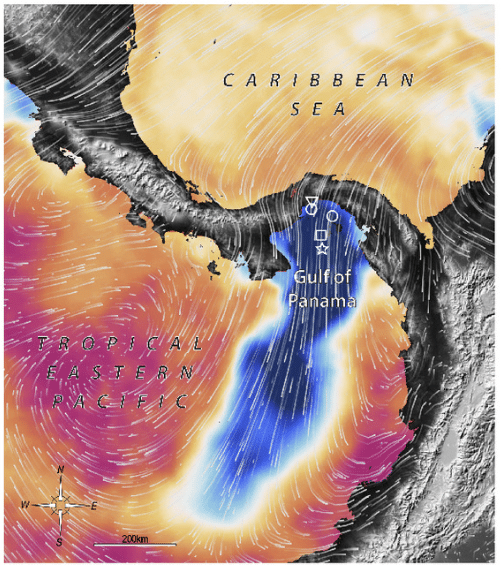
In early 2025, this dynamic vanished. Not a trace of cold water emerged at the surface nor was there an increase in chlorophyll levels. Sea surface temperatures remained high throughout the usual upwelling season. Measurements from the S/Y Eugen Seibold, operated jointly by the Smithsonian Tropical Research Institute and the Max Planck Institute, showed the vertical movement of water that defines upwelling had completely ceased.
The report published in Proceedings of the National Academy of Sciences documents this event as the first total shutdown of the upwelling process recorded in history. Scientists emphasized this loss as a removal of a vital ecological stabilizer and a warning of potential fragility in the wider ocean-climate nexus.
Weaker Winds Trigger Widespread Impacts
The root cause was a sharp decline in the strength of atmospheric forces. The northern trade winds normally drive upwelling by pushing surface waters offshore, but in early 2025 they weakened substantially. This prevented the cooler water from surfacing and eliminated the temperature gradient necessary to promote vertical mixing.
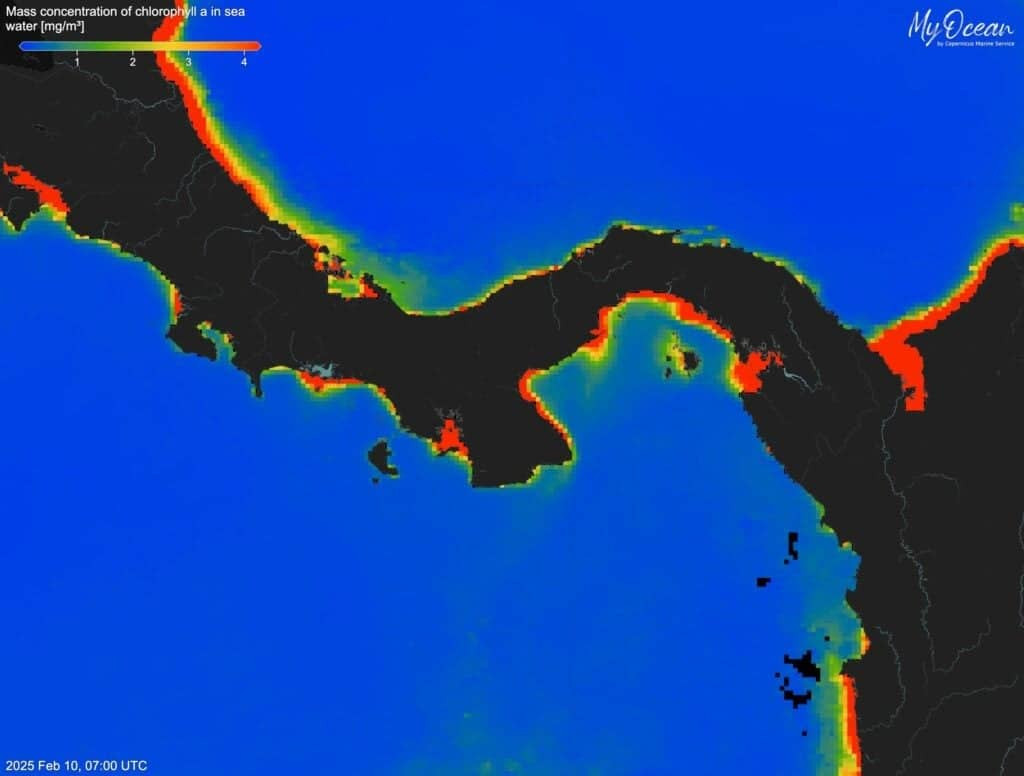
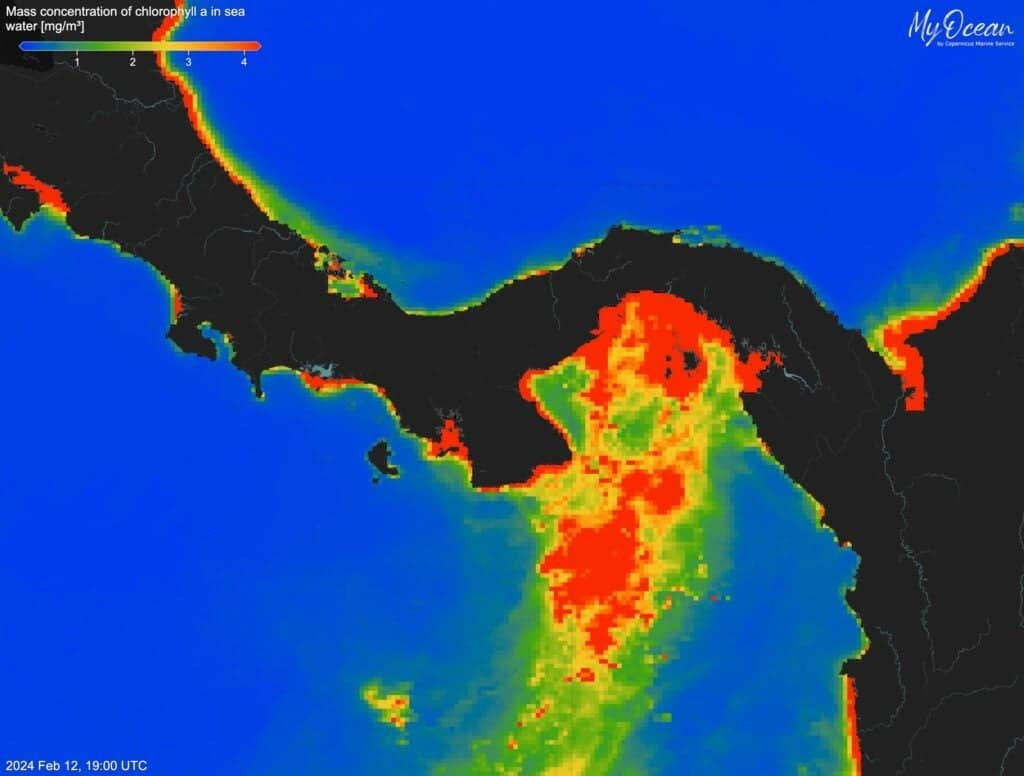
This lack of nutrient replenishment immediately affected marine life. Without a surge in nutrients, phytoplankton productivity dropped dramatically. Satellite data recorded notably diminished chlorophyll-a concentrations throughout the Gulf of Panama during the period usually characterized by peak biological activity.
This decline impacted key species such as sardines, mackerel, and squid, vital to both small-scale and commercial fisheries. Initial assessments suggest a reduction in catch volumes for coastal fishers. Warmer waters also intensified stress on coral reefs, as missing the usual cooling upwelling created conditions favorable for coral bleaching. Scientists warn such events could become more frequent amid ongoing warming, consistent with findings in STRI’s official statement.
Visual data shared by researchers highlighted a striking drop in ocean productivity compared to previous years. The chlorophyll imagery clearly shows how the usual biological boost during the dry season failed to ignite.
Lack of Continuous Monitoring Obscures Changes
Perhaps the most profound takeaway is how easily this event could have been missed. Researchers emphasize that without their coincident expedition, this significant disruption might have remained undetected. Tropical marine environments, despite their ecological and economic prominence, continue to suffer from insufficient global observation.
Unlike well-monitored systems such as the Humboldt and California Current, tropical sites including Panama depend mainly on sporadic field studies. This creates large blind spots, hindering understanding of oceanic variability on a global scale.
Co-author Hanno A. Slagter noted, “If we hadn’t been there with a ship at the right time, the whole event might have slipped under the radar.” This highlights the urgent need to strengthen data collection infrastructure in tropical regions.
The Smithsonian Institute describes this incident as a clear example of the climate susceptibility of tropical ocean systems, where even small atmospheric disturbances can trigger major ecological consequences.
Is This a Warning Sign or a Lone Incident?
It remains unclear whether the 2025 failure represents a unique event or an early indication of larger systemic shifts. The researchers propose two scenarios: one attributing the anomaly to natural variability, possibly connected to long-term cycles like the Pacific Decadal Oscillation, and another suggesting that human-driven climate change is altering the tropical wind patterns that sustain upwelling.
Atmospheric simulations link weaker winds to changed pressure systems over the eastern Pacific. Yet, the scientists refrain from pinpointing a definitive cause without further evidence. Additional data are critical to determine if similar interruptions have occurred elsewhere or are emerging in comparable ocean regions.
These results underscore the crucial importance of continuous, high-resolution monitoring throughout tropical ocean zones. Without steady baseline data and ongoing observations, detecting early distress signals or understanding when fundamental oceanic processes deteriorate will remain a daunting challenge.
- Categories:
- Science











0 comments
Sign in to Comment