
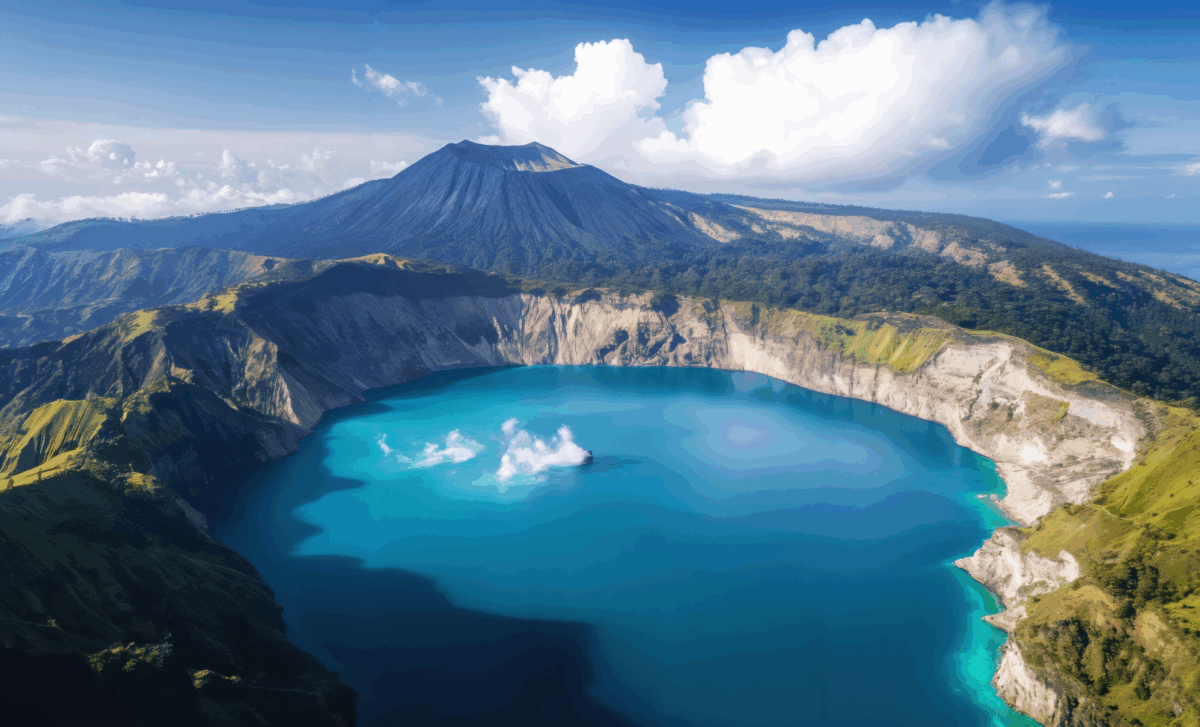
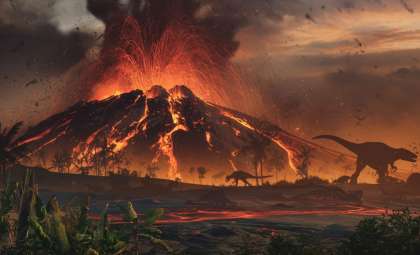
Approximately 78 million years ago, an asteroid collided with the area now known as Lake Lappajärvi in Finland, releasing extreme heat and causing widespread devastation. Yet from this dramatic event, a remarkable transformation occurred. Within just a few million years, microbial life began to inhabit the shattered rock formations within the crater. Recent research in Nature Communications unveils how this initially barren site evolved into a nurturing environment for early life.
From Devastation to a Sanctuary: The Microbial Resurgence in a Finnish Crater
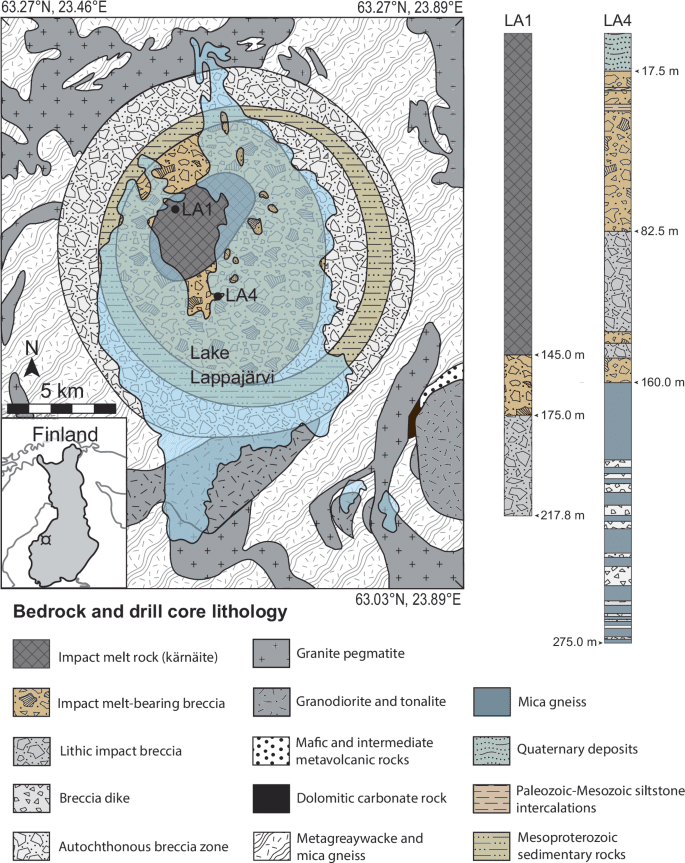
Located in Finland, Lake Lappajärvi offers a narrative of violent impact followed by gradual ecological restoration. Created by an asteroid hit that spanned 23 kilometers, the crater’s bedrock shows evidence of exposure to temperatures exceeding 2,000°C (3,632°F). As the impact’s shockwaves faded, a quiet but profound renewal phase commenced over millions of years.
A team led by Jacob Gustafsson and Henrik Drake from Linnaeus University in Sweden examined rock samples extracted beneath the lake to explore its geological history. Their results, featured in Nature Communications, identified signs of microbial life emerging just 4 million years post-impact—a tiny moment in terms of geological timescales. Through sophisticated isotope analysis focused on calcite and pyrite crystals, the scientists uncovered evidence indicative of microbial metabolic activity.

“We see the products of the microbial process,” Drake said, describing how ancient microbes likely converted sulfate into sulfide in the crater’s mineral-rich waters.
The intricate chemical signatures locked in these minerals offer a detailed glimpse into a revitalized environment.
“It’s amazing what we can find out in tiny crystals,” Gustafsson added, emphasizing how even microscopic mineral inclusions can reveal entire biological histories.
This discovery not only shifts our understanding of how swiftly life returns to disrupted landscapes but also supports the notion that similar impact craters on planets like Mars could have once harbored microbial ecosystems.
Extended Cooling Periods: Four Million Years of Environmental Recovery
Insights into how the crater’s intense heat dissipated post-impact provide valuable information about its suitability as a microbial habitat. Unlike comparable craters such as Germany’s Ries and Canada’s Haughton, which cooled within several hundred thousand years, Lappajärvi retained its warmth much longer. “Four million years is an exceptionally prolonged period,” explained Teemu Öhman, an expert in impact geology at the Lake-Lappajärvi UNESCO Global Geopark, highlighting the site’s distinctive geological traits.
“If you compare Lappajärvi with Ries or Haughton, which are the same size, they cooled way, way, way faster.”
This gradual decline in temperature likely provided a consistent environment favorable to microbial colonization. Beneath the lake lies thick granite and gneiss layers that once melted under the asteroid’s intense heat. These rock types, abundant in heat-retaining minerals, kept temperatures stable around 50°C (122°F) for millions of years—conditions that supported heat-loving microbes. Researchers suggest the crater’s relatively thin sedimentary cover was instrumental in this phenomenon.
“Sedimentary rocks often don’t fully melt during impact because of their inherent water and carbon dioxide content,” Drake explained, suggesting this moisture could have helped stabilize post-impact hydrothermal systems.
As temperatures gradually cooled to roughly 30°C (86°F), methane-producing microorganisms emerged, signaling a second wave of biological development. The crater’s history thus is not only about destruction but also a remarkable story of environmental recovery—an ecosystem rebuilt from shattered rock and elemental shifts, illuminated by isotope analysis.
Implications Beyond Earth: What This Tells Us About Life Elsewhere
The broader importance of this research lies in its planetary implications. If microbes could reclaim an asteroid impact site on Earth within a few million years, similar patterns may have played out across the solar system. Mars, featuring numerous impact craters and evidence of past hydrothermal activity, presents a compelling landscape where life might once have thrived.
This study from Lake Lappajärvi reinforces a profound perspective: life often emerges not only by surviving devastation but as a direct outcome of it. Each fractured mineral fragment and isotope variation narrate a tale of regeneration etched deep into Earth’s geological timeline.
- Categories:
- Science




0 comments
Sign in to Comment