
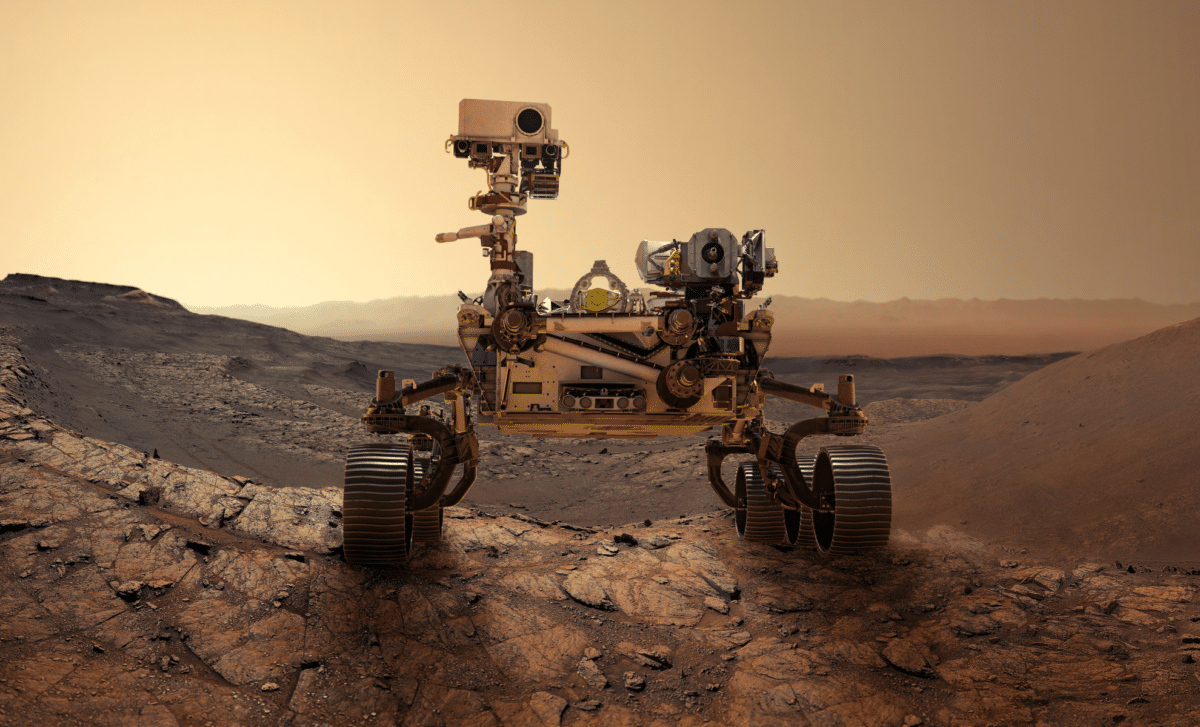
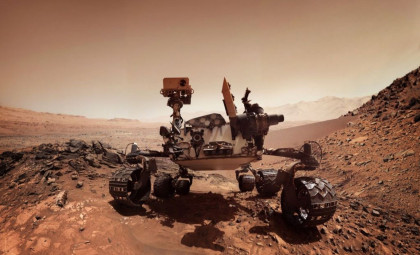
NASA’s Perseverance rover has achieved a significant milestone on Mars by journeying the equivalent of a full marathon on the planet’s surface. This achievement not only demonstrates the rover’s durability but also showcases advancements in robotics technology that enhance exploration of extraterrestrial terrains. NASA notes that this milestone aligns with Perseverance’s ongoing mission to investigate Mars’ ancient environment and its capacity to have supported life.
A Major Distance Milestone in Jezero Crater
Now five years into its mission, Perseverance has become part of an elite group of vehicles, having traveled over 26.2 miles (42.195 kilometers) on Mars. It is only the second rover in space exploration history to complete such a marathon-sized traverse, accomplishing this feat in less than half the time taken by its predecessor, the Opportunity rover.
This notable achievement occurred amid ongoing exploration of the Jezero Crater, a region of great scientific interest. Chosen for Perseverance’s landing location due to evidence of an ancient lake and river delta, Jezero is considered a prime target for uncovering signs of past microbial life on Mars.

NASA shared,
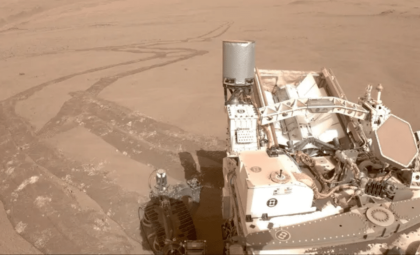
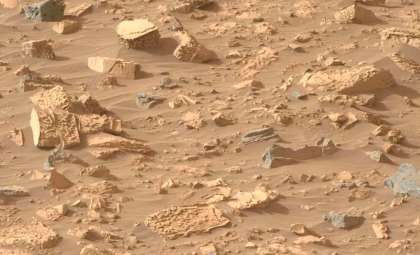
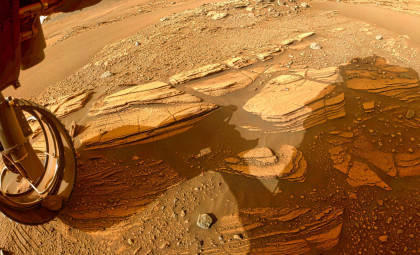
“The rover surpassed a total distance of 26.2 miles (42.195 kilometers) on the Red Planet on June 14, 2026. It crossed the milestone while exploring intriguing, ancient terrain to the west of Jezero Crater, where the robotic geologist discovered the remnants of an ancient lake, and possible signs of ancient life,” NASA wrote.
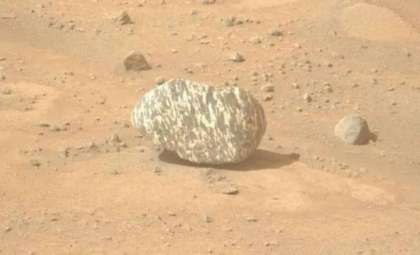
Beyond symbolizing endurance, this milestone contributes valuable data for understanding Mars’ geological history and climate evolution. Perseverance has gathered samples, analyzed rock structures, and recorded findings that could ultimately address the question of whether life once existed beyond Earth.
Innovations Driving Mars Rover Mobility
Perseverance’s swift traversal compared to older rovers stems from innovative enhancements in robotic locomotion and self-navigation. Previously, Mars rovers managed cautious movements, continuously assessing hazards ahead due to terrain challenges, including rocks, sand traps, steep slopes, and time delays in communications with Earth, limiting daily travel distances.
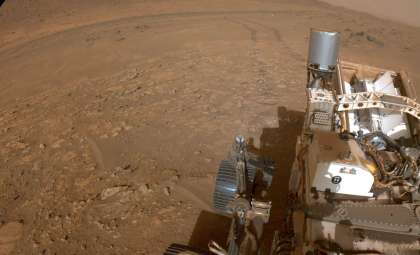
Perseverance’s system is distinct: outfitted with cutting-edge onboard processors, navigation sensors, and sophisticated AI software, it autonomously evaluates its surroundings and makes driving choices without the need to wait for commands from mission control. This autonomy lets it operate nearer to its physical speed limits while maintaining a high safety standard.
The rover’s self-driving system continuously monitors the terrain, detecting obstacles and selecting secure paths on the spot. Although mission planners on Earth outline goals and routes, Perseverance handles detailed route planning independently. This capability has revolutionized mission strategies by enabling longer treks and more adaptable linkages to scientifically meaningful targets.
This leap forward enables the rover to cover significant ground while dedicating additional time to scientific investigation, including sample collection and detailed imaging, thereby enhancing our insights into the Martian world.
Poised to Set a New Distance Benchmark
Completing a marathon on Mars is just one of Perseverance’s triumphs; another record could be on the horizon. The rover is steadily nearing the all-time Mars distance record set by Opportunity, which traveled roughly 45.16 kilometers (28.06 miles) over nearly 15 years.
Given its current rate and healthy condition, Perseverance might soon overtake Opportunity’s distance achievement. However, the pace depends heavily on mission objectives since scientific teams often pause exploration to perform detailed analyses of noteworthy geological features, trading speed for comprehensive research.
Perseverance has already proven its efficiency, having covered several kilometers in mere weeks during earlier excursions and setting records for daily travel distances. These successes underscore the maturity of autonomous navigation tech and hint at future missions capable of even farther journeys on planetary surfaces.
Each additional kilometer broadens the array of geological contexts open for study, increasing the chances to analyze ancient formations, detect biosignatures, and secure samples that could one day return to Earth for extensive examination.
- Categories:
- Nasa





0 comments
Sign in to Comment