
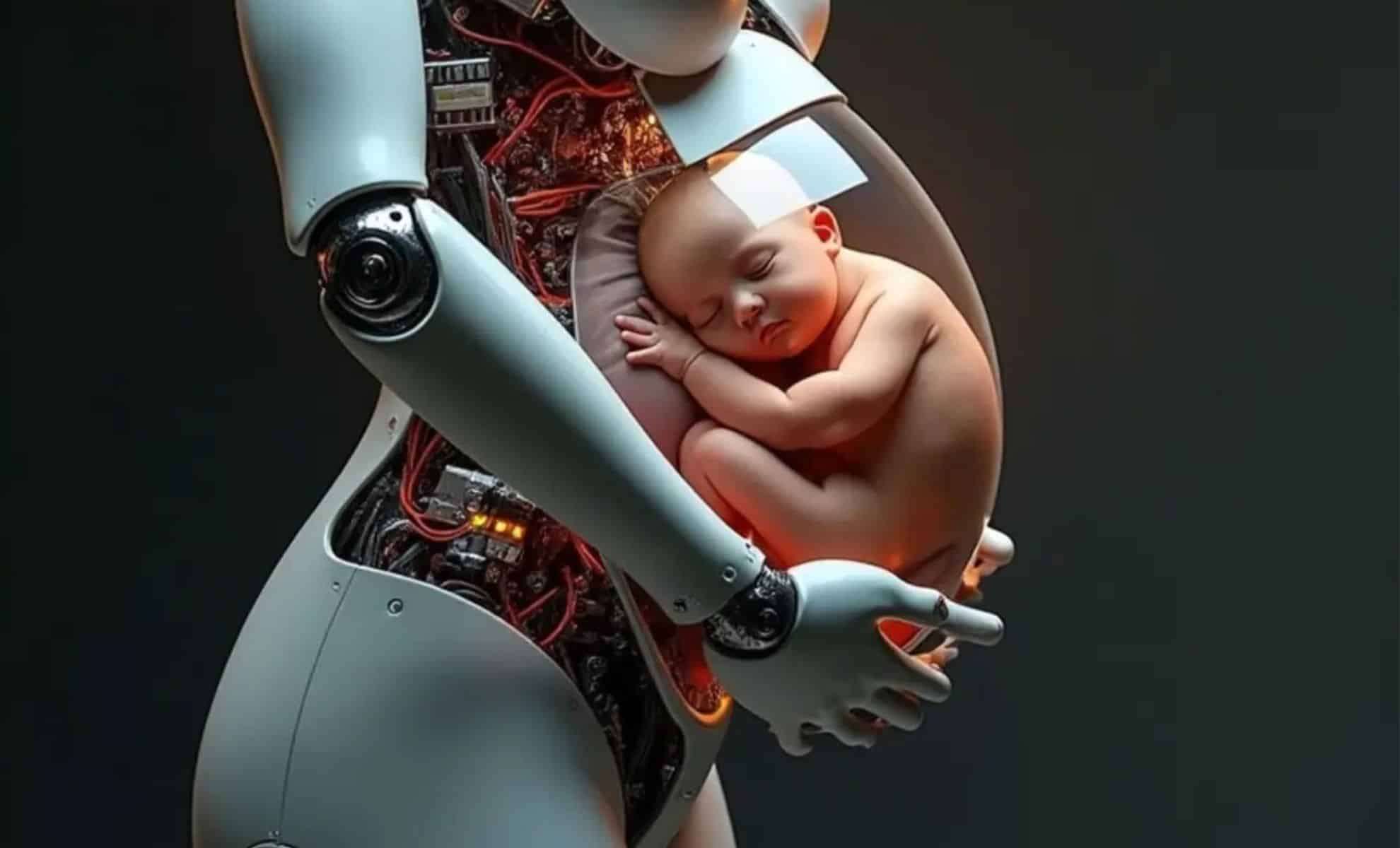
A groundbreaking development in medical innovation has emerged from China, where researchers at Kaiwa Technology, led by Dr. Zhang Qifeng, have engineered a humanoid robot equipped with a functioning artificial womb. This advanced machine is designed to gestate and potentially birth human infants, with plans for a public showcase slated for 2026.
Inside the Robot's Artificial Gestation System and Cost Overview
As reported by the New York Post, this innovation is more than theoretical—a functional prototype is undergoing final adjustments. The humanoid robot contains a specialized gestation chamber that replicates the environment of a human pregnancy. It features synthetic amniotic fluid, a nutrient delivery system, and an oxygenation mechanism simulated through a tube that functions like an umbilical cord.
The team asserts the robot is capable of managing every stage of pregnancy, including implantation of the embryo, fetal development, and childbirth. Although how fertilization and implantation will precisely occur remains to be fully demonstrated, the developers maintain their system can nurture a fetus safely until birth.

The estimated price for this robotic gestator is around 100,000 yuan, approximately $14,000 USD or ₹12 lakh, suggesting it could be attainable should it enter commercial availability. Kaiwa emphasizes the device is intended primarily to assist individuals and couples struggling with infertility, complex pregnancies, or other medical challenges rather than widespread use right away.
China’s Efforts Toward Robotic Pregnancy Legislation
The Kaiwa team has proposed policy initiatives to local regulators in Guangdong province, prompting discussions about legal guidelines for the emerging domain of robotic pregnancy. They seek governmental backing to establish ethical standards and a regulatory framework ahead of the robot’s formal release.
Though the concept of ectogenesis—the development of embryos outside the natural womb—has existed in scientific research, including experiments with animals, such as the 2017 success growing lamb fetuses at the Children’s Hospital of Philadelphia, Kaiwa’s project integrates this into a mobile humanoid robot. This may represent the first attempt to facilitate a complete human pregnancy via a robotic platform.
Ethical Concerns and the Impact on Reproductive Norms
This innovation has sparked widespread ethical debate among scholars, legislators, and the public. Questions arise about the implications for motherhood, family bonds, and the psychological well-being of children born this way. Critics warn that such technology could diminish the intimate human aspects of parenting or commercialize the reproductive process.
There are also unresolved issues around embryo selection transparency, legal protections for children, the effects on parent-child relationships, and long-term developmental outcomes, which Kaiwa has yet to address in detail.
Nonetheless, the company insists the technology aims to provide an alternative option for those unable to conceive naturally. Amidst declining birth rates in parts of East Asia, especially China, innovations like this are gaining serious attention despite raising numerous questions.
Current Understanding and Open Questions
While the robot’s promises are bold, independent validation from medical authorities remains pending. No official trials involving human embryos have been made public, and the practical feasibility of completing a full pregnancy cycle within this synthetic system, culminating in robotic delivery, has yet to be demonstrated.
Still, the significant interest this development has attracted illustrates a growing eagerness within reproductive technology circles, especially startups eyeing artificial gestation as the future of childbirth. Kaiwa’s creation offers a striking glimpse at a potential future where machinery and human biology converge in unprecedented ways.
- Categories:
- News












0 comments
Sign in to Comment