

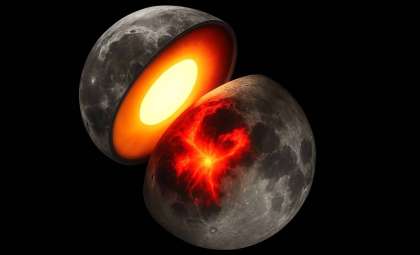
NASA has developed the Gravity Imaging Radio Observer (GIRO), a compact radio probe poised to transform the study of exoplanet and celestial body interiors. This innovative device measures tiny shifts in gravitational fields to produce detailed maps of the internal makeup of distant planets, moons, and asteroids. The concept, detailed in a recent articleThe Planetary Science Journal, aims to address fundamental questions about the structure and evolution of these far-off worlds.
GIRO: A Breakthrough for Probing Planetary Interiors
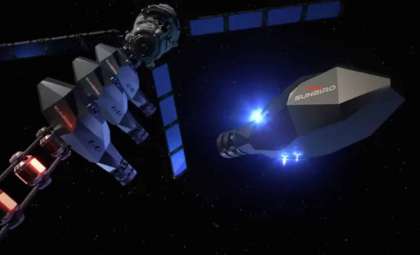
GIRO’s primary function is to detect subtle gravity field fluctuations, providing scientists with unprecedented data on the internal layers of remote planetary bodies. Ryan Park, a lead engineer at NASA’s Jet Propulsion Laboratory, described how the system works by reflecting radio transmissions from the spacecraft that deploys the probe. Park explained, “GIRO is a compact radio device that bounces signals from its host spacecraft, allowing researchers to identify fine-scale variations in the target’s gravitational pull.”
Mechanics of GIRO: Tracking Gravity Changes via Doppler Shifts
The functionality of GIRO is based on monitoring variations or irregularities in a celestial body's gravitational field. Both GIRO and its host spacecraft navigate in close coordination, whether orbiting or flying by the target. These gravitational anomalies cause minuscule alterations in their flight paths. “As the probe and host spacecraft travel together near a target, the uneven gravity field causes slight orbital shifts in both,” Park said. Scientists then analyze these shifts, observed through Doppler effect changes in radio signals, to construct detailed internal models.

Why GIRO Matters for Space Exploration and Research
GIRO stands out for its ability to capture high-precision gravity data even in environments where signals are inherently weak, such as small asteroids, or under conditions with limited data collection opportunities. Park highlighted that GIRO’s capabilities will be “essential for acquiring accurate gravity field data in challenging settings and risky exploration zones.” This technology could significantly aid missions aimed at elusive targets like distant moons or tiny, remote asteroids.
Engineering Hurdles in GIRO’s Development
Creating the GIRO probe involves overcoming design challenges including deploying the probe into finely tuned orbits that ensure consistent measurement accuracy and reliable communication with the host spacecraft. These orbits must also adhere to strict planetary protection standards to avoid contaminating other celestial bodies. For deep-space missions, GIRO relies on onboard batteries, limiting its operation to roughly ten days. Conversely, probes sent nearer the Sun may utilize solar energy to extend their functional period.
Looking Ahead: GIRO’s Role in Future Missions
The potential for GIRO extends widely across upcoming space endeavors. After key developmental phases, including rigorous prototype testing under mission-like conditions, GIRO could be incorporated into spacecraft destined for asteroids, moons, or outer planets. Park noted that verifying prototype performance in simulated space conditions is a critical step towards flight readiness. Integrating GIRO into future missions promises to advance our understanding of distant solar system bodies significantly.
- Categories:
- News




0 comments
Sign in to Comment