
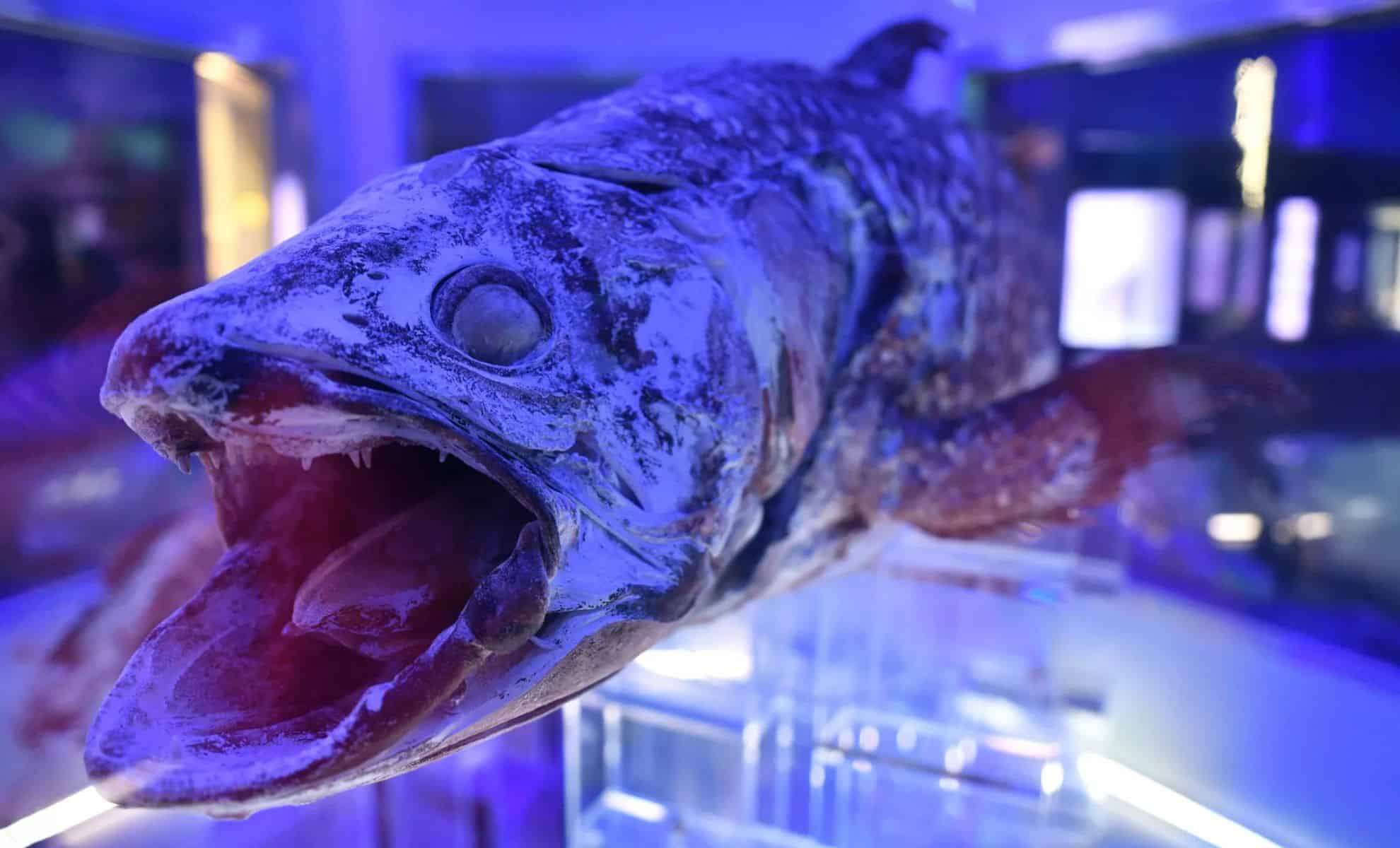
A recent investigation has provided new insights that revise a crucial part of vertebrate evolutionary history. Scientists from the University of São Paulo (USP) in Brazil and the Smithsonian Institution in the United States have demonstrated that many muscles previously attributed to the anatomy of the coelacanth, an ancient fish often called a “living fossil,” were actually ligaments mistaken for muscles.
Unveiling the True Anatomy of a Living Fossil
The coelacanth (Latimeria chalumnae) has shown remarkable anatomical stability over 65 million years but continues to reveal surprising details. In-depth dissection of this deep-sea species’ head uncovered that only about 13% of the muscle features previously documented were correct. Remarkably, the research also unveiled nine unrecognized evolutionary adjustments tied to feeding and respiration.
Aléssio Datovo, a professor at USP’s Museum of Zoology, noted that the coelacanth appears to be “more akin to cartilaginous fishes [such as sharks, rays, and chimaeras] and tetrapods [including birds, mammals, amphibians, and reptiles] than previously appreciated. It also shows greater divergence from ray-finned fish, which constitute approximately half of all vertebrates alive today.”

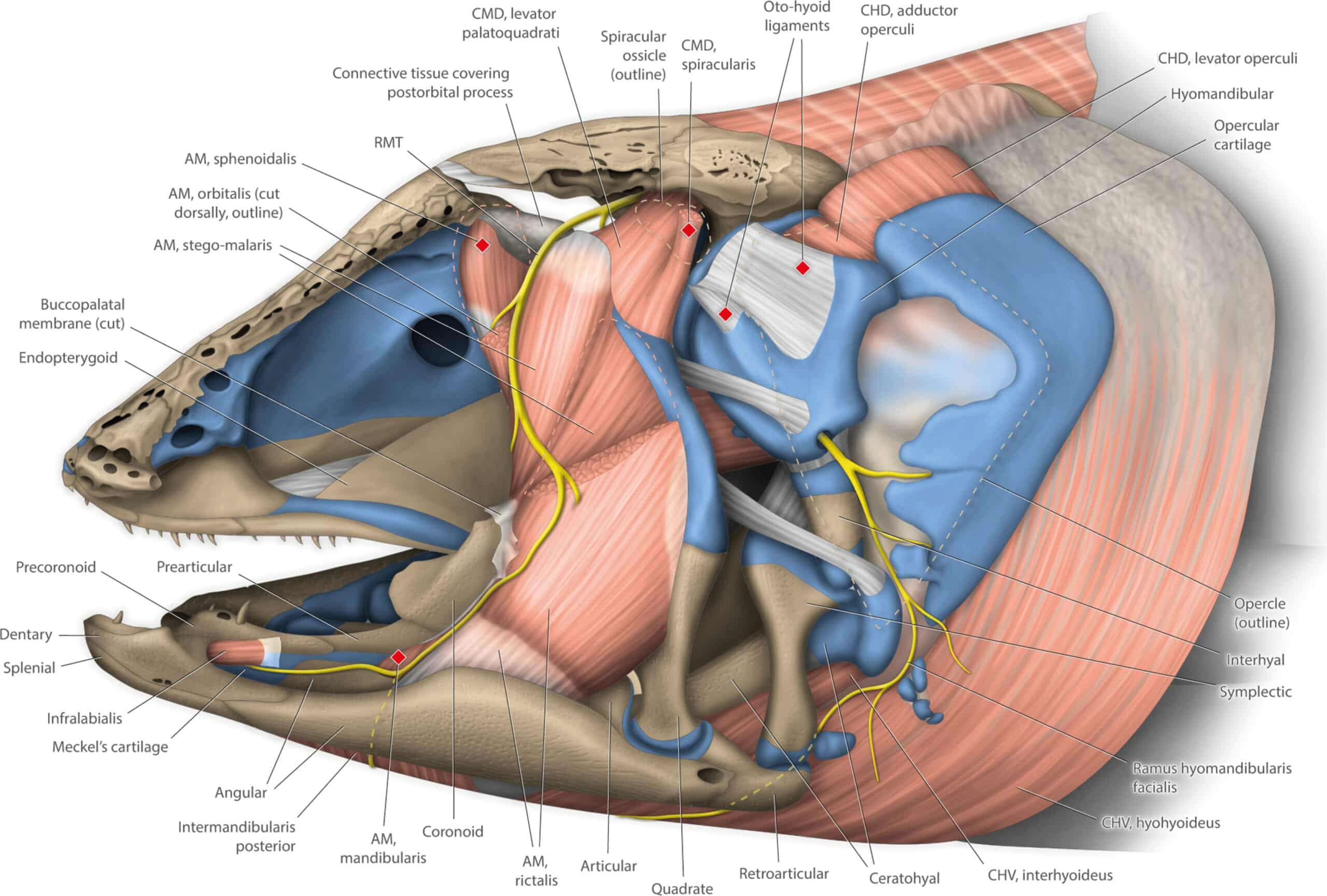
This finding overturns the longstanding assumption that the coelacanth possessed specialized muscles for expanding its buccopharyngeal cavity, critical for suction feeding and breathing. Instead, what were considered muscles turned out to be ligaments, which cannot contract. This implies the coelacanth predominantly uses biting as a feeding method, similar to sharks, rather than suction.
Insights Into Ancient Evolutionary Branches
The evolutionary split between ray-finned fish (actinopterygii) and lobe-finned fish (sarcopterygii) occurred roughly 420 million years ago. Lobe-finned fish include coelacanths, lungfish, and all tetrapods — mammals, birds, reptiles, and amphibians. Conversely, ray-finned fish, which exploit suction feeding, gained a competitive edge, thriving to dominate today’s water habitats and representing about half of extant vertebrate species.
Datovo explained, “Earlier research assumed this muscle arrangement, crucial for enhanced suction, was present in coelacanths too and thus originated in the common ancestor of bony vertebrates. Our findings reveal this is incorrect, as these muscles only evolved at least 30 million years later among the ancestors of modern ray-finned fish.”
Decoding Evolution Via Rare Ocean Dwellers
Coelacanths are elusive, residing approximately 300 meters underwater and often hiding in submerged caves. Their secluded environment and limited predators have helped preserve their genome over millions of years. Once known solely from fossils, a live specimen’s discovery in 1938 greatly surprised the scientific world. Another species was discovered in 1999 in Asian waters.
Because coelacanths are scarce, access to samples posed a significant obstacle. The USP and Smithsonian researchers obtained specimens on loan from two American institutions — the Field Museum in Chicago and the Virginia Institute of Marine Science. G. David Johnson, a preeminent fish anatomist and study co-author, played a key role in this collaboration prior to his passing in November 2024 during the peer review process.
Datovo dedicated six months to painstakingly separating each muscle and bone in the coelacanth’s skull, emphasizing that meticulous dissection safeguards specimens for future study. “Direct observation of each muscle and nerve enabled precise identification of the coelacanth’s head anatomy,” he remarked. The team concluded that 11 structures previously classified as muscles were actually ligaments or connective tissues, significantly altering scientific interpretations of this fish’s feeding and breathing functions.
- Categories:
- News










0 comments
Sign in to Comment