
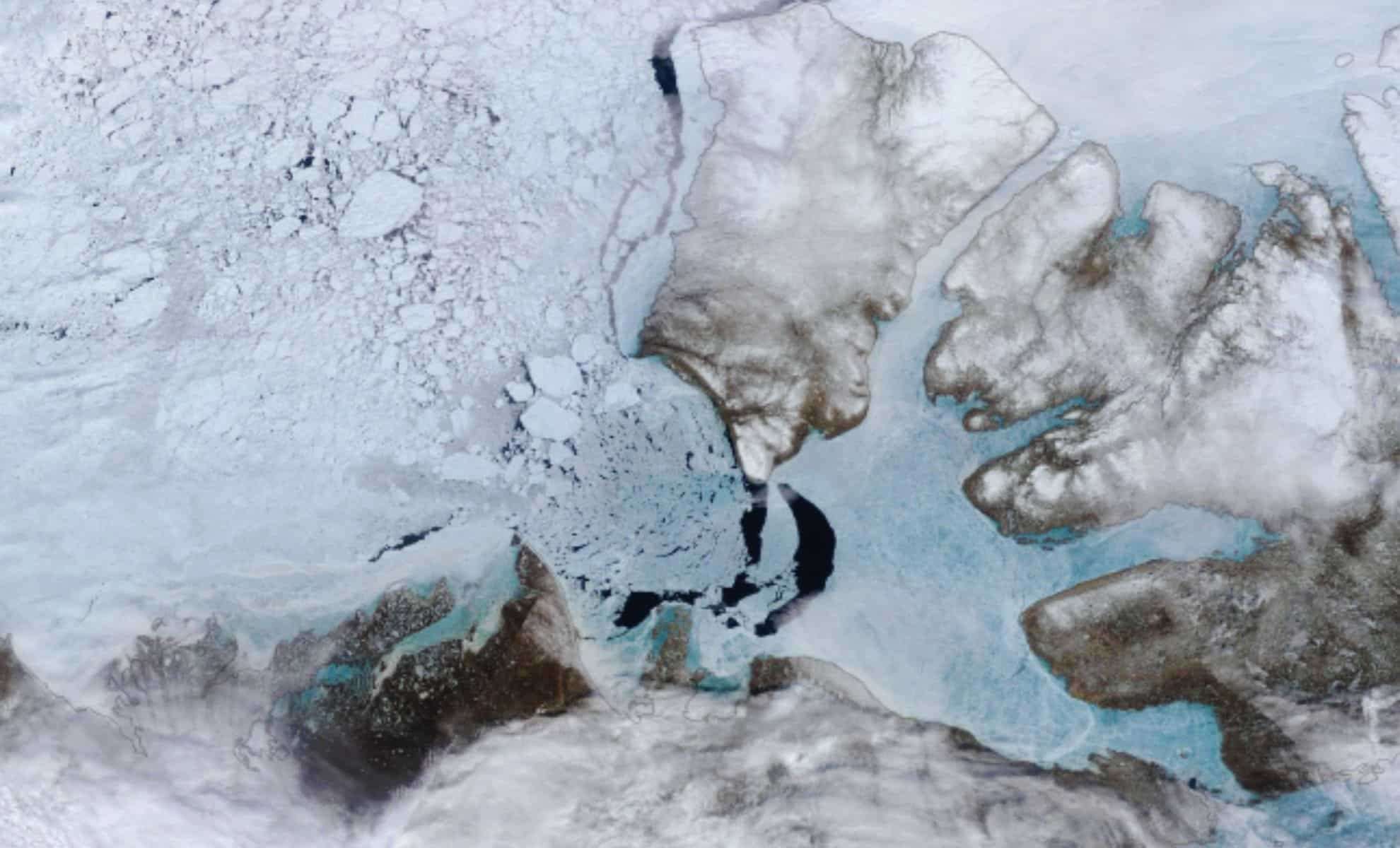
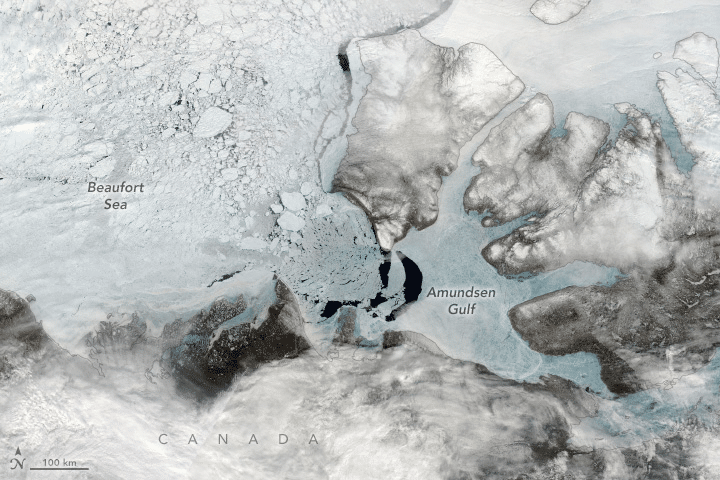
On June 9, 2025, the Terra satellite operated by NASA snapped a striking photo of the Amundsen Gulf as the seasonal sea ice began to fracture. This Arctic region, named after famed explorer Roald Amundsen, has captivated scientists and adventurers for more than a century. Featured in NASA’s Earth Observatory, the imagery highlights the ice breaking apart and drifting west into the Beaufort Sea, illustrating evolving Arctic ice patterns. As global warming intensifies, these transformations have significant implications for climate science, maritime travel, and the local ecosystem.
Historic Arctic Passage
The Amundsen Gulf serves as both a geographical and historical beacon in the Arctic. Named after the polar trailblazer Roald Amundsen, who famously completed the first journey through the Northwest Passage, this gulf has long posed navigational hurdles. In 1905, Amundsen’s expedition became icebound, compelled to endure a winter on the coast of Yukon before continuing their voyage the next year.
Despite rising temperatures, the gulf’s sea ice remains a formidable barrier today. In June 2025, thick ice continued to blanket much of the Amundsen Gulf, though fragments were beginning to separate and drift toward the Beaufort Sea. These seasonal ice shifts are critical for scientists tracking Arctic warming trends and forecasting future shipping routes. Amundsen’s 1905 ice challenges now symbolize both the difficulties and triumphs of polar exploration.

Insights from the Ice Breakup Pattern
NASA’s MODIS (Moderate Resolution Imaging Spectroradiometer) sensor captured the gradual detachment of sea ice clinging to coastal areas, now drifting into the Beaufort Sea. Wind forces combined with rising summertime temperatures drive this yearly phenomenon. As the ice melts and disperses, new open water emerges, enabling natural processes and human activities like shipping and resource extraction. However, this event signifies more than a seasonal cycle; it marks the Arctic ecosystem’s ongoing transformation.
Research shows the timeline for ice breakup fluctuates widely—from as short as two weeks to over 22 weeks—depending on weather conditions and temperature. Usually, ice vanishes from the Amundsen Gulf by August, but in 2025, the melting period appears extended. This delay reflects growing irregularities in ice behavior increasingly linked to climate change. Monitoring the timing and scale of ice retreat is essential for understanding the Arctic’s response to global temperature rises.
Changes in ice dynamics across the Arctic have resulted in drastically reduced coverage. The warming region experiences a feedback mechanism where melting ice exposes ocean waters to sunlight, accelerating regional warming and further ice loss. The images from the Amundsen Gulf vividly illustrate these critical environmental shifts.
Wind and Temperature: Drivers of Ice Movement
Wind patterns are key contributors to sea ice breakup in the Amundsen Gulf. Spring winds can fracture large ice masses and push them towards the Beaufort Sea. Simultaneously, rising temperatures melt the edges of the ice, making it more susceptible to wind-driven displacement. The complex interplay between atmospheric temperatures and wind speeds governs the timing and extent of the ice breakup.
Yearly variations mean that wind strength and ice thickness fluctuate, influencing how quickly ice breaks apart. In 2025, the breakup prolonged, possibly due to weaker winds or thicker ice. These variations are critical for refining climate models and predicting future sea ice behavior. Grasping how these factors interact is vital for forecasting Arctic conditions related to navigation, ecosystem health, and climate projections.
With Arctic warming expected to increase weather unpredictability, forecasting ice breakup timing grows more challenging. These uncertainties carry significant consequences for wildlife habitats and human endeavors in the region.
Global Climate Ramifications of Ice Decline
The Amundsen Gulf exemplifies broader Arctic transformations. The timing and pace of sea ice retreat here mirror a wider trend of accelerated melting across the Arctic driven by warming temperatures. The ramifications extend beyond the region, affecting the planet’s climate systems.
Reduced sea ice lowers Earth’s albedo effect, causing the Arctic Ocean to absorb more solar energy. This accelerates regional temperature rises and contributes to further ice melt, creating a feedback loop known as Arctic amplification—a key factor behind the Arctic warming faster than other parts of the world.
The vanishing ice threatens local wildlife such as polar bears, seals, and seabirds that depend on sea ice for hunting and breeding. Additionally, melting ice adds to sea level rise, impacting coastal environments globally. These shifts highlight why understanding Arctic ice dynamics is crucial amid the ongoing climate crisis.
- Categories:
- News


0 comments
Sign in to Comment