
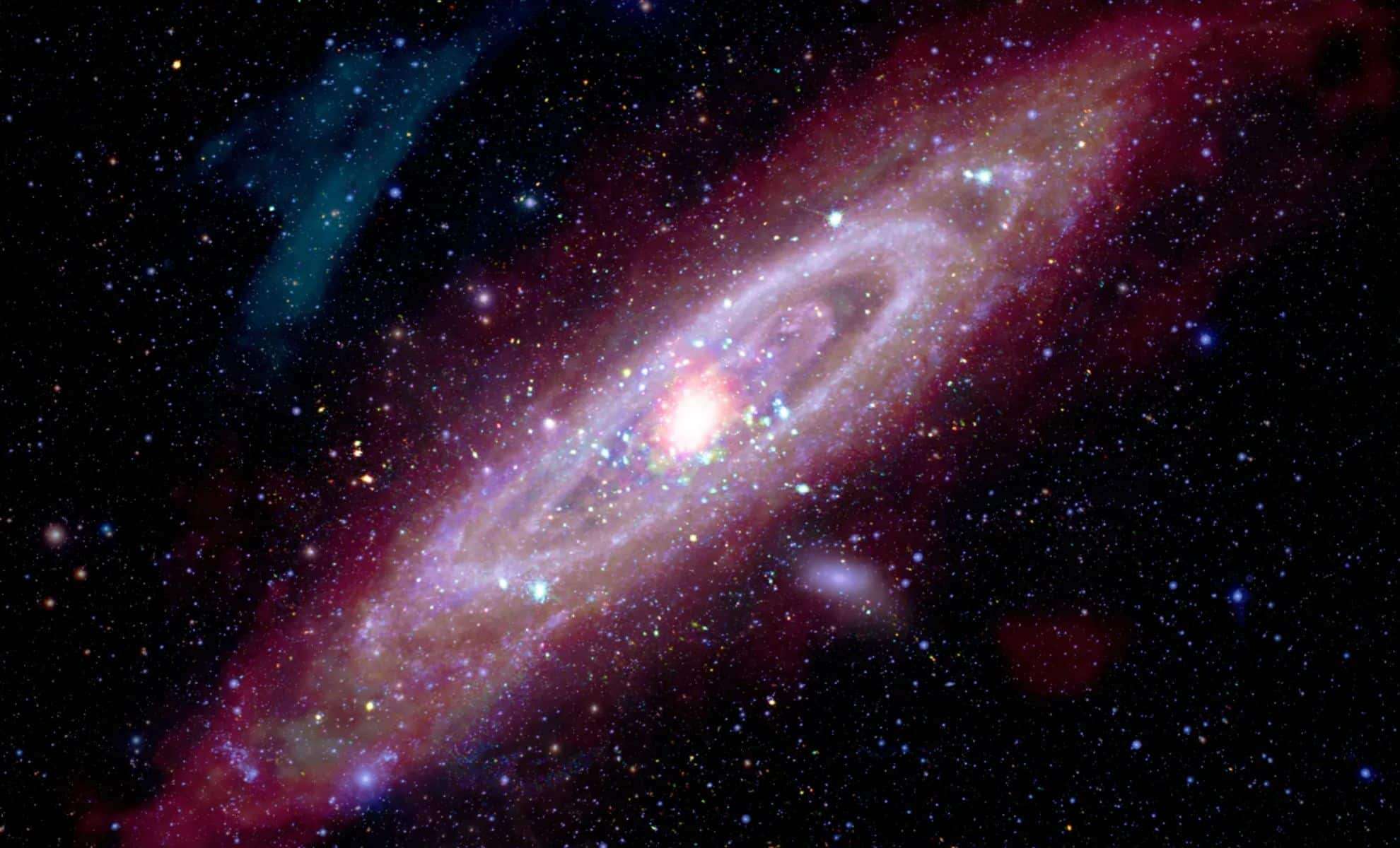
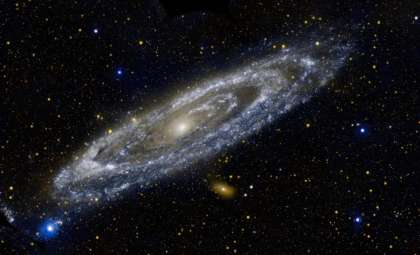
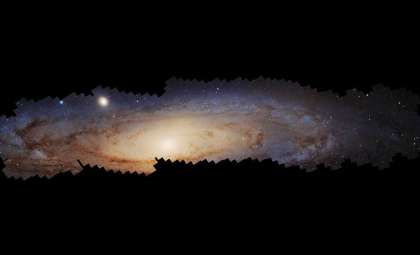
NASA’s recent publication unveils breathtaking imagery of the Andromeda galaxy (M31), captivating researchers worldwide. Situated approximately 2.5 million light-years away, Andromeda is our closest spiral galactic neighbor. These fresh visuals, assembled from data gathered by multiple cutting-edge observatories, shed new light on the intricate behavior of this nearby galaxy. This release represents a joint effort involving leading space observatories such as NASA’s Chandra X-ray Observatory, ESA’s XMM-Newton, and the retired GALEX mission.
The cutting-edge images provide scientists with an unparalleled external viewpoint of a galaxy comparable to the Milky Way. This perspective is crucial for deepening our comprehension of the Milky Way’s formation and structure. These findings also honor the legacy of Dr. Vera Rubin, whose pioneering study of Andromeda’s rotation was foundational in revealing the presence of dark matter—now recognized as a fundamental yet elusive component of the cosmos.
Multi-Spectrum Imaging Illuminates Andromeda
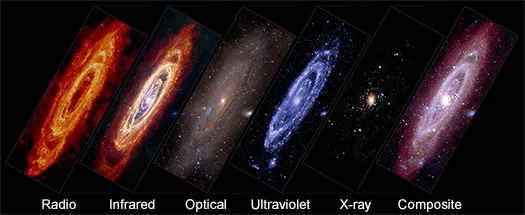
NASA’s new composite image synthesizes observations taken across a broad electromagnetic spectrum. X-ray data from the Chandra X-ray Observatory and ESA’s XMM-Newton are displayed with color codes red, green, and blue. Complementing this are ultraviolet observations from the decommissioned GALEX (shown in blue), visible light captured by ground-based astrophotographers, infrared signals from the Spitzer Space Telescope, and radio waves detected by the Westerbork Synthesis Radio Telescope. This multi-wavelength approach reveals otherwise invisible features that deepen our understanding of Andromeda’s complex composition.

A particularly exciting element is the detailed X-ray imagery from Chandra, which exposes the energetic emissions originating from Andromeda’s central supermassive black hole. Over 15 years of monitoring, Chandra has recorded fluctuations in X-ray output, including a notable flare detected in 2013 that sharply increased the radiation observed. These emissions offer critical clues about the behavior of matter in extreme gravitational fields, an active area of study for astrophysicists.
Moreover, Chandra has identified numerous small, dense objects dispersed throughout the galaxy, enriching knowledge of Andromeda’s interstellar environment and energetic processes. The wealth of new data promises to help scientists unravel the mechanisms shaping galaxies like Andromeda, especially the influence of supermassive black holes on galactic evolution.
Experiencing Andromeda Through Sound
NASA has taken an innovative step by converting this rich dataset into sonification, where different wavelengths correspond to distinct musical notes. High-energy X-rays are assigned the upper tones, while lower-energy signals like radio waves correspond to bass notes. The intensity controls the volume and vertical position influences pitch. This auditory translation guides listeners through an immersive “musical” tour of the galaxy’s features.
Sonification offers a creative and accessible alternative to traditional data visualization, opening scientific discoveries to a broader audience. By turning cosmic data into sound, NASA is pioneering new ways to engage people with space exploration, potentially transforming how we perceive and understand the universe.
Honoring Dark Matter Discoveries Through Andromeda
The new imagery also pays tribute to Dr. Vera Rubin, whose work in the 1960s on the rotational patterns of Andromeda was instrumental in revealing dark matter’s presence. She showed that galaxies are enveloped in massive, unseen material that affects their rotational speeds, a finding that revolutionized cosmology.
Rubin’s groundbreaking insights gave rise to an entire field focused on dark matter, an invisible component constituting much of the universe’s mass. In recognition of her contributions, the U.S. Mint introduced a quarter in 2025 featuring Dr. Rubin as part of the American Women Quarters Program—the first astronomer honored in this series, celebrating her profound impact on our cosmic understanding.
- Categories:
- News






0 comments
Sign in to Comment