

In recent years, private aerospace companies have taken significant strides in lunar exploration. Two commercial probes have just embarked on journeys to the Moon, marking a pivotal moment in private-sector space initiatives and lunar science efforts. Their success highlights advanced technological capabilities and signals a shift in how lunar missions might be conducted in the future, potentially influencing upcoming collaborations and explorations.
Details of the Launch Event
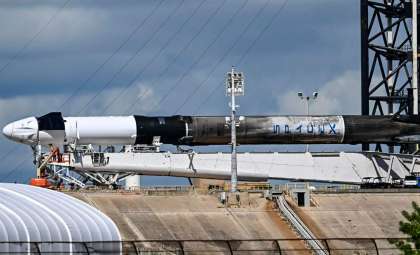
The takeoff occurred at Cape Canaveral early Wednesday morning, precisely at 7:11 AM French time on January 15. The mission utilized SpaceX’s dependable Falcon 9 rocket to send the probes toward trans-lunar orbit, demonstrating the company’s proven expertise and mission reliability.
This mission carried two distinct probes: the United States’ Blue Ghost and Japan’s Hakuto-R Resilience. Launching both simultaneously showcases an international effort directed at advancing scientific research and exploration objectives.

The Mission of Blue Ghost
Developed by Firefly Aerospace, Blue Ghost operates under NASA’s Commercial Lunar Payload Services (CLPS) initiative, which partners with private firms to accelerate lunar exploration. This aligns with NASA’s broader Artemis program, which aims to establish sustainable human presence on the Moon by the end of the decade.
Blue Ghost is designed to transport up to 150 kilograms of scientific and technological payloads. On this maiden voyage, it carries 10 instruments from NASA intended to analyze different regions on the lunar surface. Scheduled to touch down near Mount Latreille within the Mare Crisium crater, visible from Earth, the landing is set for March 2. The mission duration spans roughly 14 Earth days, concluding as lunar night approaches at the site.
Hakuto-R Resilience: A Second Chance
Japan’s Hakuto-R Resilience, developed by the company ispace, marks a renewed attempt after a setback earlier in 2023 when a previous probe was lost during descent. This mission aims for a landing between May and June in the Mare Frigoris region, known as the Sea of Cold.
An intriguing element of this expedition is a small, 5-kilogram rover called Tenacious, measuring 21.26 inches in length. Created by ispace’s European division based in Luxembourg, Tenacious is equipped with a shovel mechanism designed to collect lunar soil samples. This represents a critical step for Luxembourg’s leadership in initiating lunar mining efforts.
Significance of These Endeavors
These missions underscore a growing trend of private companies entering the arena of lunar exploration, bolstered by programs such as NASA’s CLPS. Past projects like Astrobotic’s Peregrine and Intuitive Machines’ Odysseus laid groundwork—although Peregrine didn’t achieve lunar orbit, and Odysseus tipped over after landing.
The involvement of firms like Firefly Aerospace and ispace signifies a broader transition from exclusively government-led space programs toward increased commercial participation. Through these initiatives, scientific advancement, international collaboration, and entrepreneurship in space technology are all being accelerated.
As these probes journey toward the Moon, they symbolize humanity’s relentless drive to uncover knowledge beyond Earth. Each successful mission expands the boundaries of discovery, taking us closer to unveiling the secrets that lie within our celestial neighbor.
- Categories:
- Space












0 comments
Sign in to Comment