
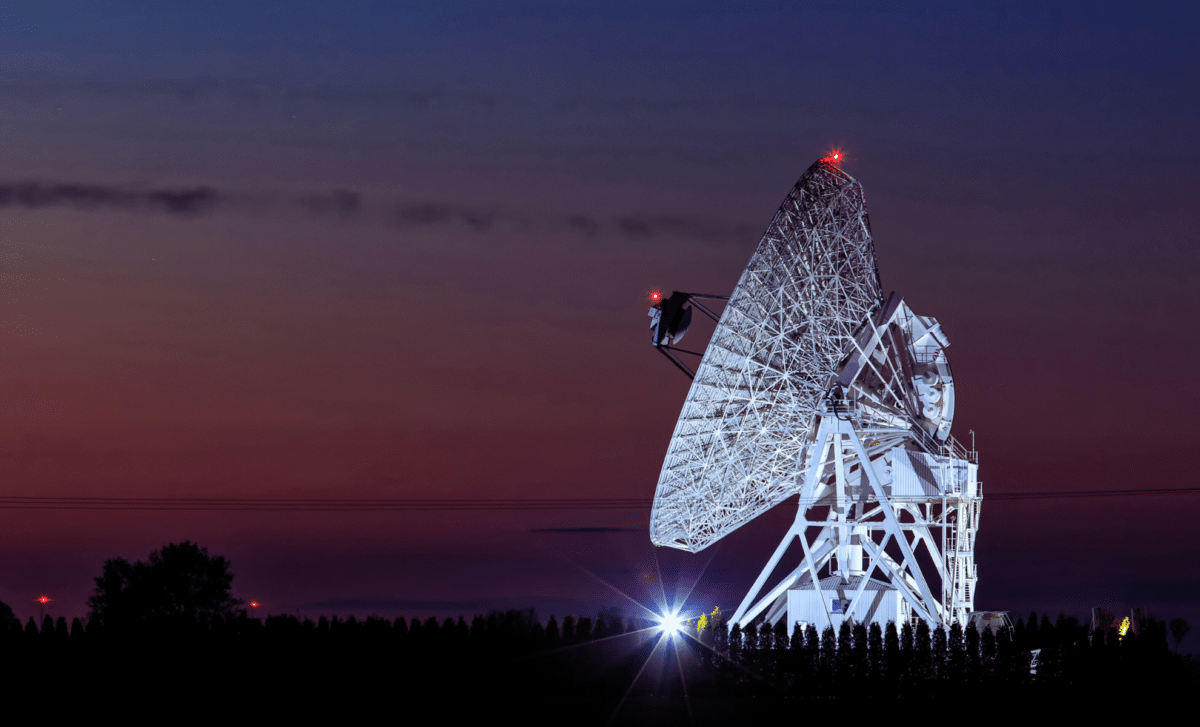
Scientists from the University of Arizona, University of Maryland, and NASA’s Goddard Space Flight Center have introduced an innovative technique aimed at capturing ultra-detailed space images through quantum entanglement. This method holds the potential to surpass the conventional challenges of long-baseline interferometry by enabling telescopes spaced far apart to work in unison without physically merging their light signals. Instead, this novel strategy capitalizes on principles of quantum mechanics to interconnect distant observatories, allowing astronomers to obtain sharper and more precise pictures of cosmic phenomena.
Bridging Quantum Theory and Astronomical Imaging
Dr. Saikat Guha, senior author and Director of the Center for Quantum Networks (CQN), explains that their work blends two cutting-edge domains: quantum information science and quantum optics. While quantum information theory deals with measuring the information content in quantum entities such as photons and atoms, quantum optics studies the quantum properties of light. Dr. Guha states, “Our expertise lies at the convergence of quantifying information in inherently quantum systems like light and atoms, together with understanding quantum aspects of light, which forms the foundation for our pioneering approach.”
For more than ten years, this research group has been delving into the ultimate resolution constraints in optical imaging, aiming to resolve pivotal astronomical inquiries like measuring star separations and tracking changes in known celestial bodies. Their findings suggest that phenomena previously deemed unresolvable can be observed using quantum computing techniques.

Surpassing Conventional Interferometry Barriers
Traditional astronomical imaging uses interferometers to blend light from multiple telescopes to refine image detail. However, as baselines lengthen, physically bringing light signals to a common hub becomes impractical. The breakthrough offered by Dr. Guha’s team replaces this logistical complexity with the utility of quantum entanglement.
Dr. Guha remarks,
“We knew that coordinated telescopes situated across long distances, looking at the same scene, could mimic a telescope whose diameter is as big as the distance separating them, and are hence capable of resolving much finer grained details of a scene.”
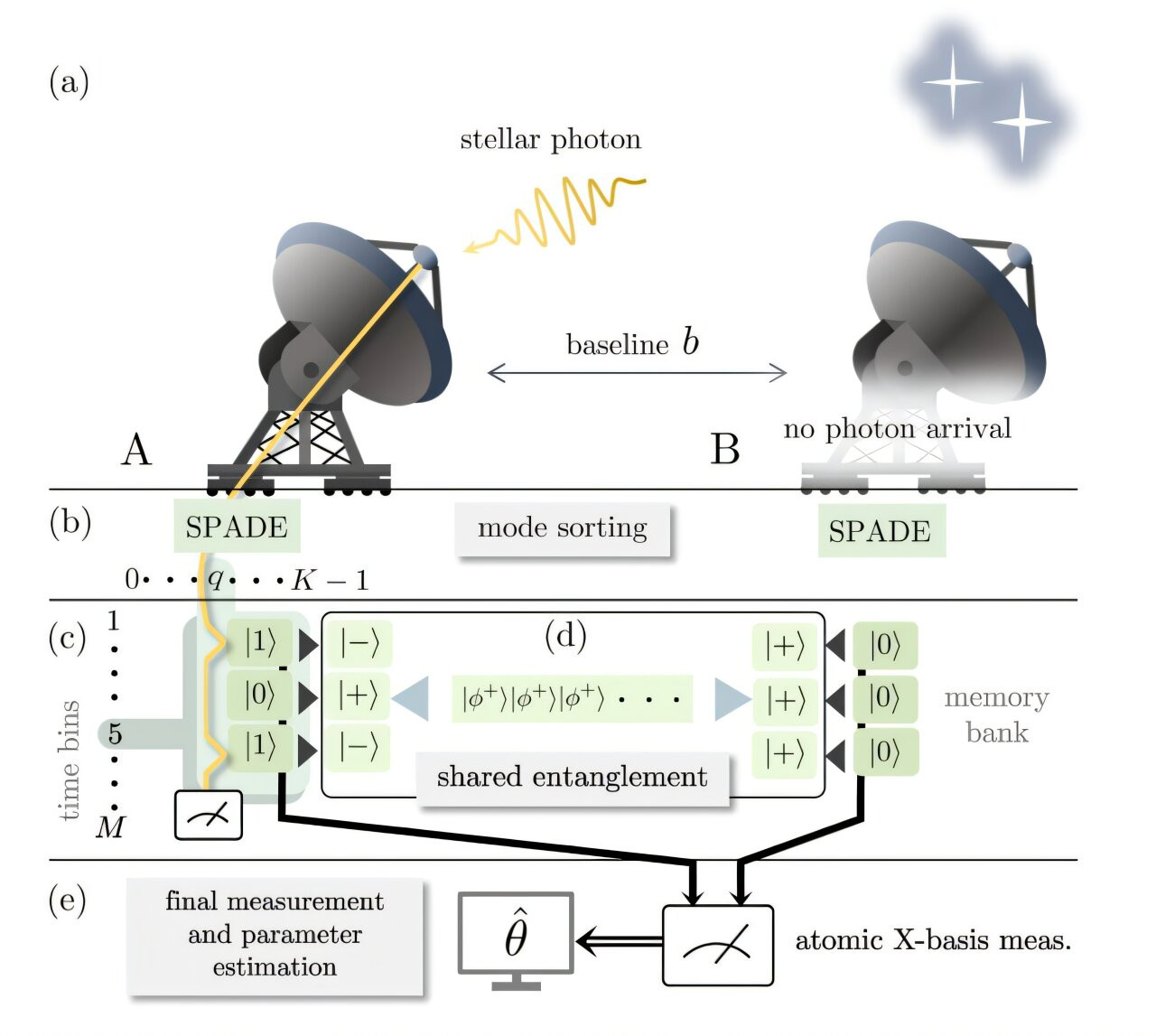
This insight inspired their technique, which employs entanglement to connect distant telescopes, allowing them to share quantum information without the need for physical light transfer.
Entanglement as a Tool Beyond Physical Connections
Quantum entanglement permits two spatially separated systems to share a deeply correlated quantum state, which can be harnessed to conduct accurate measurements of remote objects. Dr. Guha elaborates,
“Quantum mechanics allows for two distant parties to share entanglement—a form of correlation that is stronger than any probabilistic correlation allowed by physics.”
The entangled states are preserved in quantum memory devices at each telescope, effectively creating a quantum network that enables coherent operation between observatories.
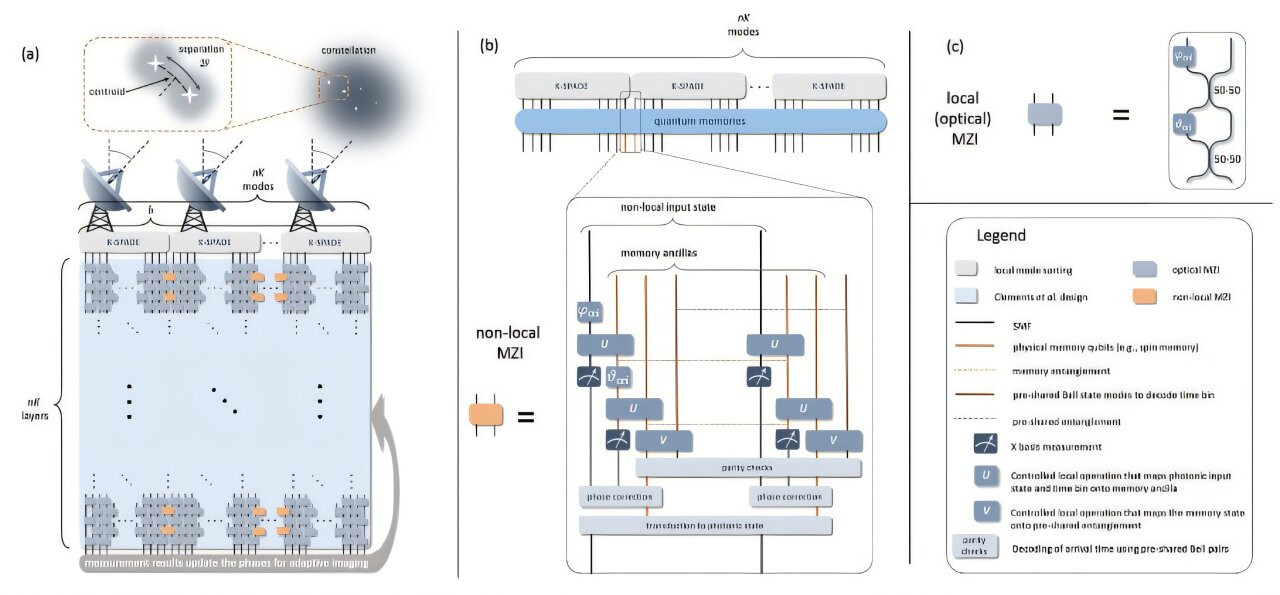
This method achieves measurement of combined starlight collected by the telescopes without physically merging the photons. Dr. Guha notes, “Our solution involves combining locally sorted starlight pairwise at each telescope with an array of beamsplitters—without any physical beamsplitter or transporting light between the telescopes.” This innovation offers the prospect of significantly improving both precision and efficiency in astronomical observations.
Impacts of Quantum-Enhanced Imaging for Astrophysics
The quantum approach carries a wide scope of applications. Dr. Guha points out possible uses ranging from pinpointing star clusters to detecting exoplanets and monitoring dynamic changes in celestial bodies.
“Our approach could have applications in areas spanning from localizing clusters of stars, to detecting a change to a known object for space domain awareness, classifying objects from a library, detecting exoplanets, and more,” he explains.
This quantum-based framework also promises breakthroughs in space domain awareness by delivering accuracies far exceeding those of standalone telescopes. By replacing classical communication channels with quantum links, it facilitates more secure and information-rich data exchange between observatories. Dr. Guha elaborates, “It may be extended to quantitative imaging challenges foundational to astrophysics and space monitoring, achieving superior resolution compared to current single telescope systems and conventional long-baseline methods that rely on classical communication instead of future quantum networks.”
- Categories:
- Space






0 comments
Sign in to Comment