
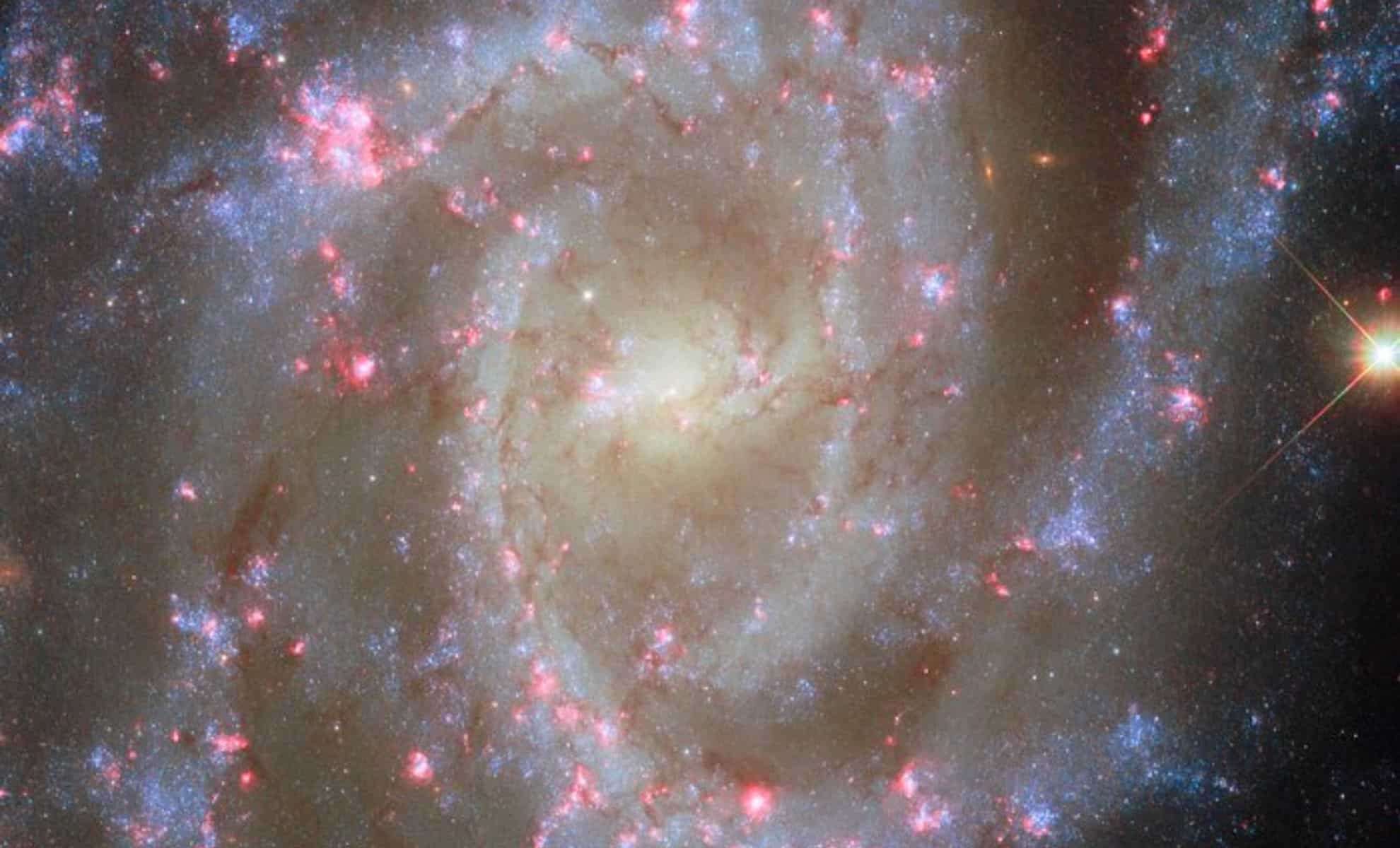
NASA and ESA’s Hubble Space Telescope has unveiled a remarkable new image of NGC 2835, a spiral galaxy situated 35 million light-years from Earth in the Hydra constellation. This image, part of Hubble’s extensive observation program, highlights intricate structures within the galaxy, with a particular focus on a newly emphasized red wavelength known as H-alpha. The vibrant pink nebulae adorning the galaxy’s spiral arms are clearly visible thanks to this wavelength, offering fresh perspectives on star-forming regions and the ongoing cosmic phenomena inside the galaxy. These glowing nebulae mark sites of active stellar birth, illustrating the galaxy's dynamic star lifecycle.
NGC 2835, previously imaged by Hubble and the James Webb Space Telescope, continues to provide astronomers with valuable data on star formation and galactic mechanics. While the latest photo bears a resemblance to earlier captures from 2020, the enhanced depiction of nebulae via H-alpha emissions allows for a deeper exploration of stellar activity — tracing everything from vibrant stellar nurseries to remnants left by dying stars.
Hubble’s H-alpha Imaging Illuminates Star-Forming Nebulae
In this most recent capture, the addition of H-alpha light reveals detailed views of regions where massive young stars are igniting. These stars ionize surrounding hydrogen gas, creating glowing H II regions that emit distinct red light. Alongside these energetic birthplaces, the fading echoes of old stars — visible through their H-alpha emissions — further enrich the galaxy’s complex gas formations. These stellar end-of-life processes, including supernova explosions and the shedding of outer layers, contribute significantly to the nebular landscape of NGC 2835.

By leveraging H-alpha data, astronomers can identify and catalogue different phases of star life within nebulae. Hubble’s ongoing survey is set to document over 50,000 nebulae across 19 nearby galaxies — an effort vital to understanding how stellar radiation, winds, and supernova remnants remodel galactic environments, influencing the birth of future stars.
Revealing Stellar Evolution Through H-alpha Wavelengths
This new Hubble image enriches astronomers’ insight into the symbiotic relationship between stars and nebulae embedded within spiral galaxy arms. The capture of H-alpha light, often invisible to human eyes, provides a trove of detailed information. Researchers use this to analyze the chemical compositions and processes behind star formation, while also observing how stars enrich their galactic neighborhoods. NGC 2835, vibrant with pink nebulae and a spectrum of stellar activity, beautifully demonstrates the vibrant evolution occurring within spiral galaxies.
The findings form part of a broader project aiming to map the star-forming regions of numerous galaxies. The goal is to establish an extensive catalog that enhances understanding of how galaxies, including our own Milky Way, evolve over cosmic timescales.
Exploring the Contrast Within NGC 2835
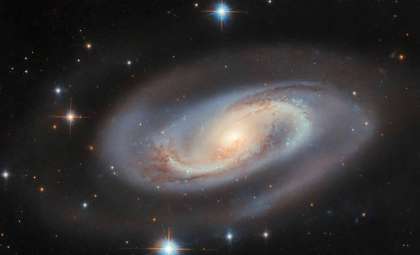
One of the most captivating aspects of this new image is the stark contrast between the older, yellowish stars in NGC 2835’s bright core and the youthful, blue stars tracing its spiral arms. The blue stars signal lively star formation, while the central yellow stars reflect the galaxy's mature stellar population. The glow of H-alpha highlights nebulae where star birth is concentrated, demonstrating the galaxy’s ongoing stellar renewal and complexity.
Captured by Hubble’s Wide Field Camera 3, the image emphasizes the delicate spiral patterns that arise from interactions among stars, gas, and dark matter. Gravitational forces sculpt the spiral arms, compressing gas and dust into pockets ripe for star creation. These observations make NGC 2835 a valuable subject for studying the evolution of spiral galaxy structures.
H-alpha’s Role in Decoding Star-Forming Nebulae
H-alpha emissions are essential in astronomy for highlighting ionized hydrogen regions, key indicators of star formation. These H II regions glow red when bombarded by radiation from massive young stars, providing a direct glimpse into stellar nurseries. This makes H-alpha an indispensable tool for astronomers tracking stars from their birth to their final stages.
For NGC 2835, H-alpha imaging reveals the galaxy's most vibrant and youngest star-forming sections along its spiral arms. Observing these bright nebulae enables a robust map of stellar populations and offers clues about the environmental forces shaping star birth and stellar winds’ influence on the surrounding medium.
Building a Nebulae Census to Illuminate Stellar Origins
Compiling a comprehensive catalog of nebulae across many galaxies is a critical step for uncovering the mysteries of stellar formation and galactic evolution. Hubble’s ambitious survey aims to document more than 50,000 nebulae within 19 neighboring galaxies, including NGC 2835. This extensive database promises to deepen understanding of how nebulae distribute across galaxy types and the processes that govern their development.
Insights from this research will shed light on the conditions fostering star formation, the chemical history of galaxies, and the influence of massive stars in enriching interstellar space. Ultimately, this work enhances our grasp on how the Milky Way and other galaxies grow and change over their lifespans.
Stellar Winds and Radiation Sculpt Galactic Landscapes
The interaction between stars and the interstellar medium — composed of gas, dust, and nebulae — plays a pivotal role in galaxy evolution. As stars age, their powerful stellar winds and radiation shape surrounding space, particularly in spiral arms like those of NGC 2835. These glowing nebulae serve as both cradles for newborn stars and markers of dying ones, each phase of stellar life leaving distinct footprints.
The synergy of stellar winds, radiation, and collapsing gas clouds drives the structure of spiral galaxies. In NGC 2835, the spiral arms’ accumulation of gas and dust fosters ongoing star formation. H-alpha emissions distinctly showcase these dynamic star-forming hubs and the intricate interplay between stars and their environment.
- Categories:
- News


0 comments
Sign in to Comment