
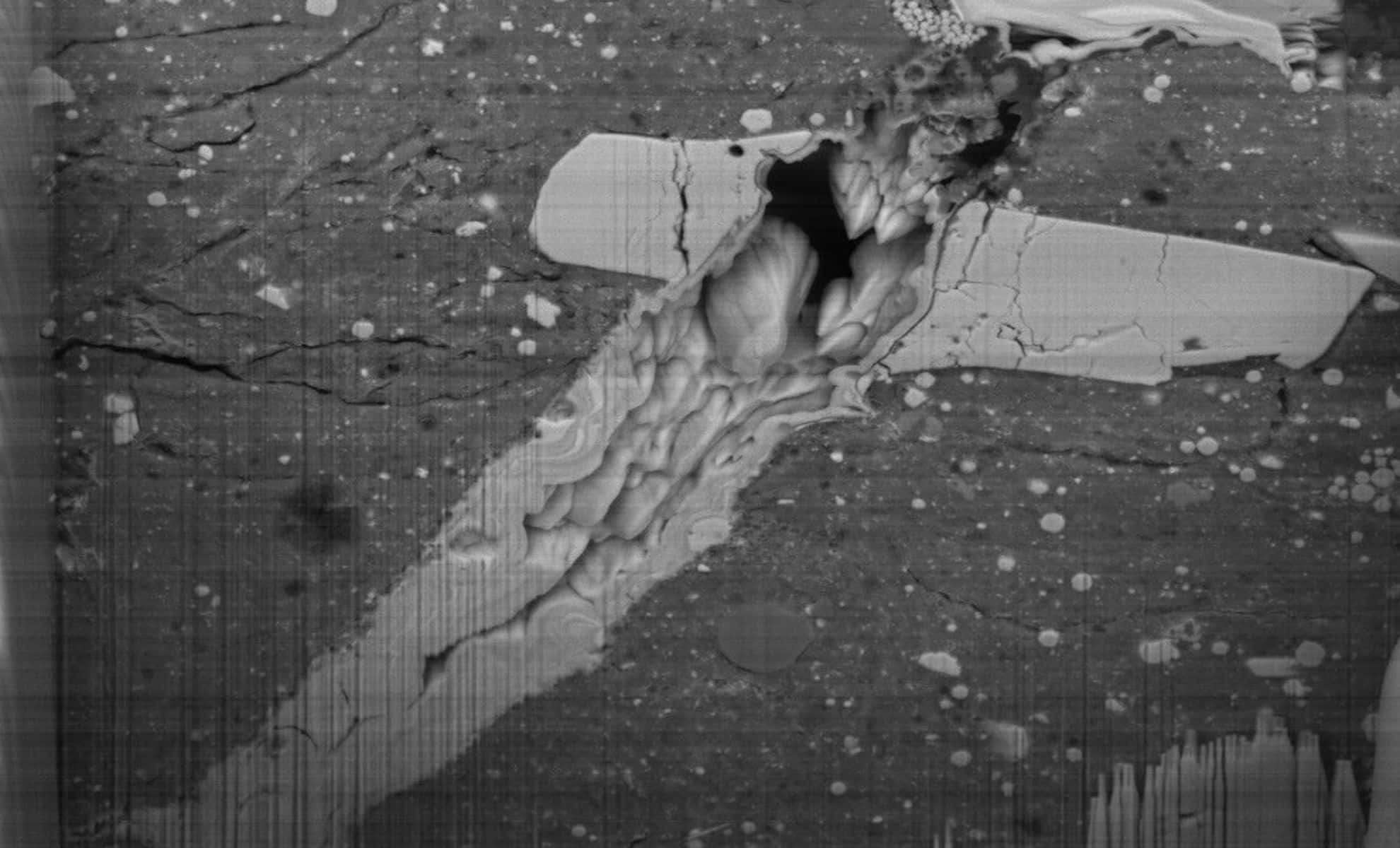
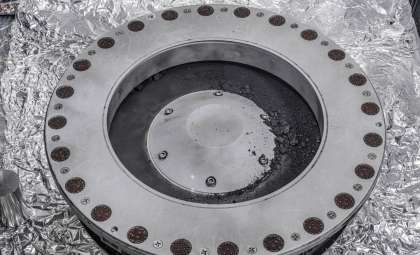
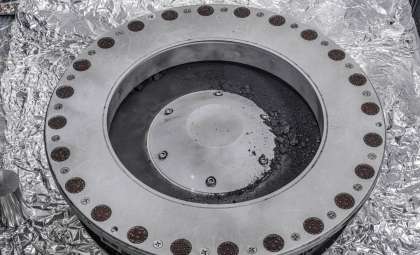
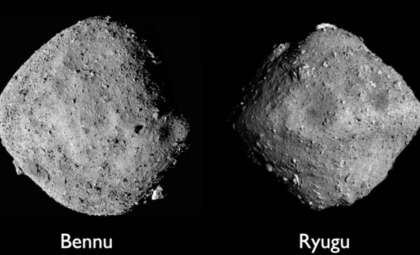
NASA’s OSIRIS-REx mission, which successfully returned fragments from the asteroid Bennu in 2020, has unlocked new understanding about the asteroid’s intricate origins and its dynamic history. The latest research, featured in Nature Astronomy, overturns earlier ideas about Bennu’s makeup, shedding light on conditions during the early development of the solar system.
The asteroid Bennu contains a rare blend of dust, organic molecules, and minerals that serve as clues to the primordial activities that influenced our cosmic neighborhood. Researchers have identified that the components of Bennu originated from diverse locations, spanning vast distances. These elements—including interstellar dust grains, complex organics, and various minerals—reveal a narrative of extensive transport and alteration through energetic and distant environments.
Origins Across the Cosmos: Stardust and More
Analysis of samples from Bennu unveiled the asteroid’s materials stemmed from a wide array of sources. The study, jointly led by Ann Nguyen at NASA’s Johnson Space Center and Jessica Barnes of the University of Arizona, Tucson, indicates Bennu’s precursor body was formed from ingredients gathered throughout the solar system and beyond. Some of these materials predate the solar system’s birth, originating from the interstellar medium. Others developed nearer the Sun, where intense heat gave rise to high-temperature minerals, while additional components may have journeyed in from the farthest reaches of interstellar space.

“We mapped out the beginnings of the materials that accumulated to form Bennu’s ancestor,” Nguyen explained. “We identified stardust particles older than the solar system itself, organic compounds most likely synthesized in interstellar space, and minerals formed closer to the Sun. All these elements migrated across great distances before gathering in the zone where Bennu’s parent body took shape.” This finding suggests Bennu’s assembly was shaped by a multitude of variables acting across vast spans of time and space, portraying the intricate routes through which cosmic matter converged to build planetary materials.
Role of Water and Resulting Chemical Changes
Further revelations concerning the Bennu samples focus on how water interaction transformed the asteroid’s composition over time. Led by Tom Zega from the University of Arizona and Tim McCoy from the Smithsonian’s National Museum of Natural History, the team found minerals indicating Bennu’s parent body originally gathered ice along with dust. Over time, solar heating caused the ice to melt, leading to chemical reactions between liquid water and dust particles.
“Bennu’s original asteroid gathered both ice and dust, and when the ice melted, the liquid water reacted with surrounding dust to produce the mineral-rich sample we observe, composed of roughly 80% water-bearing minerals,” noted Zega. This melting and subsequent chemistry provide vital insights into early planetary formation phenomena, particularly in the colder, outer zones of the solar system.
Accelerated Space Weathering Observed on Bennu
Another critical observation from Bennu’s fragments is the rapid pace of surface weathering driven by exposure to space conditions. Evidence such as impact craters and melt deposits imply Bennu endured frequent micrometeorite bombardments over billions of years. These impacts coupled with continuous solar wind exposure have resulted in surface alterations occurring more swiftly than scientists had anticipated.
“Space weathering on Bennu is proceeding much faster than previously assumed, with impact melting playing a dominant role contrary to our initial predictions,” explained Lindsay Keller, a lead researcher on this subject. “Understanding space weathering processes through returned samples allows us to precisely define the factors controlling it, which can then be applied to explain surface transformations on many other asteroids not yet explored.”
This accelerated weathering insight not only revises our perception of Bennu’s evolution but also enhances models predicting the surface development of asteroids throughout the solar system.
Significance of Direct Asteroid Sample Retrieval
The analysis of Bennu’s samples emphasizes the indispensable role of obtaining extraterrestrial materials firsthand to deepen comprehension of asteroid composition and planetary origins. Barnes highlighted, “These samples are absolutely essential. The discoveries we’ve made wouldn’t have been possible without them. It’s thrilling to finally examine firsthand an asteroid we’ve long hoped to study.”
While meteorites that reach Earth provide valuable information, they only present a limited snapshot of an asteroid’s initial formation. Many original characteristics are altered or lost as meteorites pass through Earth’s atmosphere. Studying pristine samples like those from Bennu enables researchers to unravel much more precise details about early solar system conditions and the processes that shaped planetary bodies.
- Categories:
- News








0 comments
Sign in to Comment