
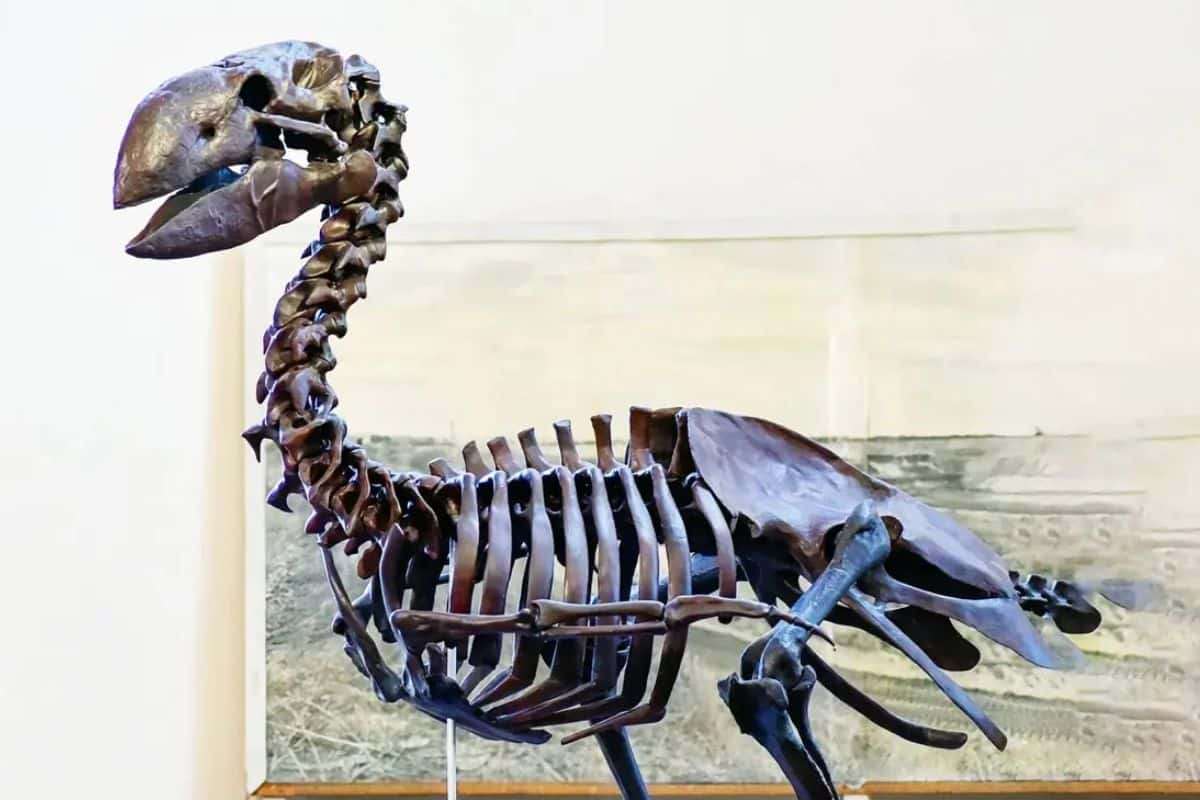
A stunning 45-million-year-old fossil, long overlooked in a museum archive in Germany, has now been identified as belonging to Diatryma, a colossal flightless bird from the Eocene period. This find challenges previous assumptions about its identity and lifestyle.
Exploring the Ancient Geiseltal Habitat
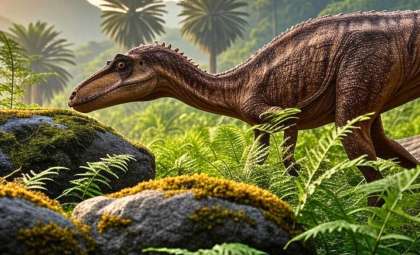
About 45 million years ago, during the Eocene Epoch, the area known today as Geiseltal in Germany was a vibrant tropical swamp supporting a rich array of wildlife. This ecosystem hosted early horses, tapirs, giant tortoises, large terrestrial crocodiles, and many avian species. Among these was the formidable Diatryma, which reached an impressive height of around 4.6 feet (1.40 meters).
Scientists once viewed Diatryma as a fierce hunter, but current research portrays it as a peaceful herbivore, equipped with a powerful beak suited for consuming tough plants.

A Long-Forgotten Fossil Revealed
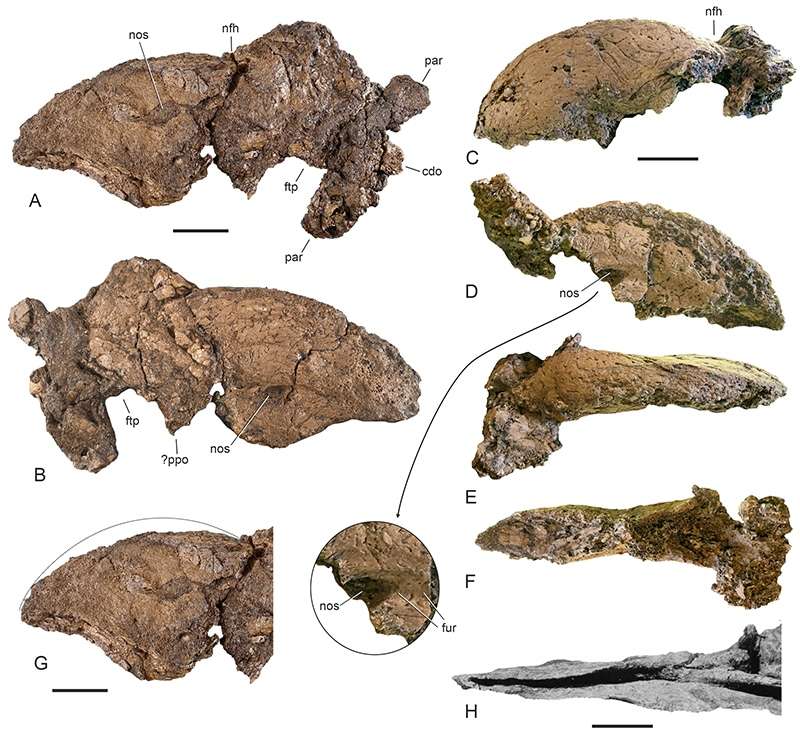
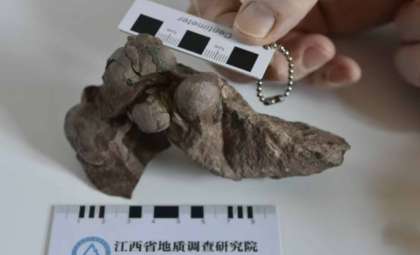
The remarkable Diatryma skull was not unearthed in a new dig. Instead, it rested unidentified in the Geiseltal Collection at Martin Luther University Halle-Wittenberg since the 1950s. Originally found in a lignite mine area, the fossil was mistakenly cataloged as a crocodilian skull, an understandable error given the abundance of reptilian remains there.
It was Michael Stache, a geological technician at MLU, who uncovered the fossil’s true identity during an inventory review. Recognizing the mistake, he carefully restored and studied the specimen. Stache also found another fossil piece in the collection that completed the skull, enabling him to assemble one of the only two known fully preserved Diatryma skulls worldwide.
A Globally Significant Paleontological Find
This rediscovery caught the eye of Dr. Gerald Mayr from the Senckenberg Research Institute, who verified the specimen’s identity as Diatryma. Prior to this, the sole complete skull of this species resided at the American Museum of Natural History in New York.
“This case highlights how many remarkable paleontological finds still await recognition within museum collections. It was unexpected that the Geiseltal Collection held such a treasure,” stated Dr. Mayr.
The specimen’s excellent condition offers researchers a unique chance to delve into this ancient bird’s anatomy, improving insights into its behavior and ecological role.
Reconsidering Its Role: Predator or Herbivore?
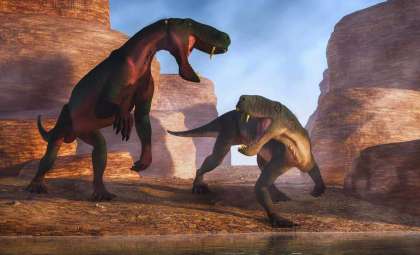
Historically, the large size and robust beak of Diatryma suggested it was a predator feeding on smaller mammals like early horses inhabiting Geiseltal’s wetlands. These characteristics led to comparisons with aggressive, flightless birds known from later periods.
Contemporary studies, including those focused on the recently rediscovered skull, indicate otherwise. The bird’s strong beak appears adapted to process tough vegetation, marking it as a herbivore likely feeding on plants, similar to modern ostriches or emus.
“Our findings broaden knowledge of Geiseltal’s Eocene wildlife,” Stache explained. The evidence now places Diatryma among large herbivores, reshaping its ecological narrative away from predation.
Impacts of the Discovery on Paleontological Research
With approximately 40 Diatryma fossils recorded in the Geiseltal Collection, scholars believe that this bird was relatively scarce in the area during the Eocene. This rediscovery underlines the critical importance of methodical study and preservation within museum archives for paleontology.
As Stache eloquently summarized, “Diatryma, once lost in misidentification, now exemplifies how patient examination and unexpected findings can rewrite our understanding of natural history.”
- Categories:
- Science





0 comments
Sign in to Comment