
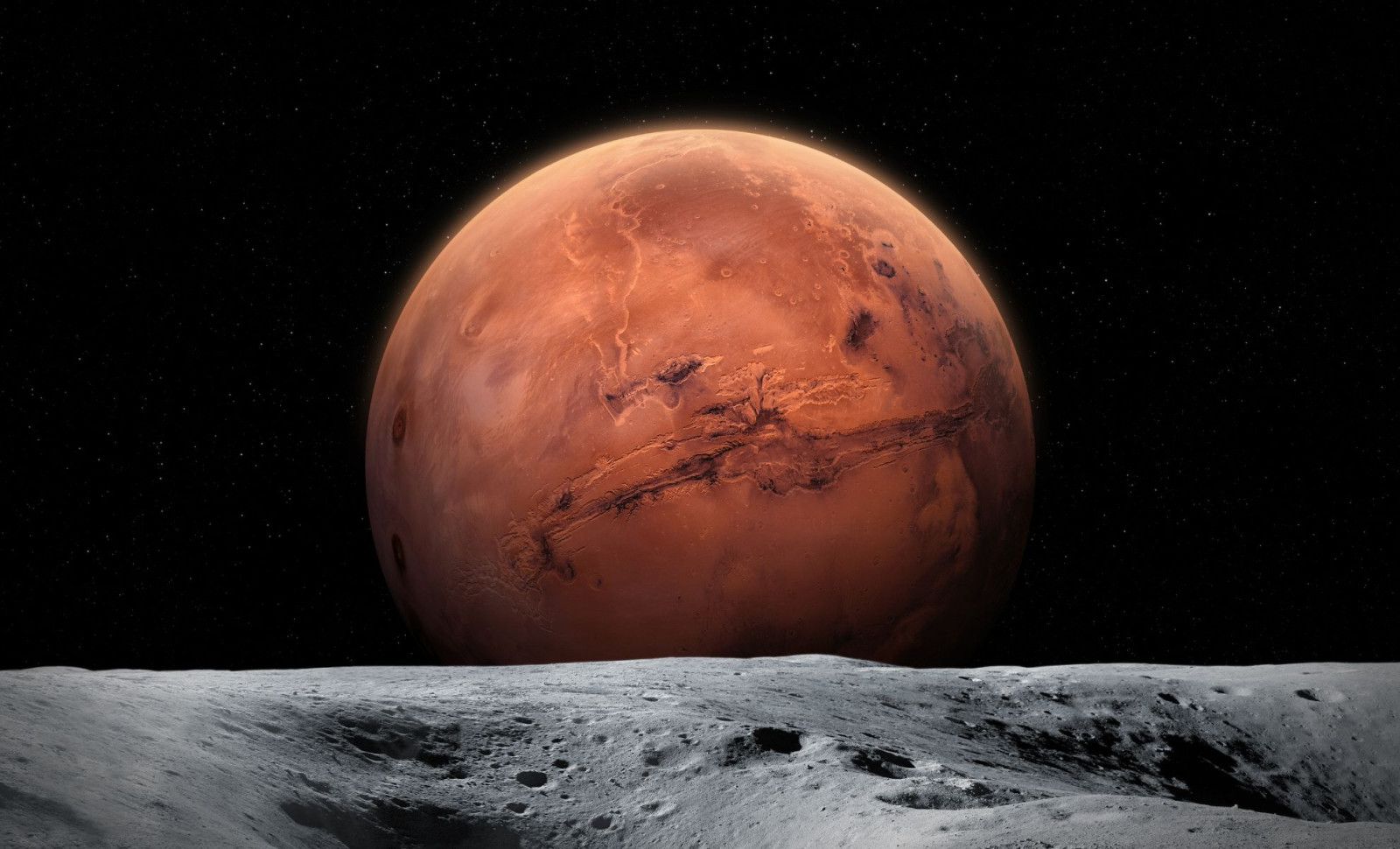
New research points to the intriguing possibility that Mars was once orbited by a significantly larger moon, which may have influenced tidal patterns in an ancient lake within Gale Crater. This hypothesis emerges from sedimentary studies conducted by the Curiosity rover during its extensive exploration of the area. Confirmation of this theory could illuminate the origins of Mars’ unusual moon system.
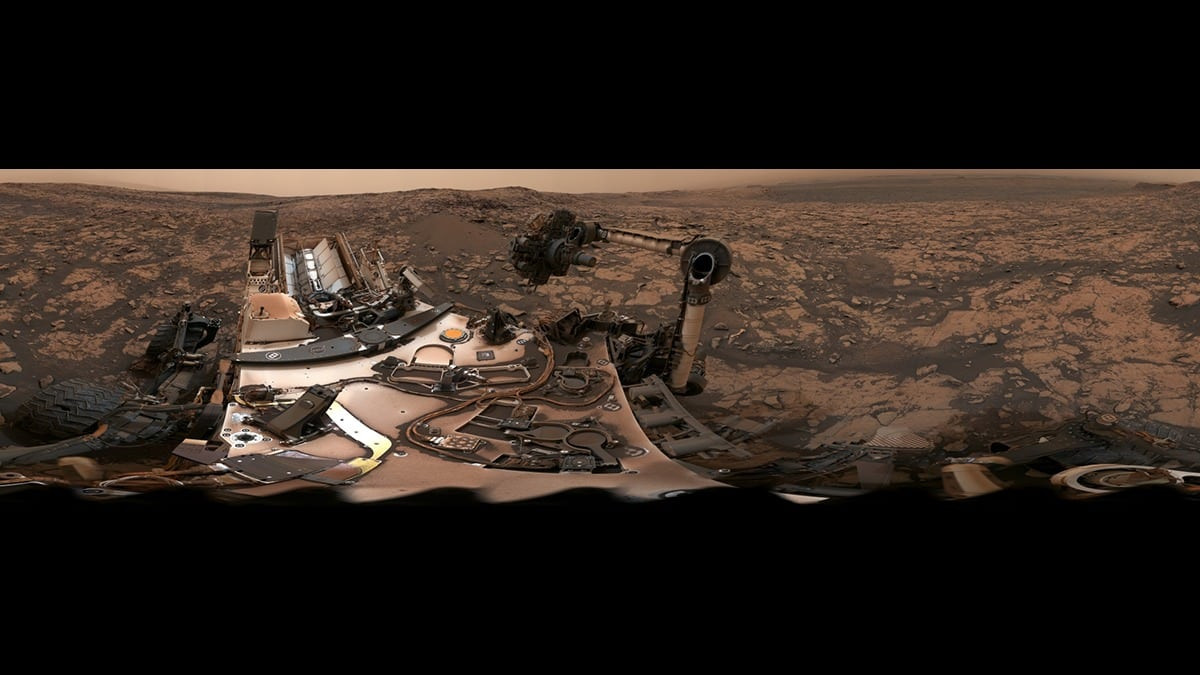
Since its arrival in Gale Crater in 2012, NASA’s Curiosity rover has been meticulously examining the Martian landscape to better grasp the planet’s past environments. A group of scientists analyzed sedimentary rock stratifications at the Jura outcrop and discovered evidence indicative of tidal forces, hinting that Mars once had a moon sizable enough to generate tides in the crater’s primeval lake.
Tidal Sediment Layers Reveal Clues of a Former Large Martian Satellite
Led by Ranjan Sarkar from the Max Planck Institute for Solar System Research, the research team identified sedimentary layers called tidal rhythmites, which form as a result of periodic tidal activity. These layers, found specifically at the Jura formation, suggest that Mars was once accompanied by a moon considerably heftier than the current ones, producing tidal effects strong enough to shape the sediment in Gale Crater.

“Our study provides sedimentary evidence for the case of tidally deposited rhythmites, hinting at a past larger moon for Mars.” he added, “This, in turn, aligns with the hypothesis that Mars has repeatedly had larger moons that were tidally destroyed into rings, which then reformed into successively smaller moons.”
Published in Eos, their findings point to tidal cycles lasting roughly 30 Earth days — a timescale consistent with a substantial satellite orbiting Mars. In contrast, Mars’ current moons, Phobos and Deimos, are too small to have induced these prominent tidal motions.
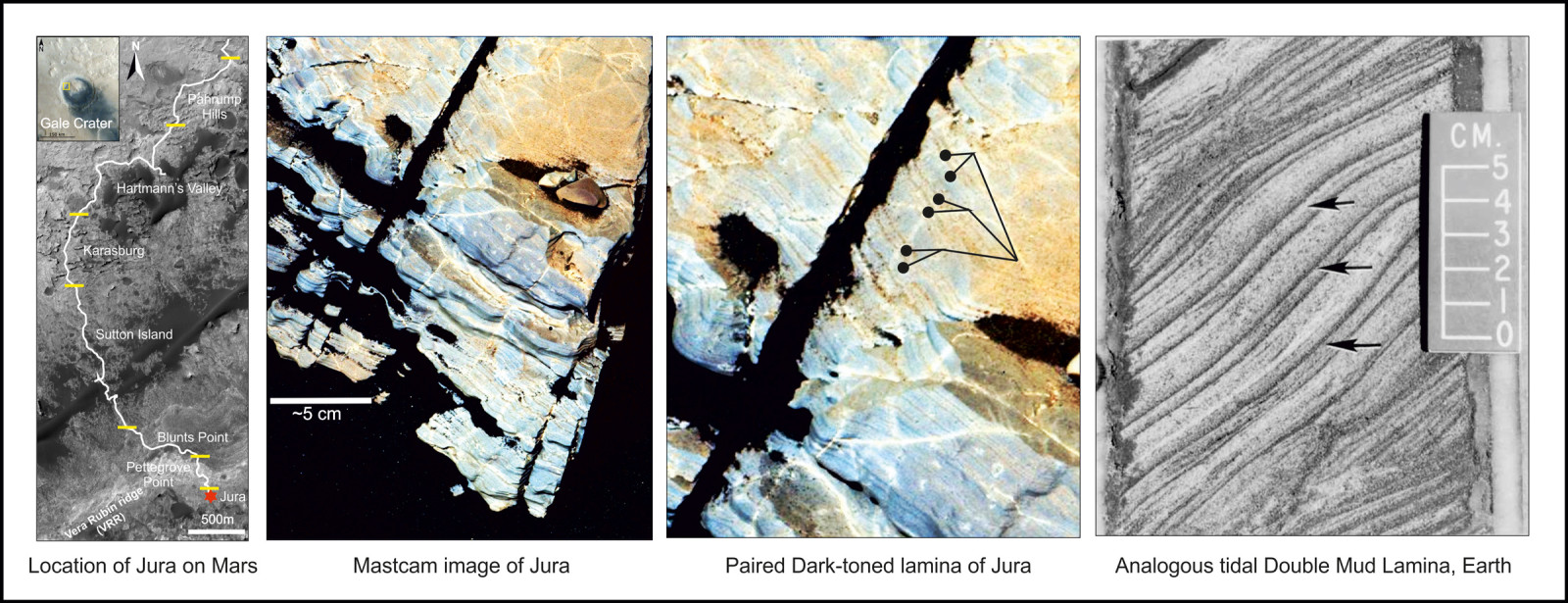
The researchers suggest this former moon must have had at least 18 times the mass of Phobos, orbiting at a distance approximately three times Mars’ radius. Such a satellite would have generated significant tidal forces, explaining the sedimentary signatures found within Gale Crater’s lake deposits.
The Cyclical Nature of Mars’ Moons
This lost moon theory integrates well with broader ideas regarding Mars’ current moons. Sarkar proposes that the ancient larger moon was eventually fragmented by Mars’ gravity, potentially creating rings around the planet. Over time, these rings could have given rise to smaller moons, such as Phobos and Deimos. Similar cycles of moon fragmentation and reformation have also been observed or theorized for other planetary systems, including Earth’s.
This concept highlights an ongoing dynamic between Martian moons and gravitational forces, explaining the presence of small moons arising from the remnants of much larger predecessors being pulled apart.
Consistent Sediment Records Could Strengthen Evidence of Mars’ Past Moon
While definitive proof is still pending, the sedimentary patterns in Gale Crater present compelling clues supporting the ancient large moon theory. Ongoing investigations of additional locations within the crater seek to discover similar tidal deposits that could further corroborate this model. As Sarkar emphasizes, “It’s very tricky. We can’t be decisive, so our argument is one of consistency.”
Suniti Karunatillake from Louisiana State University noted that discrepancy among sites;
it would “dispute our model, and possibly falsify it. But any agreement would take us toward a stronger argument for an ancient large moon.”
- Categories:
- Science









0 comments
Sign in to Comment