

New research challenges the traditional notion that gravity is a fundamental force controlling cosmic structures and planetary orbits. Instead, it may emerge from entropy, the measure of disorder within a system. This innovative idea comes from physicist and mathematician Ginestra Bianconi at Queen Mary University of London, aiming to bridge the divide between general relativity and quantum mechanics. By suggesting gravity stems from quantum entropy, Bianconi offers a fresh perspective on the universe’s framework.
A Novel Quantum Perspective on Spacetime
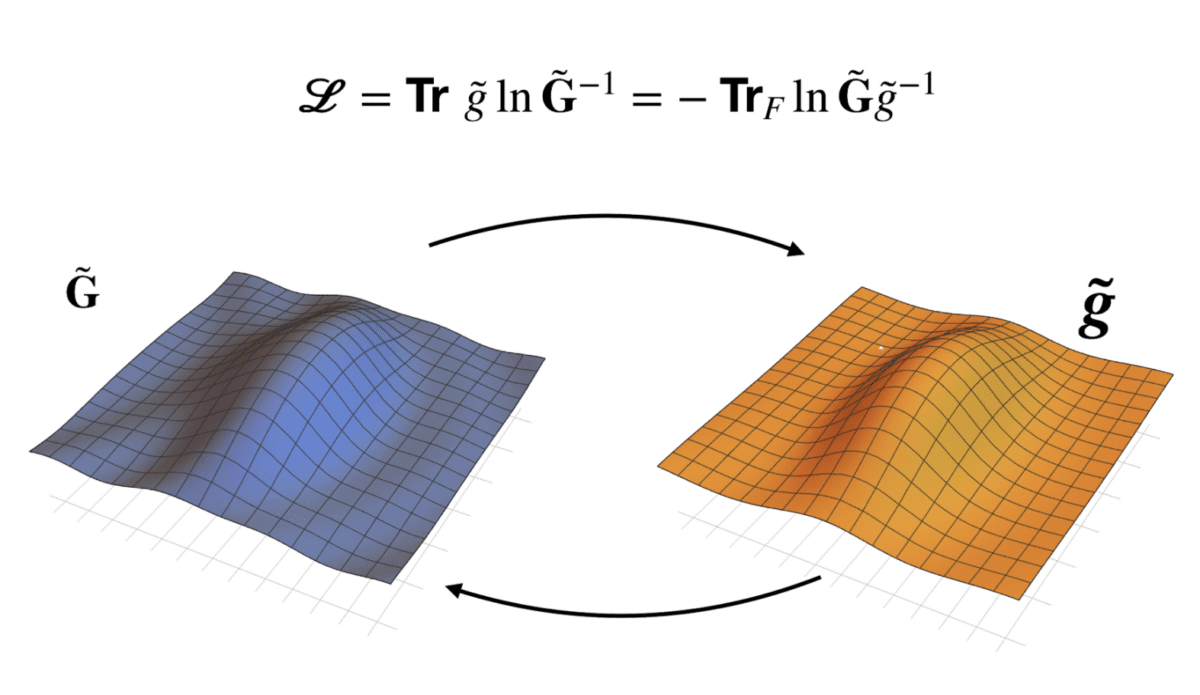
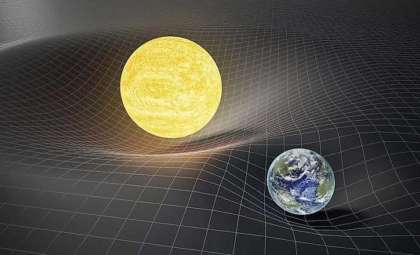
The foundation of Ginestra Bianconi’s proposal involves quantum relative entropy, a tool to distinguish one quantum state from another. Here, spacetime functions as a quantum operator, actively influencing and modifying quantum states, marking a distinct departure from Einstein’s model where gravity arises from mass-induced curvature of spacetime.
Embedding quantum entropy within spacetime’s structure preserves a smoothly curved universe akin to our observations, while altering the fundamental origin of gravity. As Bianconi explains in her latest paper in Physical Review D:

“Gravity is derived from an entropic action coupling matter fields with geometry [of spacetime].”
This methodology also introduces the G-field, a vector field characterized by direction and magnitude, which links matter to the fabric of spacetime.
Why Quantum Gravity Remains Elusive
Physicists have long struggled to reconcile general relativity, which explains large-scale phenomena, with quantum mechanics, governing the microscopic realm. The two theories rely on fundamentally different principles, making unification notoriously difficult.
Bianconi’s framework views gravity as an emergent property arising from the collective dynamics of quantum states. According to a research release by Queen Mary University of London, this enables interactions between quantum wave functions and the G-field, potentially bridging the divide between quantum theory and relativity.
This theory envisions spacetime not as a static stage but as a dynamic entity continually reshaped by evolving quantum information.
Tying Gravity to the Mystery of Dark Matter
A captivating aspect of Bianconi’s model is its potential to shed light on dark matter. If gravity can be described via particles, as her entropy-based theory posits, then the G-field might explain the invisible effects attributed to dark matter.
The Popular Mechanics article highlights that this perspective could clarify why dark matter remains undetected: it may not consist of unknown particles, but instead be an outcome of quantum information molding gravitational fields.
“This work proposes that quantum gravity has an entropic origin and suggests that the G-field might be a candidate for dark matter,” Bianconi explained. “Additionally, the emergent cosmological constant predicted by our model could help resolve the discrepancy between theoretical predictions and experimental observations of the universe’s expansion.”
While this hypothesis remains unproven, it boldly challenges conventional thinking and tackles some of the most profound puzzles in astrophysics.
- Categories:
- Astronomy





0 comments
Sign in to Comment