
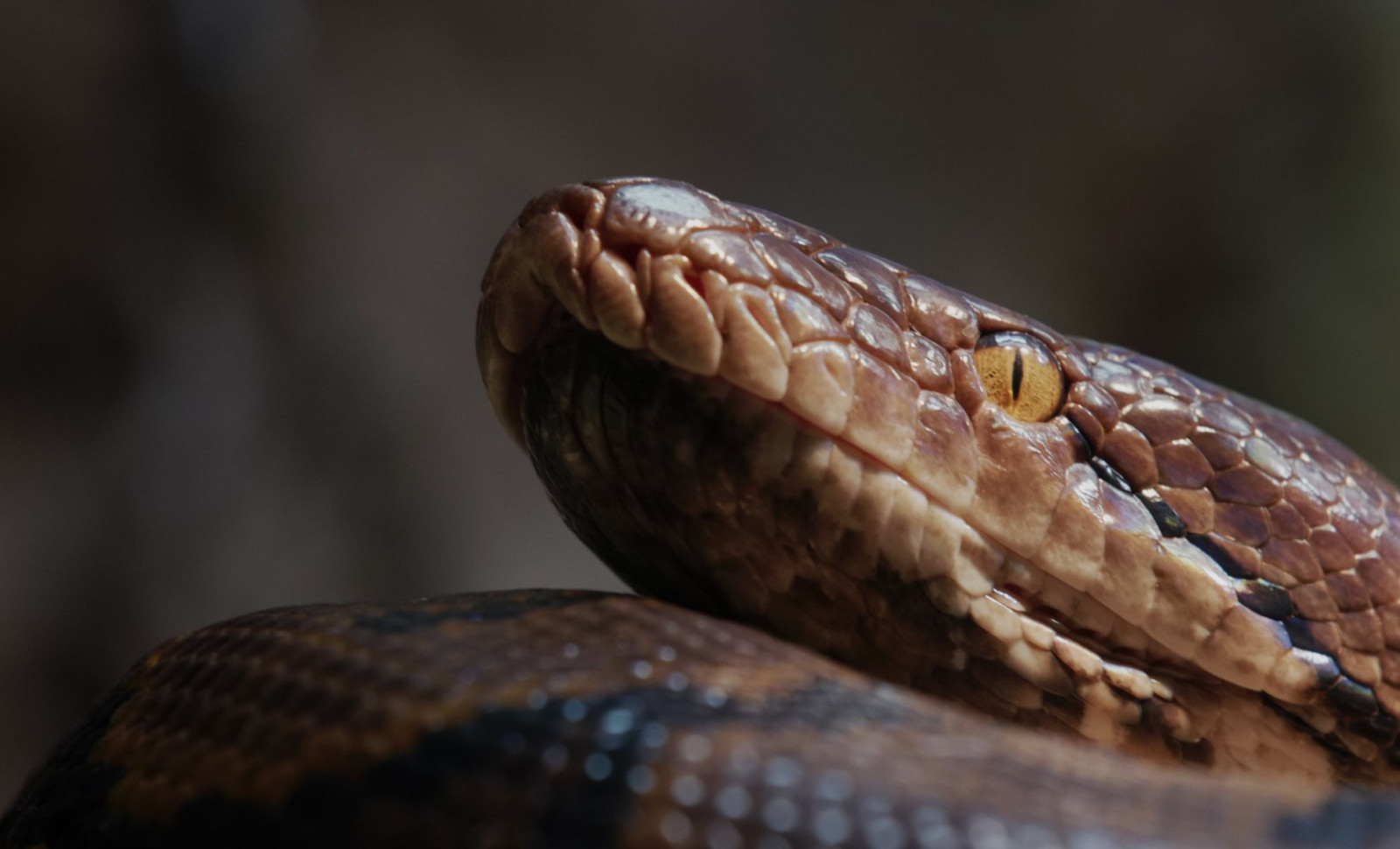
A team of scientists in western India has uncovered fossils of an enormous prehistoric snake that may rank among the largest serpents ever recorded. Named Vasuki indicus, this serpent is believed to have stretched up to 15 meters long and weighed approximately one tonne, matching the size of the famed Titanoboa that once held the title of the largest ancient snake.
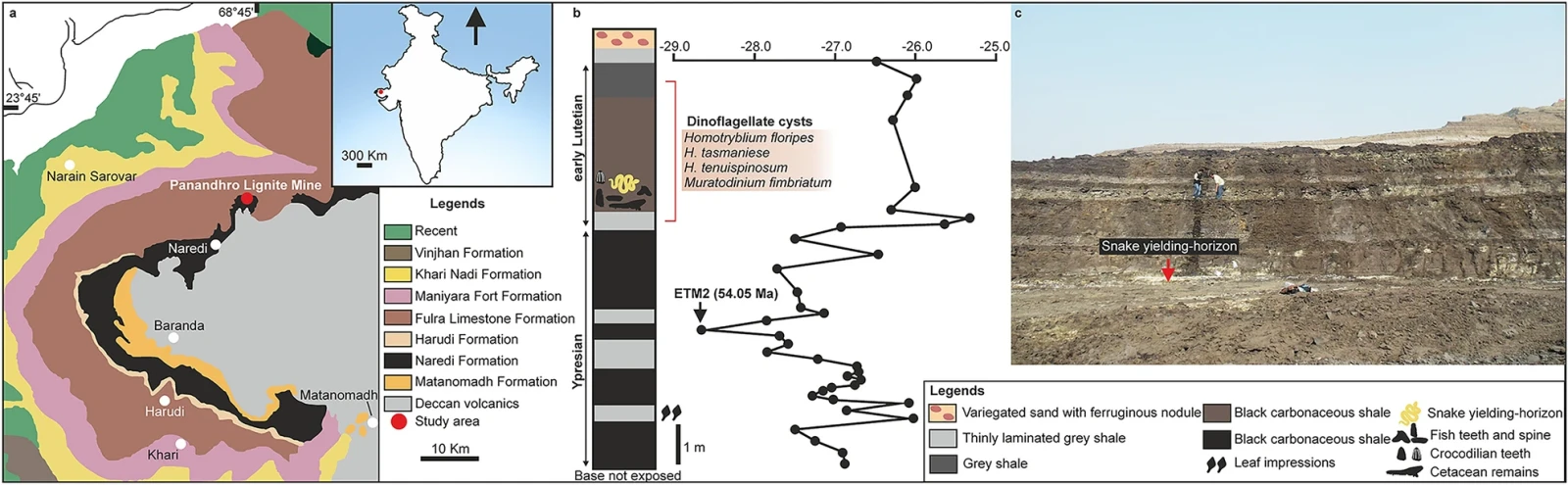
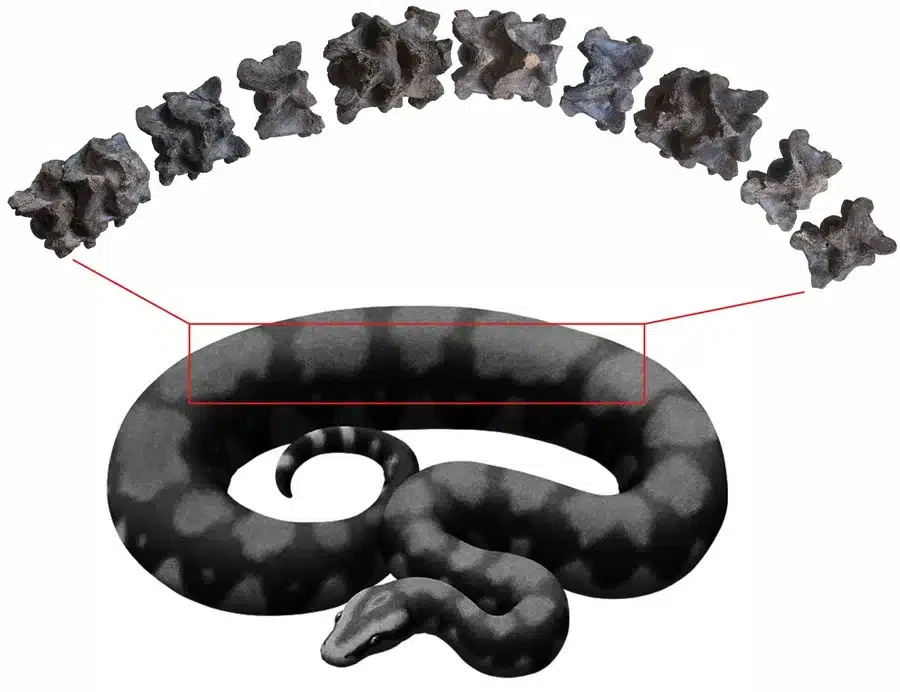
Unearthed within a lignite mine located in the Panandhro region of Gujarat, the fossil includes 27 vertebrae, some preserved in their natural alignment. The research, featured in Scientific Reports, dates the remains to around 56 million years ago, offering fresh insights into the colossal reptiles that inhabited the Earth after the dinosaurs.
An Ambush Predator of Marshlands with Python-like Features
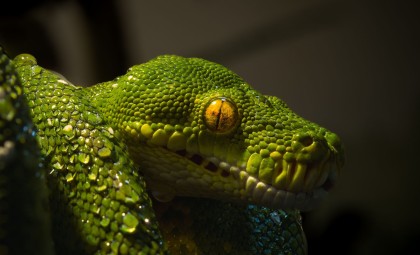
Unlike the fast-moving reptiles familiar to us today, Vasuki indicus likely relied on stealth and patience. Researchers suggest it was a slow ambush hunter that waited submerged in swampy environments to capture prey that ventured nearby.

“Considering its large size, Vasuki was a slow-moving ambush predator that would subdue its prey through constriction like anacondas and pythons. This snake lived in a marshy swamp near the coast at a time when global temperatures were higher than today,” said Debajit Datta, a postdoctoral researcher at the Indian Institute of Technology Roorkee and lead author of the study.
The published report describes vertebrae up to 11 cm wide, suggesting a sturdy, cylindrical torso approximately 44 cm thick. Such girth would allow the snake to overpower smaller trees or squeeze between rocks. Though no skull has been found yet, making some behavioral details uncertain, scientists agree Vasuki probably wasn’t venomous and instead killed by constriction and suffocation.
Rivaling Titanoboa’s Legacy
For years, Titanoboa cerrejonensis has been the benchmark for prehistoric giant snakes. First discovered in a Colombian coal mine in 2009, it was estimated to be around 13 meters in length and weigh more than a ton.
“The estimated body length of Vasuki is comparable to that of Titanoboa, although the vertebrae of Titanoboa are slightly larger than those of Vasuki. However, at this point, we cannot say if Vasuki was more massive or slender compared to Titanoboa,” explained Sunil Bajpai, a paleontologist at IIT Roorkee and co-author of the study.
The Guardian reports that the emergence of a giant snake species from a different continent introduces complexity to what was once a clear record-holder story.
Many questions remain unanswered. The exact build of Vasuki—whether it was bulkier or more streamlined than Titanoboa—still remains uncertain. However, the discovery broadens our understanding of giant constrictor distribution, suggesting these massive snakes were more globally diverse than previously believed.
- Categories:
- News







0 comments
Sign in to Comment