
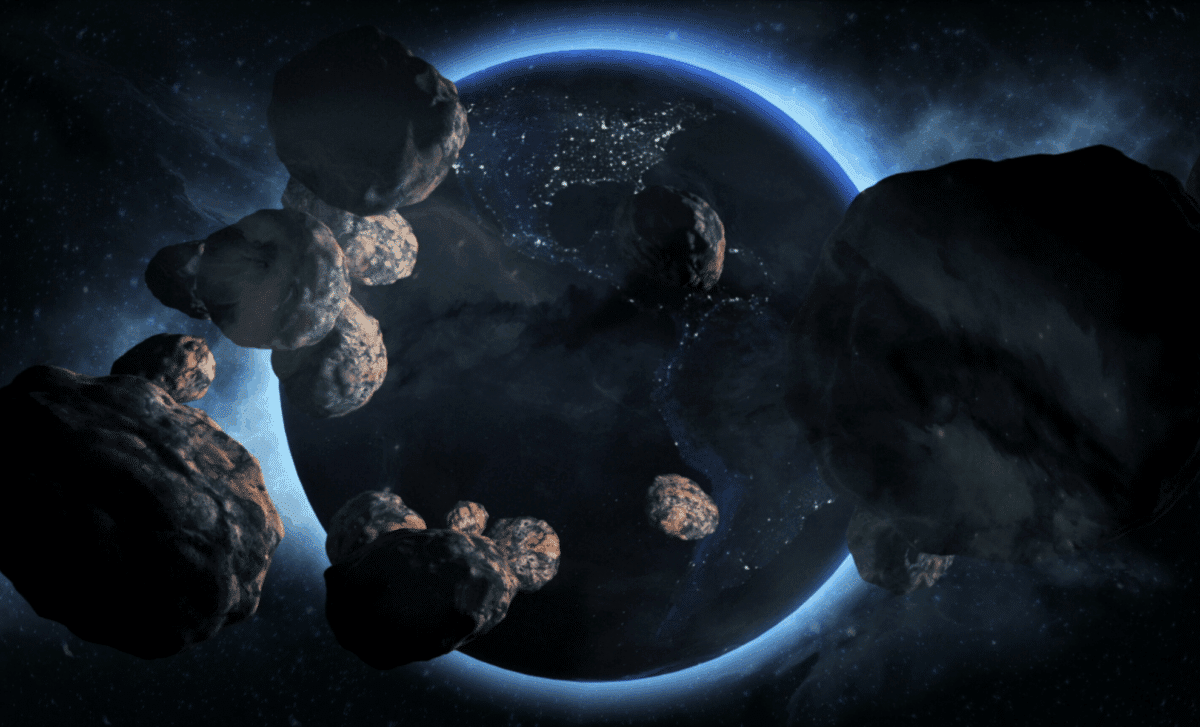
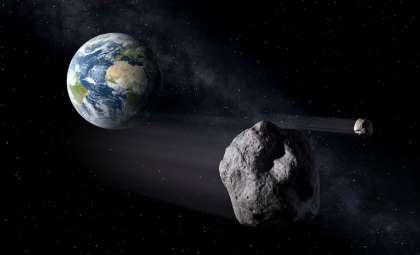
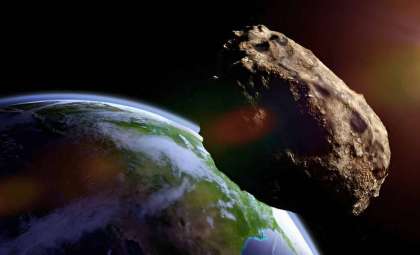
Recent research has brought renewed attention to the Taurid resonant swarm, a group of small asteroids that could cross Earth's orbit in the decades ahead. Scientists emphasize that although the chance of a significant collision is low, improved surveillance measures are crucial to mitigate any potential danger. The study details how current observational tools might identify these hard-to-detect objects well before they pose a threat. This work underscores a growing global commitment to enhancing planetary defense capabilities in light of increasing awareness about near-Earth objects.
Exploring the Taurid Resonant Swarm Concept
Appearing in Acta Astronautica, the paper investigates the idea of a “resonant swarm” — a proposed cluster of small near-Earth objects (NEOs) linked to the Taurid meteor stream. Scientists, including physicist Mark Boslough, stress the necessity of coordinated observation efforts to detect these potential hazards well in advance of any approach.
“Planetary defense is the multidisciplinary and internationally coordinated effort to protect Earth and its inhabitants from impacts by near-Earth objects (NEOs),” explained Boslough.
Add Cosmo Herald as a Preferred Source

The authors point out that recent detections of flash impacts on the Moon and unusually bright fireballs align with predicted times for swarm passages, lending indirect support to the swarm’s existence. Boslough further commented:
“The resonant swarm is theoretical, but there is some evidence that a sparse swarm of small objects exists because bright fireballs and seismic signatures of impacts on the moon have been observed at times that the theory has predicted.”
The research identifies two notable chances — in 2032 and 2036 — when astronomers can perform focused sky surveys with current telescopes to verify or disprove the swarm’s presence.
Strategies For Upcoming Close Encounters
The team believes that, if alerted early, humanity possesses the required technology to avert a serious impact. Boslough highlighted the potential role of new instruments like the NEO Surveyor infrared telescope in providing earlier detection of these objects.
“Our findings are that we have the technology to test the Taurid resonant swarm by using existing telescopes for targeted sky surveys in 2032 and 2036 when the hypothetical swarm will make very close approaches,” said Boslough.
“If we discover the objects with enough warning time, then we can take measures to reduce or eliminate the risk. If the new infrared telescope (NEO Surveyor) is in operation, then we can potentially have much more warning time.”
This forward-thinking approach reflects how planetary defense is benefiting from increased global cooperation. Although the risk of an impact is statistically small, researchers caution against complacency. Boslough noted that national laboratories in New Mexico are at the forefront of impact simulations and mitigation research.
“Asteroid impacts represent a small but significant risk, and New Mexico’s national labs have some of the best minds working on the problem,” he said.
Separating Fact From Fiction Regarding Asteroid Risks
Despite thorough scientific evaluations, inaccurate information about asteroid hazards persists widely online. Boslough addressed this problem directly, pointing out how misinformation skews public perception of the real risks.
“A lot of false information and mythology about this subject has been promulgated on social media, online sources, and sensational TV shows. This media gives the public the wrong impression about NEOs, impacts, and airbursts, and what we can do to reduce the risk,” he said.
The study reiterates that even though the average chance of a damaging impact remains very low, maintaining preparedness and awareness is essential. Boslough added that the 2036 encounter is particularly challenging to observe since the swarm’s approach aligns with the Sun’s position, making bright fireball sightings unlikely unless the objects are exceptionally luminous.
“The average probability is extremely low, so even an enhanced risk means that the probability would still be low. The swarm will come from the direction of the sun in 2036, so fireballs will not be seen in our blue skies unless they are extremely bright,” he explained.
As efforts in planetary defense continue to grow, initiatives like the one presented in Acta Astronautica are paving the way for more effective detection and management of potential asteroid hazards in our cosmic vicinity.
- Categories:
- Space





0 comments
Sign in to Comment