
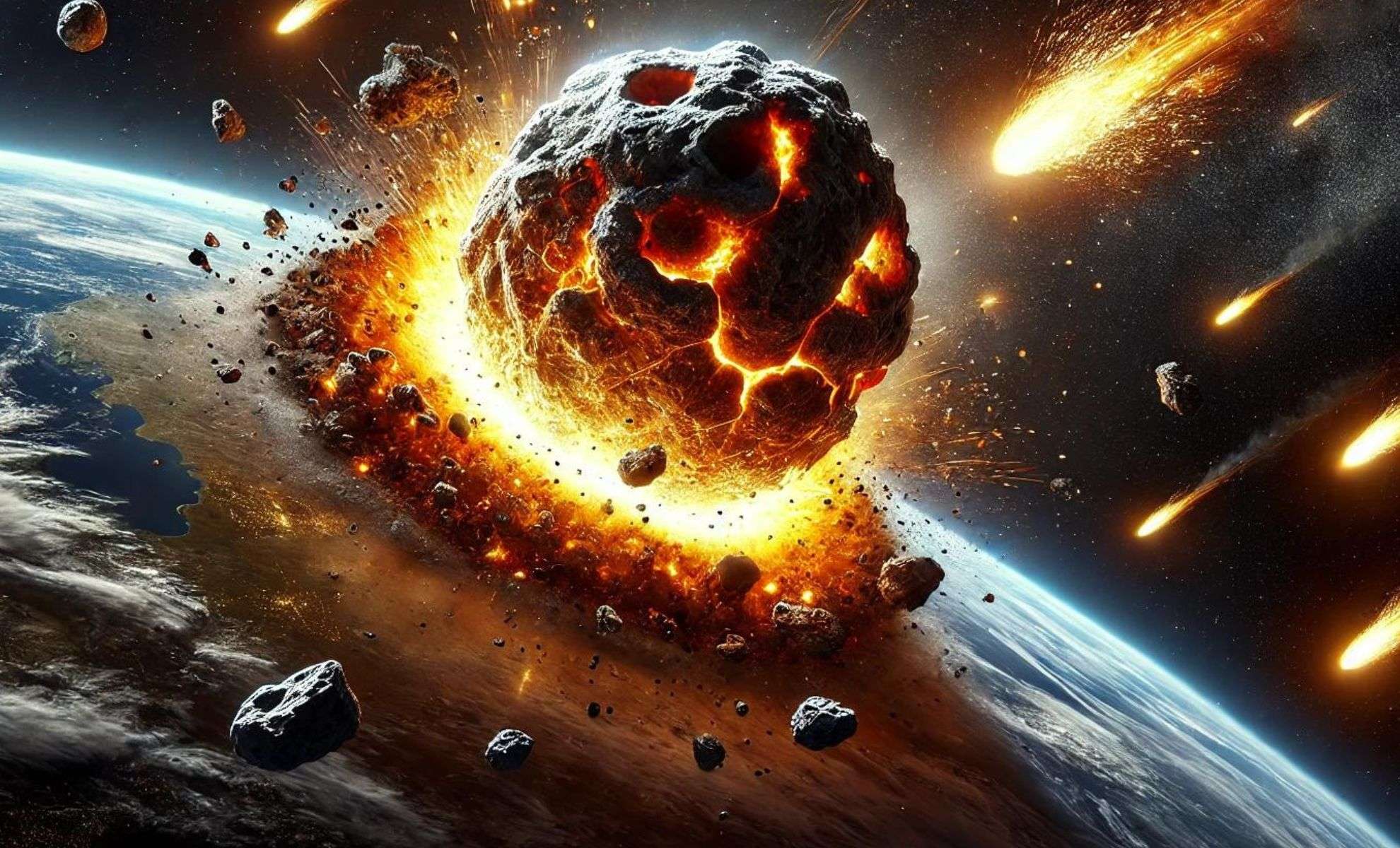
Recent investigations suggest that nuclear detonations could provide a viable approach to steer asteroids away from Earth, potentially averting catastrophic impacts. Although this concept has been contemplated before, current research applies rigorous scientific analysis, revealing that X-rays from such explosions might be harnessed to alter an asteroid’s path with precision.
The Mechanism of Using Nuclear Blasts for Asteroid Diversion
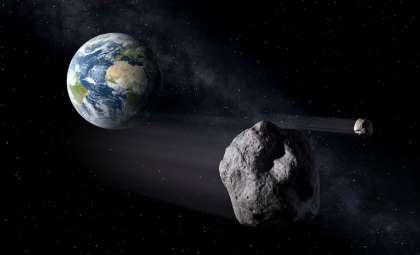
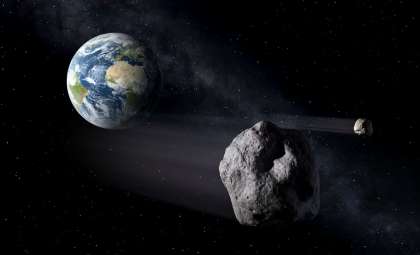
Popular culture, through films like Armageddon and Deep Impact, has often portrayed nuclear devices as tools to shatter threatening asteroids. Yet, experts now caution that fragmenting a large asteroid could create multiple hazardous debris rather than neutralizing the danger. Modern theories propose detonating a nuclear device at a safe distance—approximately a mile or more from the asteroid—to produce intense X-ray radiation. This radiation selectively vaporizes the asteroid’s surface, generating thrust that pushes the object off its collision course with Earth.
Researchers from Sandia National Laboratories, New Mexico, spearhead this innovative work. Employing the facility’s powerful Z Pulsed Power Facility, they recreated the effects of nuclear bursts on miniature asteroid simulants. Nathan Moore, a physicist involved, remarked, “I explored how to replicate space conditions to divert a small asteroid right here on Earth.” The experiments demonstrated how the X-ray pulses ablated tiny layers of material, simulating a potential deflection mechanism in actual space scenarios.

The Importance of Controlled Force to Prevent Breaking the Asteroid
A key challenge is to apply just enough energy to alter an asteroid’s trajectory without pulverizing it into dangerous fragments. Moore explained, “Our goal is precise application of force that nudges the rock without fracturing it into multiple lethal parts.”
The team’s approach focuses on finely tuned detonations that vaporize only minimal portions of the asteroid surface, avoiding fragmentation while achieving trajectory shifts. This nuanced method marks a significant improvement compared to earlier concepts that risked creating numerous hazardous pieces.
Smaller space rocks have been successfully nudged using kinetic impactors, such as NASA’s DART mission. However, for larger or sturdier asteroids, radiation from nuclear blasts may be essential, since the X-rays can vaporize surface material without direct contact.
Addressing Asteroid Hazards and NASA’s Involvement
Though rare, the threat from near-Earth asteroids remains serious. Last year, the National Academy of Sciences underscored planetary defense as a critical priority. NASA’s extensive sky surveys have cataloged roughly 25,000 objects near Earth large enough to cause significant damage, yet only about one-third have been thoroughly tracked due to observational limitations.
Asteroid impacts aren’t just hypothetical: in 2013, a 20-meter asteroid exploded over Chelyabinsk, Russia, injuring many and causing substantial damage. Catastrophic events like the Chicxulub impact that led to the dinosaurs’ extinction highlight the existential risks from larger bodies.
NASA’s Double Asteroid Redirection Test (DART) mission showcased successful redirection of a small asteroid’s orbit via a kinetic impact on Dimorphos, a moonlet orbiting Didymos. While encouraging, scaling this technique up for massive or denser asteroids remains uncertain.
Expanding the Potential of Nuclear Detonations for Planetary Defense
At Sandia National Laboratories, researchers simulate space-like conditions using an innovative method called X-ray scissors, temporarily eliminating gravity and friction influence to suspend asteroid simulants in midair. By exposing these targets to controlled bursts of X-rays, they mimic nuclear blast effects, vaporizing surface material and producing measurable movement.
Although these tests are small scale, the research team believes this concept is scalable to more massive targets. Their published findings highlight that comprehensive models integrating radiation and hydrodynamics can be refined using experimental data to better predict outcomes for varied asteroid interception missions.
This work lays a crucial foundation for future attempts at asteroid deflection, offering safer, more adaptable techniques capable of addressing diverse asteroid shapes, sizes, and compositions.
Preparing for Future Asteroid Threats
While no immediate threats loom, planetary defense experts warn a major asteroid collision with Earth is likely over the long term. NASA’s continuous surveys track numerous potential hazards, while laboratory experiments like those at Sandia are vital steps toward readiness. Moore emphasized, “We want to develop effective methods in advance, not scramble when a catastrophic asteroid appears.”
Currently, efforts focus on improving technology and expanding data to ensure reliability. Even if nuclear detonations seem dramatic, they could be necessary to deflect sizeable asteroids already en route to Earth.
NASA’s ongoing missions combined with laboratory insights increasingly clarify how humanity might thwart disastrous impacts. Although at an early stage, using intense X-ray pulses from nuclear explosions could become a cornerstone of future planetary defense tactics.
- Categories:
- Astronomy ,
- News ,
- Space ,
- Nasa






0 comments
Sign in to Comment