
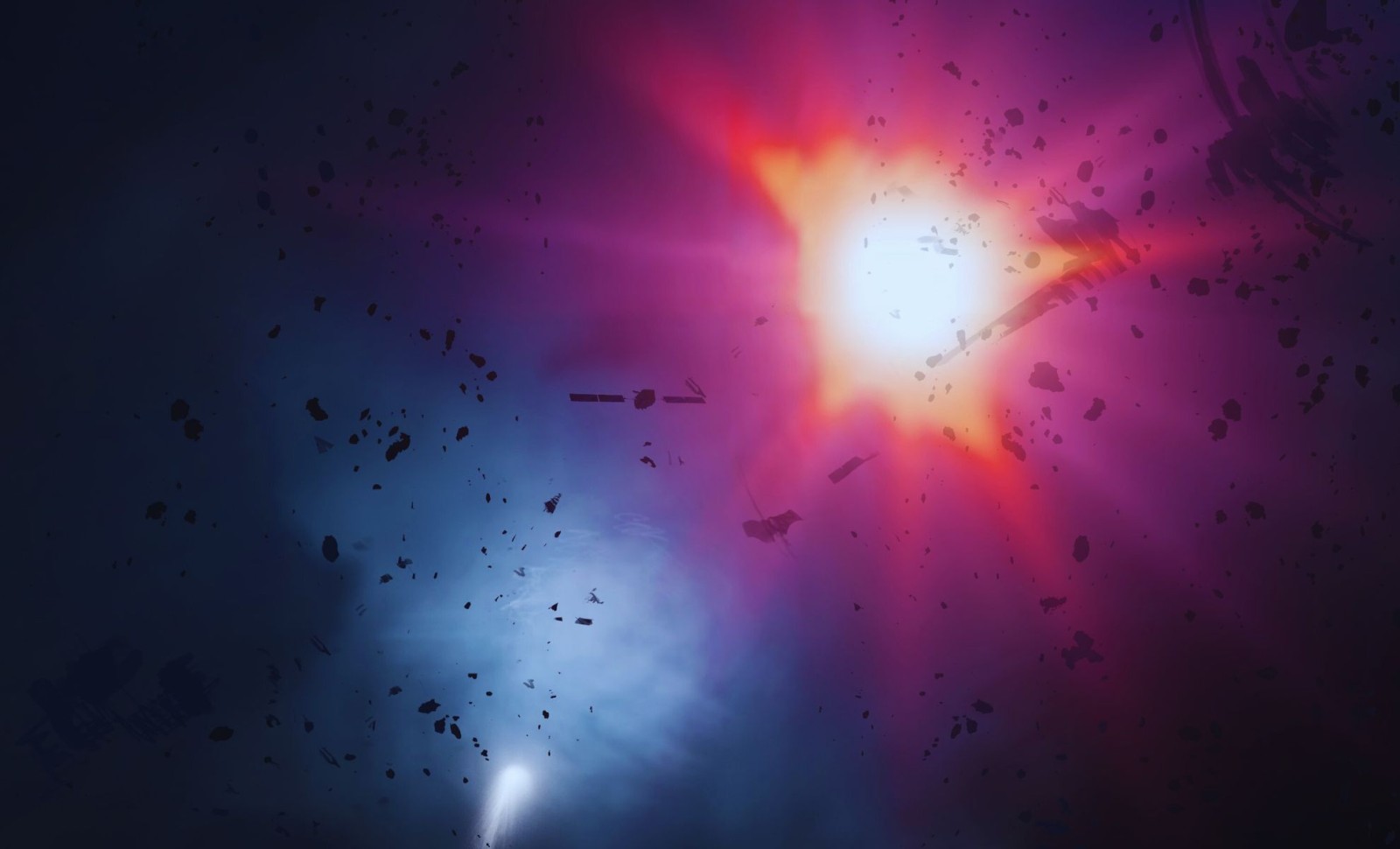
For many years, scientists have theorized that stars outside our solar system could emit large bursts of magnetized plasma, similar to the solar flares and coronal mass ejections observed from the sun. However, direct evidence of such events escaping the gravitational and magnetic influence of another star had remained elusive—until now.
A recent breakthrough came with observations made by a radio telescope based in the Netherlands, which detected a substantial plasma eruption originating from the star StKM 1-1262. This milestone not only fills a significant gap in our understanding of stellar physics but also provides crucial insights into how such stellar activity might impact atmospheres on exoplanets circling these stars.
New Radio Detection Reveals Stellar Plasma Burst
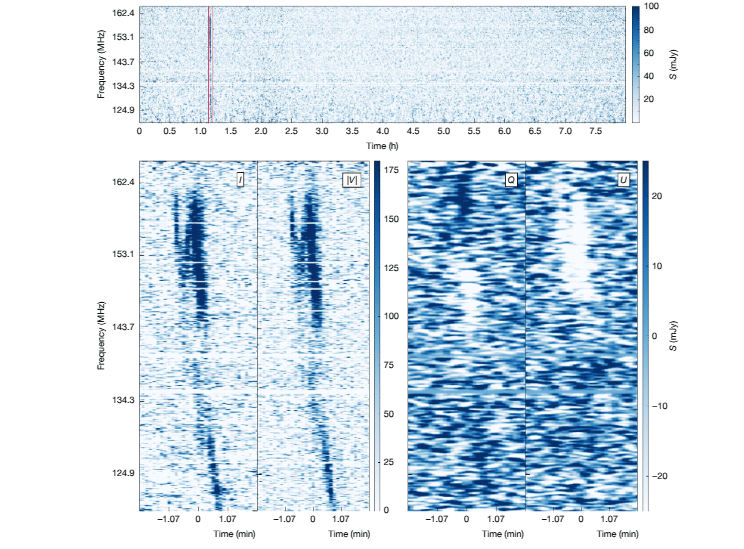
The discovery team, whose work was published in Nature and led by Joseph Callingham at the Netherlands Institute for Radio Astronomy, harnessed the capabilities of LOFAR (the Low Frequency Array radio telescope). They recorded a distinctive radio signal indicating a cloud of plasma that had escaped the star's gravity and magnetic confinement.

Previous observations of coronal mass ejections (CMEs) from stars outside our solar system had only shown potential surface disturbances but lacked confirmation of actual mass loss. This time, the detection of specific radio emissions extending into space proves that material was propelled far from the star's surface, detectable all the way from Earth.
In addition to LOFAR’s radio data, the team utilized observations from the XMM-Newton space telescope to measure StKM 1-1262's brightness and temperature. This comprehensive dataset conclusively identified the event as a true CME, confirming that significant plasma was ejected into surrounding space.
Implications for Habitability of Exoplanets
The impact of such energetic star activity extends beyond stellar dynamics. Solar CMEs are well known to cause geomagnetic storms, disrupt satellite operations, and create stunning auroras on Earth. In severe cases, they can erode the atmospheres of nearby planets, especially those without strong magnetic fields, like Venus.
Anthony Yeates from Durham University highlights that this newly observed CME from StKM 1-1262 would represent a major hazard for any hypothesized life on planets nearby.
“If there was an exoplanet, it would have been quite catastrophic for any life on it,” he said.
This finding urges a broader view of habitability criteria, moving beyond temperature and orbital range to also consider a star's violent behavior. High-energy radiation and plasma from such eruptions could sterilize planetary surfaces or destroy atmospheres, which until now has been underestimated when evaluating exoplanet environments.
Decades-Old Debate Finally Resolved
Since the 1990s, astronomers have spotted potential evidence of stellar CMEs, but these were often fleeting brightening or material loops that failed to escape the stars. As Callingham explained:
“You could argue that we’ve had hints for 30 years, and that’s true, but we never explicitly proved it. We’re saying that mass has been ejected, has been lost from the star, and that’s always been a debate in the literature.”
This latest detection removes longstanding uncertainty. The radio waves recorded by LOFAR are produced only when plasma interacts with open magnetic fields in space — an indication that the material is no longer confined by the star’s magnetic grip. This evidence resolves a decades-long scientific discussion about stellar CMEs beyond our sun.
- Categories:
- Space




0 comments
Sign in to Comment