
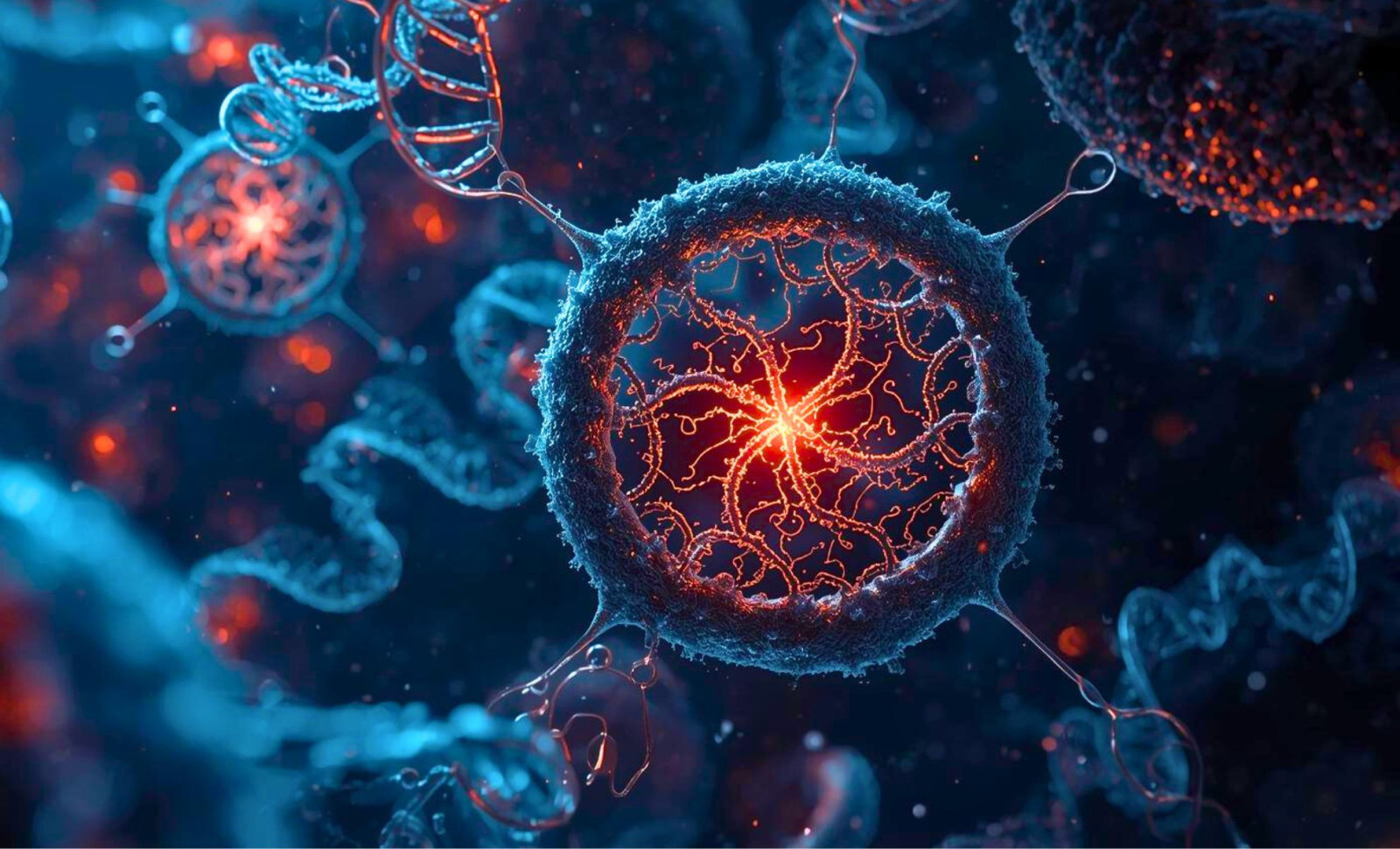
Scientists have identified a new category of RNA molecules residing within bacteria in the human body. These circular RNA strands, named obelisks, differ significantly from known viruses and bacteria, potentially representing an uncharted class of self-replicating RNA entities.
Discovered through extensive examination of genetic data from human-associated microbes, obelisks were frequently found in samples from the digestive tract and oral cavity, suggesting their presence is widespread among human populations worldwide. Their biological role remains a subject of active investigation.
Distinct from typical biological agents, these RNA molecules are characterized by their simplistic makeup. They do not produce proteins nor seem to be enclosed within protective protein layers. Instead, they consist of small RNA loops that replicate by mechanisms that remain largely mysterious.

Thousands of unique circular RNA forms detected in human microbial communities
Using advanced computational analyses of public metagenomic databases, researchers identified more than 3,000 distinct obelisk types. These sequences originated from bacterial populations inhabiting human mouths and intestines, detected by tools specialized in finding circular RNAs within vast genomic datasets.
The study was spearheaded by Nobel laureate Andrew Fire at Stanford University and is currently available as a preprint on bioRxiv, an open platform for early-stage biological research. The identified RNA loops lack protein-coding ability, distinguishing them from conventional viral genomes. They bear resemblance to viroids, which are simple, circular RNAs known to infect plants, although obelisks have only been observed in human-associated bacteria.

By applying strict sequence validation to exclude artifacts, the team uncovered conserved genetic patterns within multiple samples. Many obelisks were integrated within bacterial genomes, implying they replicate inside microbial cells and may have co-evolved with specific bacterial hosts.
No direct links to health conditions have yet been established. Nonetheless, since these RNA rings inhabit bacteria critical to digestion, immunity, and other bodily functions, future studies may explore their indirect influence on human health.
Unusual nature challenges existing microbial classification frameworks
Obelisks diverge from all known categories of mobile genetic elements, including viruses and plasmids. They are unique, protein-free RNA replicators lying outside the conventional definitions used in microbiology. This unconventional nature has captivated scientists interested in the fundamental limits of life and the behavior of minimalist replicators.
These discoveries carry weight for evolutionary biology, particularly in theories about the dawn of RNA-based life. Some hypotheses propose early organisms depended solely on self-replicating RNA molecules. Entities like obelisks, which lack cells and protein machinery, might provide valuable clues about primitive life forms.
The genetic variation seen among obelisk types correlates with different bodily environments, suggesting adaptations to specific bacterial niches. Whether these structures play regulatory or ecosystem roles within the microbiome remains a vital open question.
Readers interested in a comprehensive discussion of this classification dilemma can refer to the Royal Society Open Science publication, which delves into novel RNA replicators found in microbial settings.
Broader significance for RNA science and microbiome research
This breakthrough contributes to the rising knowledge about non-coding and circular RNA molecules, known to influence gene expression and cell biology in diverse organisms. Obelisks are exceptional in that they seem to persist independently, without engaging in protein production or recognized regulatory processes.
The discovery highlights the transformative impact of modern metagenomics and bioinformatics, enabling researchers to uncover previously hidden molecular life forms by scrutinizing immense genetic data from microbial habitats.
Contributions from scientists like Dr Mark Peifer at the University of North Carolina and Dr Matthew Sullivan at Ohio State University underscore the interdisciplinary approaches being used to decode these RNA elements. Their expertise spans microbial genetics, host-interaction dynamics, and the biology of minimal replicators.
As sequencing efforts expand across environmental and human microbiomes, additional RNA forms with unclear functions are expected to emerge. Whether obelisks represent remnants of ancient RNA life or newly evolved molecular parasites remains to be determined. Current research aims to clarify their replication, transmission pathways between bacteria, and possible interactions within microbial communities.
- Categories:
- Science







0 comments
Sign in to Comment