

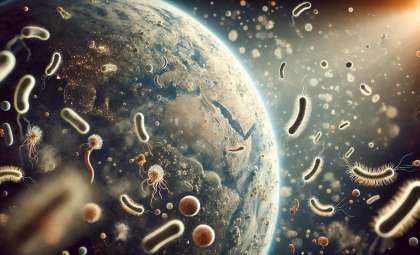
Microscopic organisms suspended in extraterrestrial atmospheres might soon unveil their presence through unique light interactions. Recent research highlights how microbial aerosols drifting in the skies of other planets could produce distinct spectral markers detectable from great distances. This innovative approach moves beyond surface observations, focusing instead on atmospheric biosignatures as new indicators of life beyond Earth.
Uncovering Life's Subtle Atmospheric Clues
A scientific team has introduced a novel avenue for biosignature identification: detecting microbial spectral characteristics within planetary atmospheres. Their recently published work on Arxiv explores how light absorption and scattering caused by microbial particles could imprint recognizable spectral features accessible to telescopic observations. If airborne microorganisms exist high in a planet’s atmosphere, they might leave behind specific reflectance and transmission signals visible even across interstellar distances.
Through modeling different types of microbial communities and account for varied atmospheric conditions, the study reveals that pigments such as chlorophyll and bacteriorhodopsin can cause characteristic absorption bands in visible and near-infrared spectra. These signatures stand apart from mineral or haze-induced effects, positioning them as promising indicators of life. Such optical biosignatures could provide indirect evidence of biological processes without needing direct surface examination.

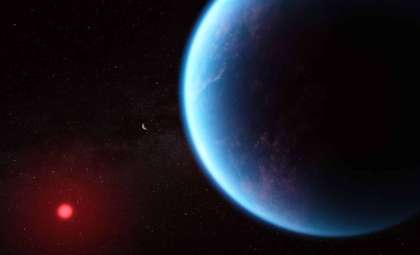
The ramifications are significant. Current exoplanet surveys often emphasize atmospheric gases like oxygen or methane, but this research proposes a complementary strategy: searching for the physical presence of living aerosols. Confirming this observationally could open opportunities to detect life on planets shrouded by thick clouds or hazes, such as Venus, Titan, or Earth-like exoplanets with dense atmospheres.
Expanding Horizons in the Quest for Extraterrestrial Life
The paper, recently posted on Arxiv, challenges the traditional focus on life existing only on planetary surfaces or oceans. Instead, it proposes life could thrive in atmospheric layers where sunlight, chemistry, and temperature create habitable zones. On Earth, microorganisms endure in the upper troposphere and stratosphere, withstanding harsh conditions including radiation, dryness, and low temperatures.
If analogous aerial ecosystems exist elsewhere, their spectral footprints might reveal their presence. Using simulations of exoplanets with varying cloud thickness, microbial amounts, and particle dimensions, the team assessed how these variables influence reflectance spectra. Results indicate even sparse microbial populations could be detectable, assuming future observatories like LUVOIR, HabEx, or next-generation JWST instruments can attain the required precision.
This method’s strength lies in its adaptability. Rather than focusing narrowly on specific gas combinations (such as oxygen and methane), it broadens the search to all particulate biosignatures interacting with light. This could streamline identifying potentially habitable worlds and guide which exoplanets warrant prioritized observation.
Advancing Atmospheric Biosignature Research
The researchers highlight that comprehending airborne biosignatures relies on merging astrophysical simulations with microbial spectral analysis. Laboratory studies on Earth are refining pigment databases needed to detect biological compounds in planetary reflected light. Enhancing these reference collections will improve astronomers’ ability to distinguish genuine life signs from non-biological mimics.
Upcoming missions might integrate remote spectroscopy with in situ investigations to test these concepts within our Solar System. For example, Venus’s clouds — long debated as habitats for microorganisms — present an ideal natural laboratory. The planned DAVINCI and VERITAS missions aim to characterize Venusian aerosols and their optical traits, facilitating comparisons with exoplanetary atmospheric data.
In closing, the study calls for broadening life’s habitability criteria. On some worlds, living entities may not be confined to solid surfaces but could be suspended aloft, leaving their presence etched in the planet’s light signatures.
- Categories:
- Science




0 comments
Sign in to Comment