
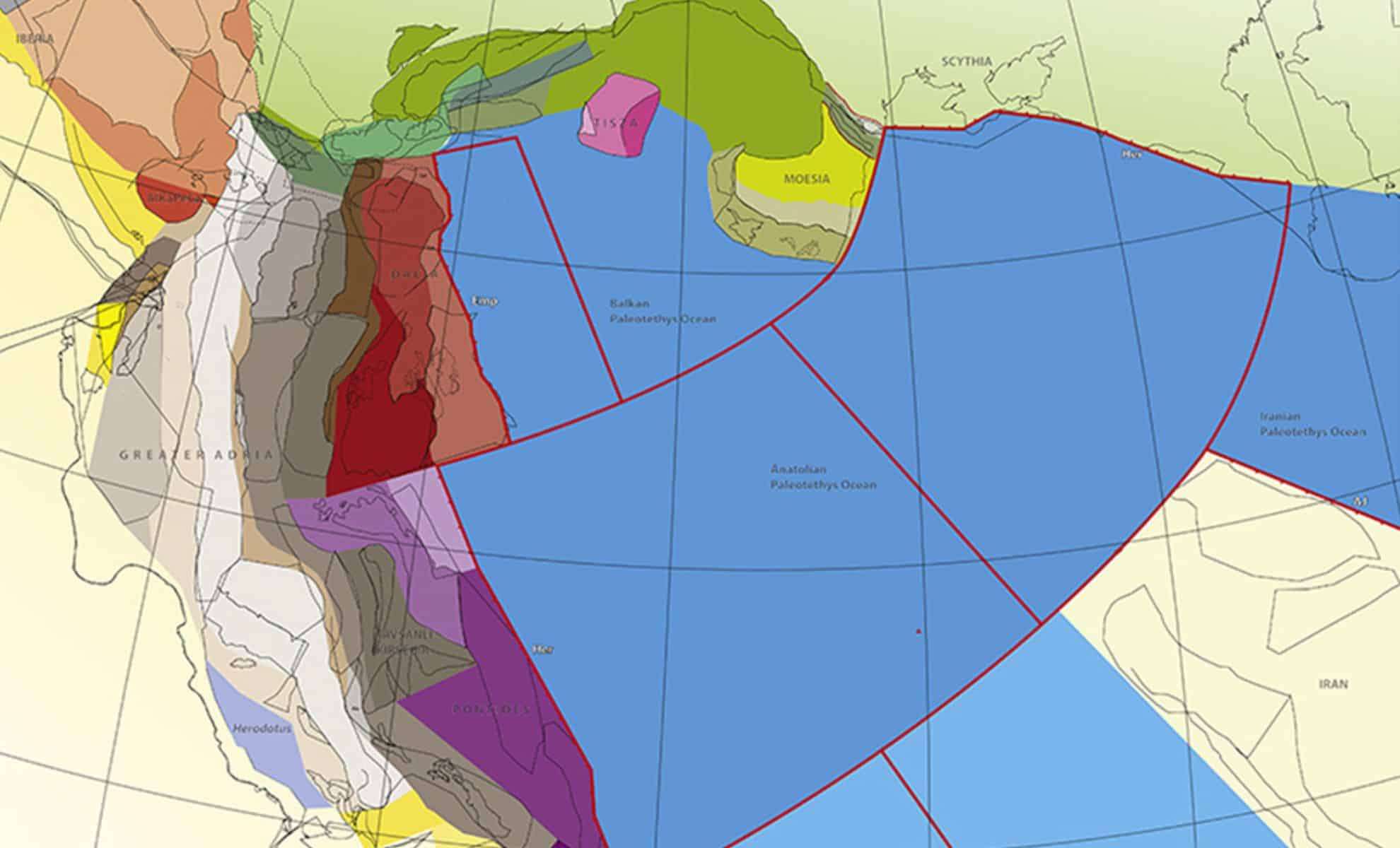
A revolutionary finding from Utrecht University scientists has brought to light the remains of Greater Adria, an ancient continent concealed beneath Southern Europe for approximately 140 million years. This discovery, featured in Gondwana Research, provides fresh perspectives on Europe’s geological evolution and the creation of its famous mountain ranges. Covering an area once comparable to Greenland, Greater Adria slowly sank beneath the crust of Southern Europe, leaving geological traces that persist in today’s terrain. This intriguing study opens a window into the powerful subterranean forces shaping Earth’s surface.
An Ancient Landmass Beneath the Alpine Region
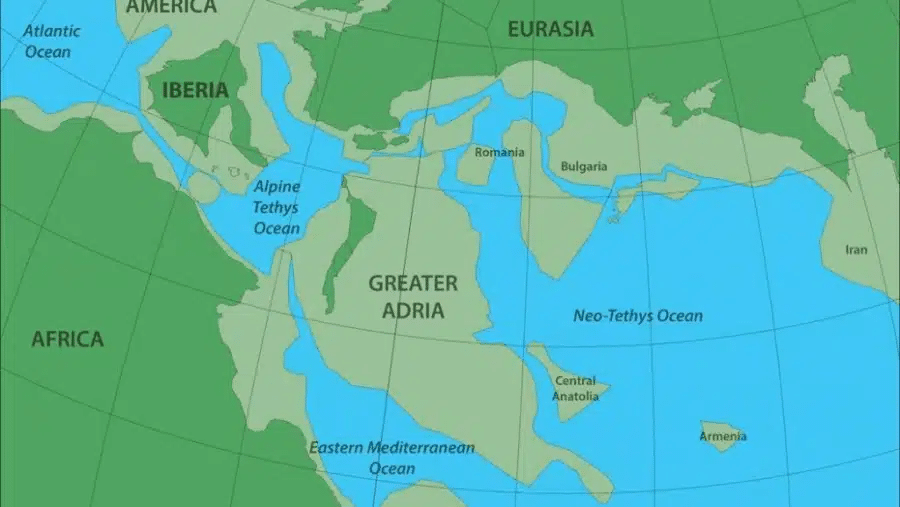
The formation of Greater Adria took place roughly 240 million years ago as part of a vast supercontinent. Over time, it drifted away from what evolved into North Africa and was completely separated from it by about 200 million years ago. For many millennia, Greater Adria extended across present-day Southern Europe and sections of the Middle East.
Led by Douwe van Hinsbergen, the research team determined that Greater Adria was not fixed in place but was gradually pushed beneath Southern Europe’s crust. Employing advanced tectonic modeling, they tracked the continent’s complex geological shifts. Most of Greater Adria was subducted and slid beneath the Earth’s mantle, with only fragments surfacing today as the foundations of the Alps, Apennines, and mountain ranges in Greece and Turkey.

Van Hinsbergen wittily remarked, “Forget Atlantis. Tourists unwittingly spend their vacations on the ancient, sunken continent of Greater Adria.” The remnants lie not far beneath the surface, meaning visitors traversing Southern Europe’s majestic mountains unknowingly walk over the remains of this vanished titan.
Decoding a Complex Geological Puzzle
The Mediterranean is famous for its complicated geological characteristics, and studying Greater Adria demanded an untangling of an exceptionally convoluted tectonic past. Unlike regions with clearly defined plate boundaries, the Mediterranean is a labyrinth of fractured, curved, and overlapping structures. Van Hinsbergen described it as a “geological mess,” stemming from the region’s multifaceted plate interactions that have caused continual folding and displacement over millions of years. This intricate fabric has challenged researchers seeking to precisely reconstruct Greater Adria’s tectonic journey.
Utilizing seismic imaging, the team mapped Greater Adria’s subduction in remarkable detail. Their findings indicate that some parts of the continent were dragged deep into the mantle, while others remained nearer the surface, eventually shaping the mountain regions visible today. Seismic wave analysis has traced the distorted remains stretching as far as 1,500 kilometers under the Earth’s crust. This seismic data paints a vivid and unprecedented portrait of this hidden continent beneath the Mediterranean basin.
Reevaluating Continental Formation Processes
The identification of Greater Adria carries significant consequences for our understanding of geology, especially in the context of plate tectonics and mountain-building mechanisms. The fragments of this forgotten continent provide crucial evidence of how vast landmasses can sink beneath the mantle over time, leaving geological records that explain the origin of Europe’s prominent mountain ranges. This research enriches knowledge on the tectonic forces that continue to mold Earth’s exterior.
Moreover, insights from Greater Adria’s history could enhance predictions related to seismic and volcanic hazards across the Mediterranean. Understanding how such land fragments engage with tectonic plates offers vital clues for anticipating earthquakes, volcanic eruptions, and other geohazards currently affecting the area.
This revelation also underscores active geological processes that persistently reshape Earth’s crust. The Mediterranean region remains a hotbed of tectonic activity, and the concealed Greater Adria brings new understanding to how continents evolve and interact through deep geological time.
Shedding Light on Earth’s Dynamic Crust
The story of Greater Adria highlights Earth’s continuously changing landscape, illustrating the immense geological forces at work beneath our feet. As research progresses, scientists deepen their grasp of the long-term dynamics driving Earth’s tectonic movements. The rise and fall of Greater Adria is a testament to the powerful cycles of geological transformation that have sculpted both Europe and the planet as a whole.
This investigation offers a profound look into our planet’s deep past and reminds us that no landmass, however vast, is exempt from the relentless forces of tectonics and time.
- Categories:
- News





0 comments
Sign in to Comment